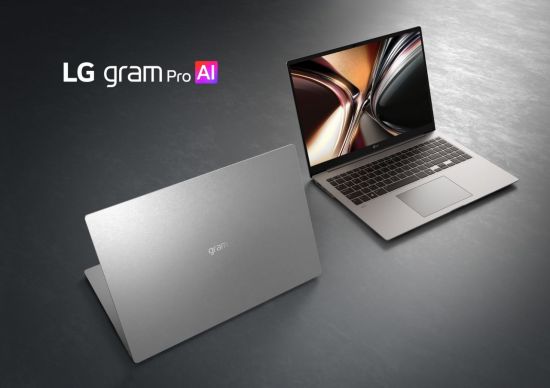
LG Electronics unveiled the 2026 LG Gram Pro AI lineup at CES, led by the 16-inch models (16Z90U/16Z95U) and launching in Korea from Jan. 6. Key differentiators include Exaone 3.5 on-device LLM and a 'Multi AI' Copilot Plus PC integration, a new aerospace-grade magnesium-aluminum alloy (‘Aerominium’) yielding a 16-inch Gram Pro weight of 1,199g and a >35% improvement in scratch resistance, and CPU options from Intel (Core Ultra) and AMD (Ryzen AI 400 series). The 16-inch Pro features a 77Wh battery (advertised up to 27 hours video playback), fast-charge capability, expanded Gram Link/Web OS connectivity and new Secure Lock remote-data protections—moves that position LG to compete in the premium ultra-lightweight AI-PC segment but are unlikely to be materially market-moving on their own.
Market structure: Winners are Microsoft (MSFT) via Copilot distribution, CPU vendors (INTC, AMD) supplying AI-capable silicon, and specialty-metal suppliers (magnesium/aluminum alloy producers). LG’s premium positioning may support ASPs for AI-ready laptops (+~5-10% premium possible) but will intensify OEM competition for scarce “AI CPU” slots, tightening near-term supply for Intel/AMD high-margin SKUs. Cross-asset: expect a modest tech-equity bid (treasury spreads tighten slightly), slight rise in implied vol for INTC/AMD around product windows, and upward pressure on magnesium prices (a meaningful move would be +8-15% if adoption scales).
Risk assessment: Tail risks include regulatory limits on on-device LLMs (privacy/consumer protection) or MSFT licensing shifts that reduce OEM economics, and supply-chain constraints for Aerominium (magnesium) that spike BOM costs. Timeframes: immediate (0-14 days) — limited market reaction; short-term (1–3 months) — CES reviews and channel inventory shifts; long-term (6–18 months) — true CPU share shifts and monetization of Exaone/Copilot. Hidden dependency: LG’s value hinges on Exaone accuracy and MSFT partnership terms; catalyst windows are CES reviews, Q1 OEM order updates, and MSFT Copilot roadmap announcements.
Trade implications: Favor concentrated, size-limited exposure to MSFT to capture software-led monetization (3–9 month horizon) and tactical positions in INT C/AMD to play CPU share shifts; consider long INTC vs short AMD if Intel secures outsized OEM wins (pair size 1% each). Use options to limit downside: buy 3–6 month call spreads on MSFT (target +15–25%) and sell 2–3 month call spreads on AMD to harvest near-term premium if you expect muted delta. Rotate into semiconductors and AI-software vendors, trimming cyclicals if demand data in next 60 days disappoints.
Contrarian angles: Market may overvalue hardware novelty — Aerominium is unlikely to create recurring revenue, so OEM equity upside is limited absent software monetization. Historical parallel: ultrabook/material innovations (2012–2015) moved unit economics but not sustainable ASP expansion without ecosystem lock-in. Unintended consequence: higher BOM from exotic alloys could compress OEM margins by ~1–3% if magnesium costs rise >10% and software monetization (Exaone/Copilot revenue share) doesn’t materialize within 12 months.
AI-powered research, real-time alerts, and portfolio analytics for institutional investors.
Request DemoOverall Sentiment
mildly positive
Sentiment Score
0.35
Ticker Sentiment
