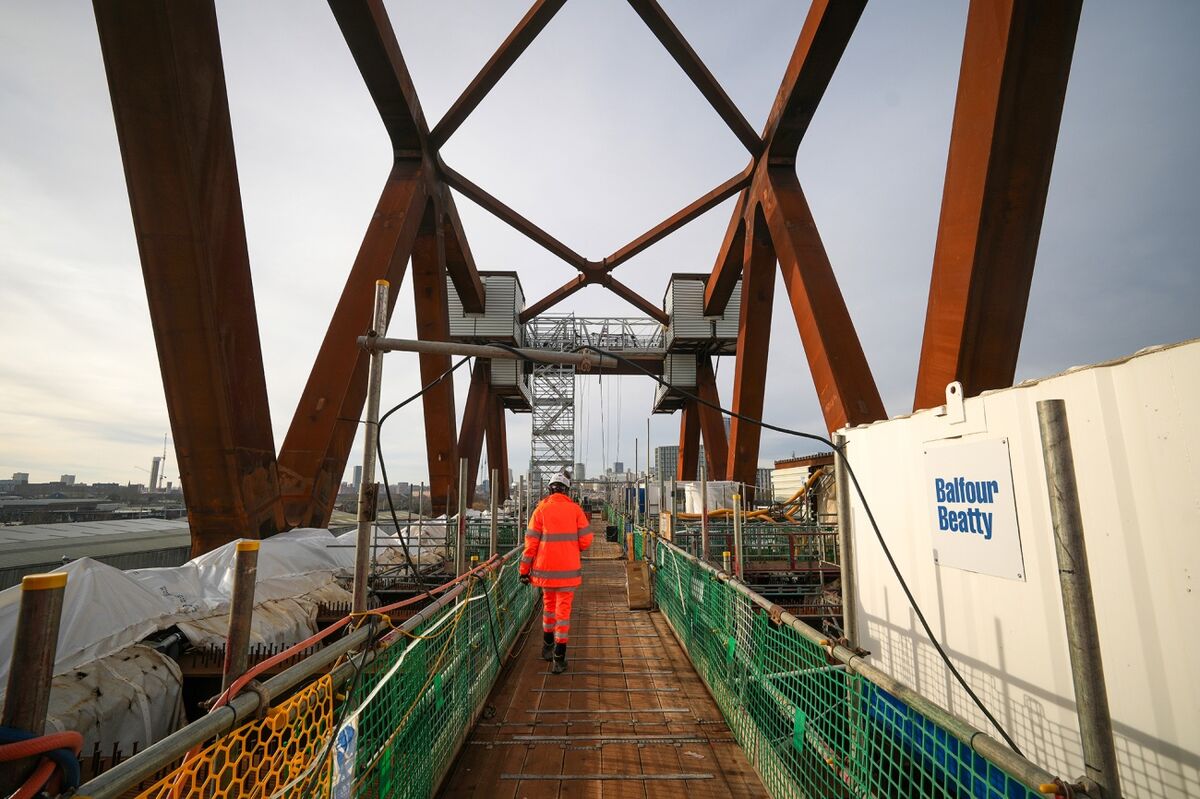
The UK’s High Speed 2 rail project is now expected to cost £87.7 billion to £102.7 billion and not open until 2036 at the earliest, marking another major delay and budget escalation. Planned train speeds have also been reduced to 320 km/h from 360 km/h to cut costs, while the route remains limited to London-Birmingham after earlier northern extensions were canceled.
This is less a one-off overruns story than a signal that UK fiscal capacity is being implicitly repriced toward maintenance of legacy megaprojects rather than new productive capital. The second-order effect is a higher hurdle rate for any future nationally sponsored rail, energy grid, or defense infrastructure program: once the market internalizes that major projects can drift another decade and still get funded, every public capex commitment carries a bigger contingent-liability discount.
The immediate winners are the contractors, engineers, and consultants that get paid on time-and-materials or change-order structures, while the losers are downstream regional growth plays that were underwriting earlier completion. A slower top speed is also economically important: it weakens the narrative that this line materially compresses travel-time arbitrage versus existing rail, which reduces the chance of a sharp modal shift in business travel and limits the upside for station-area redevelopment, retail footfall, and real estate uplift outside the core corridor.
From a market perspective, the bigger catalyst is not construction timing but political spillover. Further overruns increase the odds that the next UK budget cycle leans on higher taxes, softer infrastructure spending elsewhere, or more explicit debt issuance, all of which pressure sterling-sensitive domestic cyclicals and duration-heavy assets. The tail risk is that this becomes a template for other public projects: if accountability remains weak, private bidders will price wider risk premia into future UK tenders, making the next round of infrastructure more expensive before it even starts.
Consensus is likely still underestimating the fiscal signaling effect. The move looks negative on headline, but the deeper issue is that stretching the timeline can sometimes preserve optionality for subcontractors and landowners while quietly degrading the economic IRR for the state; that argues for caution on anything priced off an imminent “UK infrastructure renaissance.”
AI-powered research, real-time alerts, and portfolio analytics for institutional investors.
Request DemoOverall Sentiment
mildly negative
Sentiment Score
-0.35
