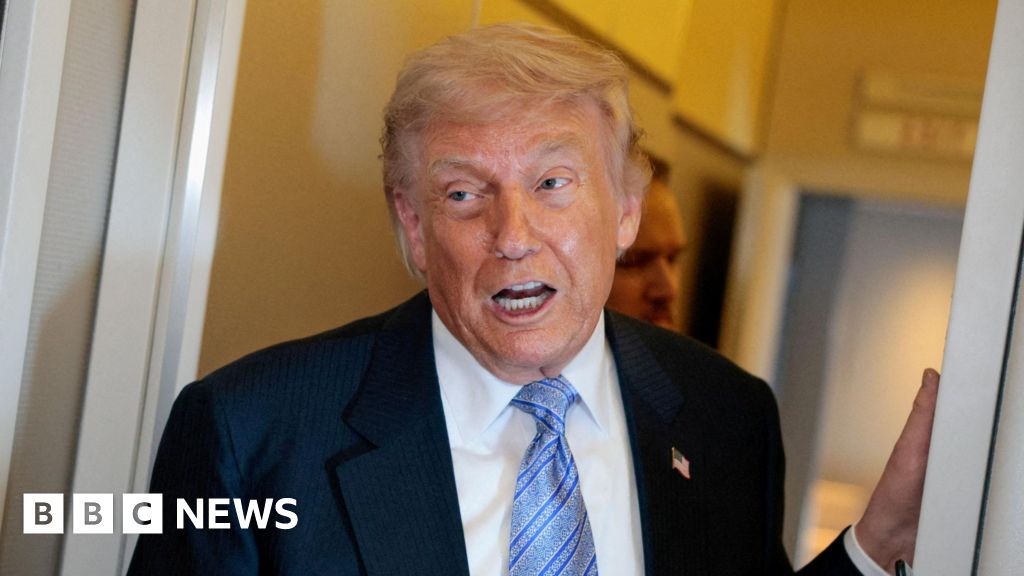
Trump said he called off a planned Tuesday military attack on Iran after requests from Qatar, Saudi Arabia and the UAE, but warned the US could still launch a large-scale assault if talks fail. The standoff comes amid continued US pressure on Iranian ports, Iran’s control of the Strait of Hormuz, and ongoing negotiations over nuclear restrictions and sanctions relief. The article points to elevated geopolitical risk with direct implications for oil prices, regional security and broader market sentiment.
The key market takeaway is that the marginal probability of an imminent strike has fallen, but the premium for a rapid escalation path has not disappeared. That creates a classic “volatility down, tail risk still bid” setup: front-end crude and defense vol should compress on de-escalation headlines, yet any failed negotiation can still gap energy higher because the Strait of Hormuz risk is a binary supply shock, not a gradual one. The market is likely underpricing how much of the oil curve is already hostage to headline sequencing rather than physical flows.
The second-order effect is on Gulf intermediaries and logistics. If regional states are actively shaping the diplomatic channel, they are signaling preference for stability over maximal pressure, which tends to support Gulf sovereign risk assets and local infrastructure/capex plans while reducing the odds of a broadening regional conflict that would hit shipping, insurance, and port operations. Conversely, any renewed blockade dynamics or missile exchange would quickly spill into marine insurance, LNG freight, and non-U.S. defense procurement, with the biggest move likely in firms tied to missile defense, ISR, and munitions replenishment rather than traditional manned-platform primes.
Politically, the domestic constraint is meaningful because it caps how long a maximalist military posture can be sustained without negotiation cover. That argues for a higher likelihood of a negotiated pause than a full campaign, but also a higher probability of whipsaw outcomes: short-lived relief rallies in risk assets followed by sharp reversals on any hardline rejection. The contrarian point is that the market may be too focused on the strike/no-strike binary and not enough on the fact that even a ‘deal’ could preserve sanctions, keep the naval blockade leverage, and leave oil structurally tight for months.
The best asymmetry is to own protection against upside energy shocks while fading premium in names that have already repriced for a full regional war. If talks stabilize, the unwind in defense and crude vol could be faster than fundamentals justify; if talks fail, the move higher in oil and missile-defense demand should be violent and immediate.
AI-powered research, real-time alerts, and portfolio analytics for institutional investors.
Request DemoOverall Sentiment
strongly negative
Sentiment Score
-0.55
