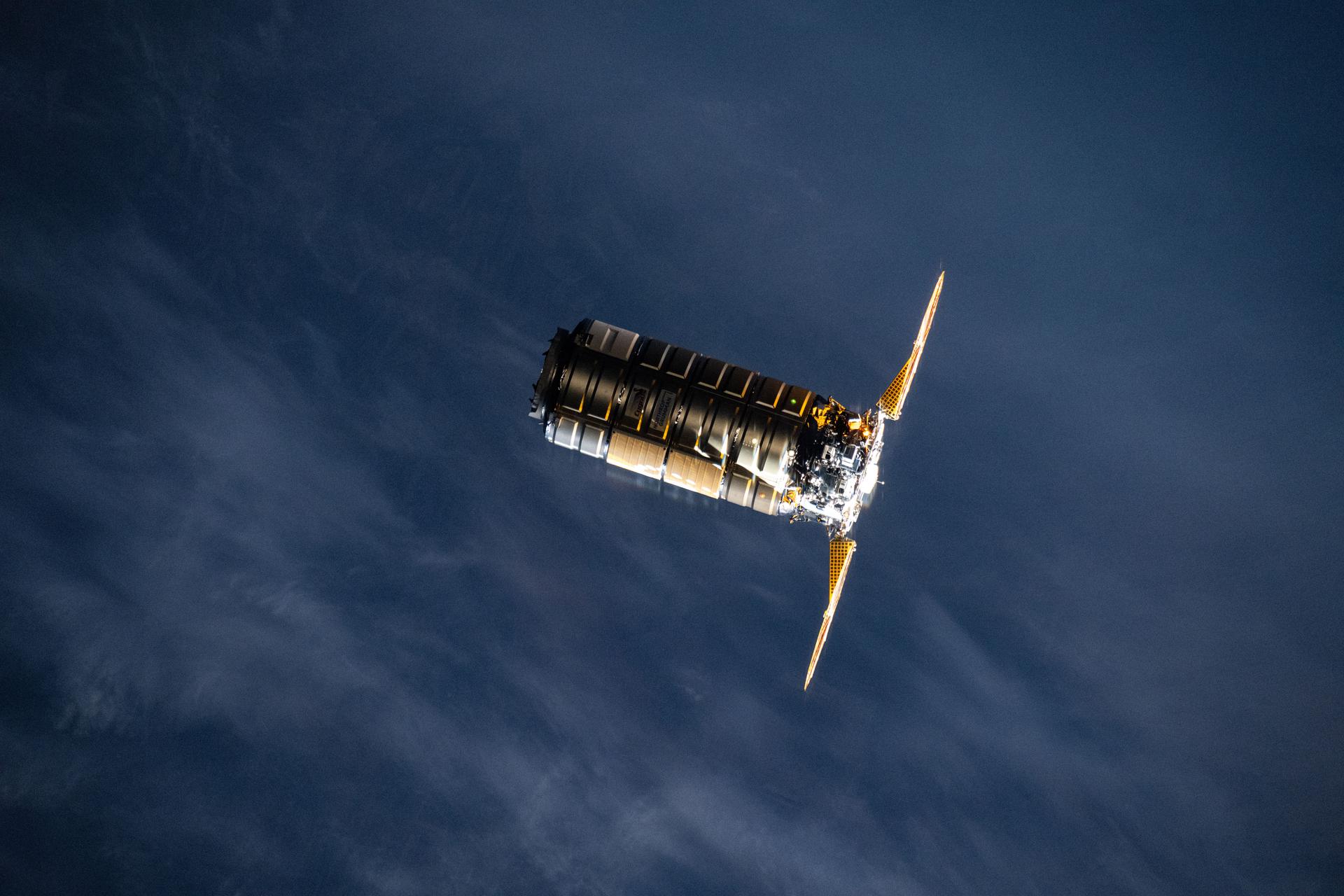
Approximately 11,000 pounds of cargo aboard a Northrop Grumman Cygnus XL (named S.S. Steven R. Nagel) will launch on a SpaceX Falcon 9 no earlier than 8:49 a.m. EDT on April 8 from SLC-40, Cape Canaveral; capture by Canadarm2 is scheduled for April 10 and the spacecraft will remain at the ISS until October before departing with several thousand pounds of trash for destructive reentry. Key payloads include a Cold Atom Lab module for quantum science, hardware to expand therapeutic stem cell production, model organisms for gut-microbiome research, and a space-weather receiver; media coverage and public virtual attendance will be available via NASA+, Amazon Prime, YouTube and other NASA channels.
Northrop stands to extract more annuity-like revenue and follow-on services value from repeated commercial resupply missions than the market currently prices; commercial cargo work cross-subsidizes high-margin integration and sustainment work on larger programs, compressing revenue cyclicality over a 12–36 month horizon. The collaboration with low-cost launch providers shifts the value pool toward systems integration, long‑term consumables and on-orbit servicing — segments where incumbents with deep ISS experience can expand margins without proportionate capital expenditure.
Second-order beneficiaries include suppliers of precision composites, thermal protection and avionics who face multi-year demand visibility from sustained CRS-style manifesting; conversely pure-play launch vehicle manufacturers without integration offerings face margin pressure and must either verticalize or specialize. Key catalysts are operational milestones (successful capture, on-orbit experiment validation) that can drive re-rating within weeks, while program-level risks (NASA budget reprioritization, manifest cancellations) could erase meritocratic gains over quarters to years.
Consensus underestimates the optionality embedded in on-orbit services revenue and downstream data/IP from microgravity R&D (biotech and quantum), which can produce partnership and licensing streams beyond contract cashflows. That optionality is asymmetric: a clean operational run catalyzes visible revenue accretion and analyst revisions in 3–12 months; a failure is a discrete negative event but not existential given contract diversification, so position sizing should favor controlled upside exposure with limited tail hedges.
AI-powered research, real-time alerts, and portfolio analytics for institutional investors.
Request DemoOverall Sentiment
neutral
Sentiment Score
0.00
Ticker Sentiment
