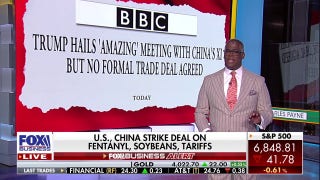
Goldman Sachs CEO David Solomon expressed optimism regarding recent US-China trade talks between President Trump and President Xi Jinping, despite labeling decades of past US trade policy with China as a "mistake." Solomon believes these discussions could foster a more constructive and reciprocal trade system, following Trump's announcement of tariff cuts on Chinese imports and agreements on agricultural purchases, fentanyl enforcement, and a pause on rare-earth export limits. This development signals a potential de-escalation of trade tensions and a move towards a more balanced economic relationship between the two largest economies.
Goldman Sachs CEO David Solomon expressed moderate optimism regarding the recent Trump-Xi talks, despite characterizing decades of prior US-China trade policy as a "mistake." The discussions, which included President Trump's announcement of tariff cuts on Chinese imports, signal a potential de-escalation of trade tensions. This positive sentiment is reinforced by agreements on agricultural purchases, fentanyl enforcement, and a pause on rare-earth export limits.
Solomon emphasized the necessity for a more constructive and reciprocal trade system, moving away from past policies that he deemed flawed. The reported agreements, particularly on farm goods like soybeans and rare-earth export limits, suggest a tangible shift towards addressing key sticking points in the bilateral relationship. This could alleviate some supply chain pressures and reduce input costs for industries reliant on these commodities.
While the immediate outcome is positive, the underlying criticism of past policies highlights the structural challenges in US-China trade. The previous threat of a 100% tariff on Chinese goods, set for November 1st, 2025 (or sooner), underscores the fragility of the truce. Investors should monitor the implementation of these agreements and any further policy shifts, as the long-term trajectory of trade relations remains subject to geopolitical dynamics.
AI-powered research, real-time alerts, and portfolio analytics for institutional investors.
Overall Sentiment
moderately positive
Sentiment Score
0.55
Ticker Sentiment
