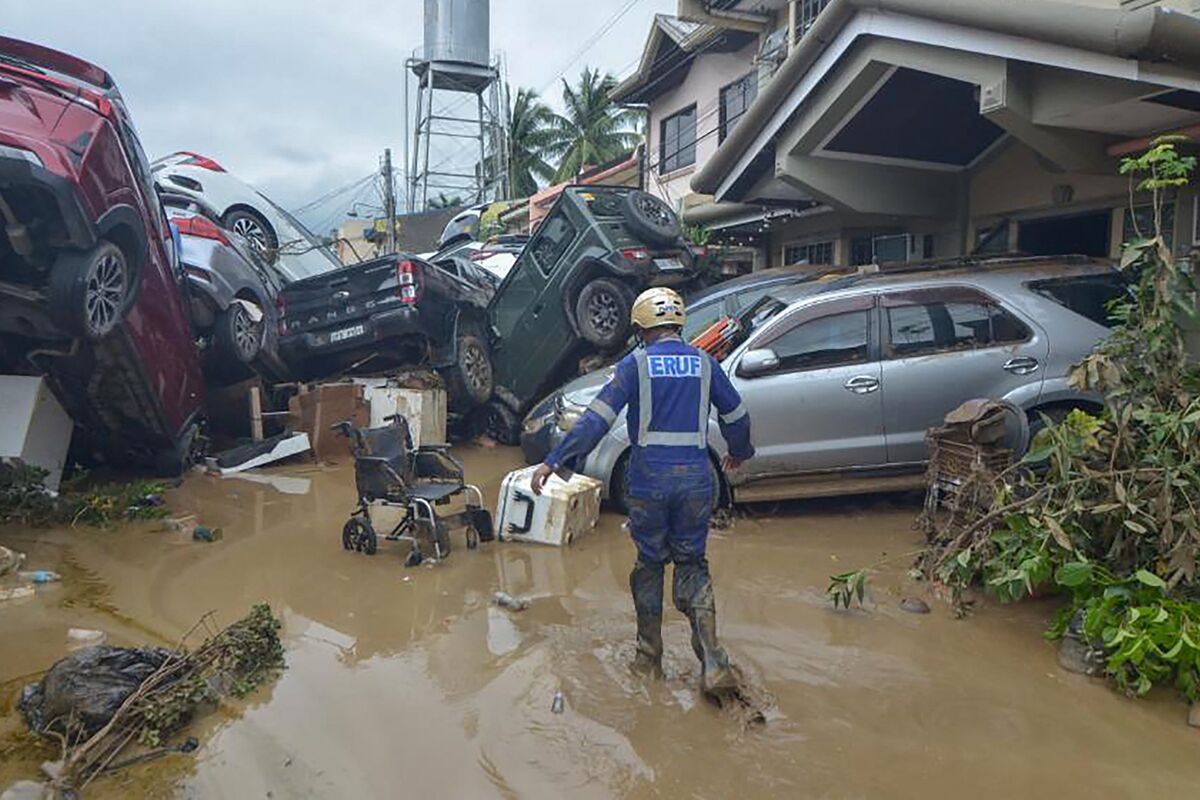
Typhoon Kalmaegi has resulted in 59 fatalities and displaced nearly half a million people across central provinces of the Philippines, particularly Cebu, and is now tracking towards Vietnam, posing a significant humanitarian and potential economic risk to the region.
Typhoon Kalmaegi has caused significant humanitarian damage in the Philippines, resulting in 59 fatalities and displacing nearly 500,000 individuals, primarily in central provinces like Cebu. The storm led to widespread flooding and submerged homes, highlighting severe infrastructure vulnerability in the affected regions.
The typhoon is now tracking towards Vietnam, extending the potential for further disruption across Southeast Asia. This event, described as one of the deadliest in recent years for the Philippines, carries a notable "potential economic risk to the region," as indicated by the summary, despite the absence of specific financial market tickers.
While automated sentiment and market impact signals register as neutral, the scale of displacement and infrastructure damage implies localized economic strain, potential reconstruction costs, and disruptions to local supply chains. Investors should recognize that such widespread natural disasters can affect regional GDP growth and consumer activity in the short to medium term, even without direct impact on major listed companies.
AI-powered research, real-time alerts, and portfolio analytics for institutional investors.
Request DemoOverall Sentiment
neutral
Sentiment Score
0.00
