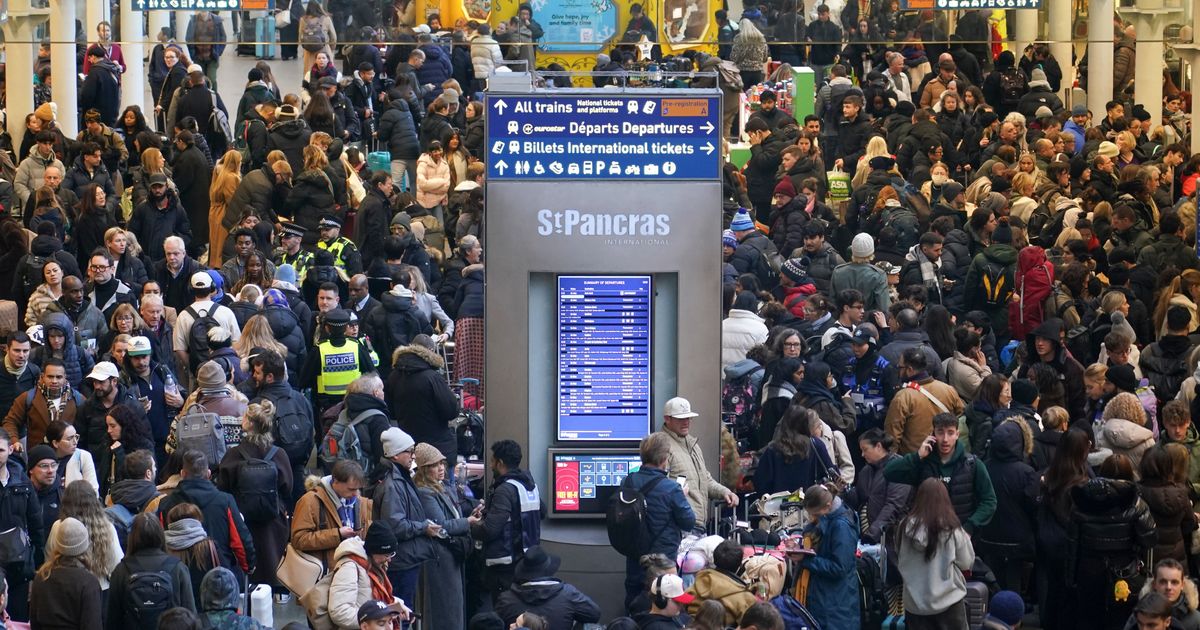
Power supply failures in part of the Channel Tunnel and a failed LeShuttle train caused Eurostar passenger services to be suspended until further notice, stranding travelers at Gare du Nord and elsewhere during peak holiday travel. Eurotunnel said the outage began overnight, a technical intervention is underway and traffic was expected to resume gradually Tuesday afternoon; the disruption highlights operational vulnerability of the single fixed cross‑Channel rail link and poses near‑term revenue and reputation risks for operators and potential short‑term logistical knock‑on effects for cross‑channel freight and vehicle movements.
Market structure: The incident creates short-term winners (airlines, ferries, car rentals) and losers (rail passenger operators and Channel Tunnel operator Getlink/Eurotunnel). Expect airlines like easyJet (LSE: EZJ) and IAG (LSE: IAG) to pick up displaced passengers for 2–8 weeks, supporting ticket yields by ~5–15% on peak routes; Getlink (Euronext: GET) faces reputational and revenue pressure from lost passenger and vehicle shuttle volumes.
Risk assessment: Tail risks include a prolonged outage or regulator-mandated capex/fines (run-rate shock €200–€500m) that would materially hit GET EBITDA and bond spreads; immediate disruption lasts days, booking patterns shift for weeks, and durable modal perception damage could take quarters to repair. Hidden dependencies: freight throughput and insurance losses are concentrated revenue streams for the tunnel operator and can amplify P&L moves if disrupted. Key catalysts: official incident report and maintenance/capex announcement within 30–90 days.
Trade implications: Tactical trades: tilt short-duration long exposure to airlines (EZJ/IAG) and short GET equity or buy puts on GET for a 3–12 month horizon; consider a pair trade long EZJ (2–3% position) / short GET (1–2%) to capture modal substitution. Options: buy 4–8 week call spreads on EZJ (ATM to +15%) and buy 3–6 month GET puts 10% OTM as asymmetric downside protection. Rotate portfolio overweight to travel/airline equities vs rail infrastructure until investigations clear (2–3 months).
Contrarian angles: The market may over-penalize GET for a single outage — if the probe clears operator negligence and no major capex is required, GET could rebound >20% from oversold levels; conversely, regulators could force upgrades that justify further downside. Historical parallels show airline uplift is typically front-loaded and fades after 4–8 weeks; size positions accordingly and use options to limit tail exposure.
AI-powered research, real-time alerts, and portfolio analytics for institutional investors.
Request DemoOverall Sentiment
moderately negative
Sentiment Score
-0.45
