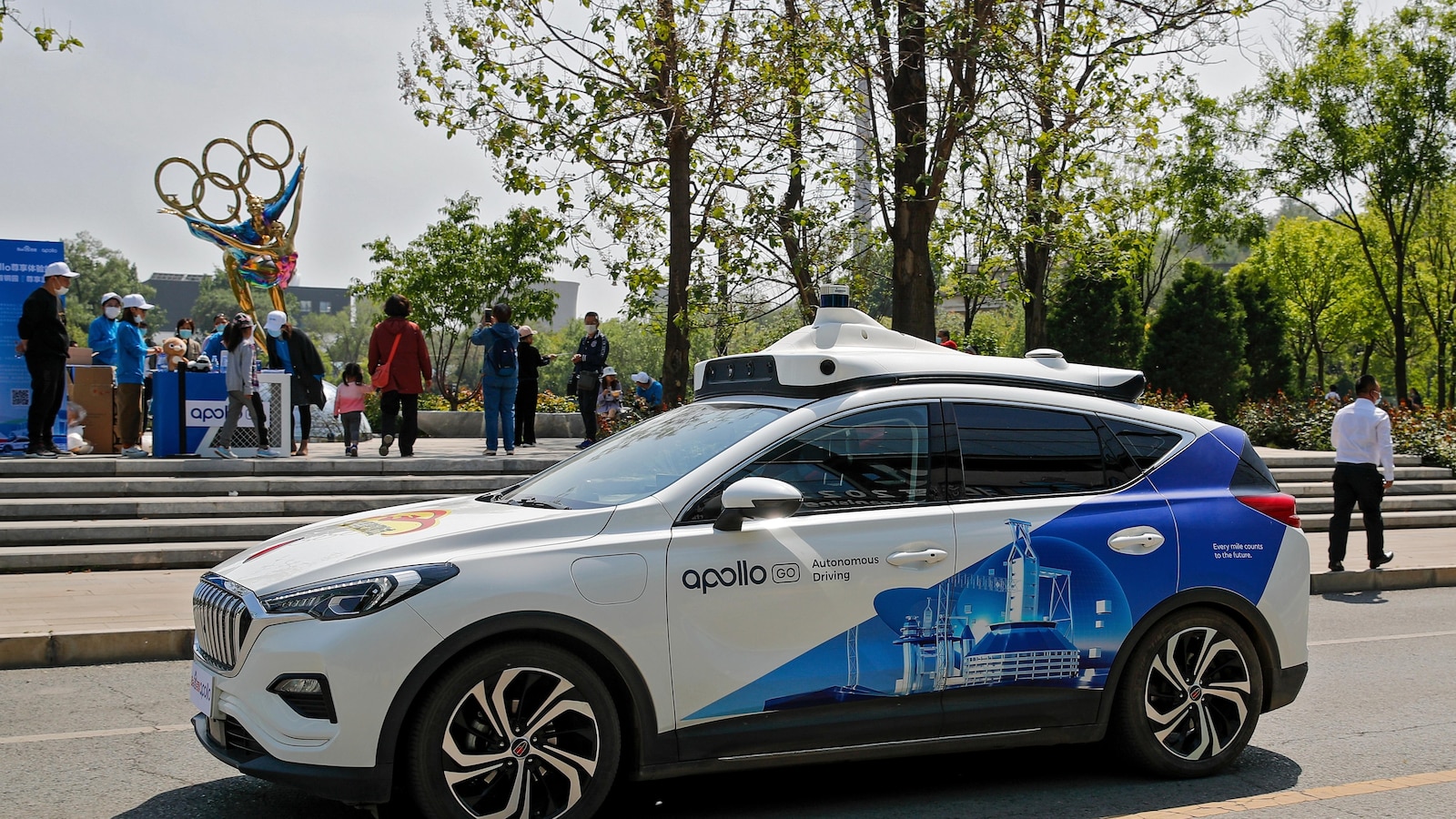
Uber and Lyft announced separate partnerships with Baidu's Apollo Go to pilot robotaxi services in London, with testing expected to begin in the first half of 2026; Lyft expects to test an initial fleet of dozens of purpose-built Apollo Go RT6 vehicles next year and plans to scale to hundreds pending regulatory approval. The moves come as the UK accelerates a government-run self-driving taxi pilot and amid competition from Waymo and local startup Wayve, making regulatory clearance and fleet scaling the key near-term execution risks for investors tracking autonomous-mobility exposure.
Market structure: Baidu (BIDU) is the primary winner — it provides the autonomous stack and can monetize fleet services, while Uber (UBER) and Lyft (LYFT) gain potential unit-cost reductions and network reach in London starting H1 2026. Expect downward pressure on per-ride variable costs (estimate 20–40% over time vs driver-led rides) and increased ride supply, which will compress prices in commoditized urban segments but expand total addressable rides.
Risk assessment: Key tail risks are regulatory rollback after a high-profile accident, UK data/sovereignty rules blocking Chinese stack use, or US-China restrictions on software updates; any one could erase projected upside within weeks. Near-term (days–months) volatility will track regulatory announcements; medium-term (6–18 months) depends on scalability (dozens→hundreds), and long-term (2–5 years) depends on insurance, maintenance capex and mixed-fleet cannibalization.
Trade implications: Direct trade: overweight BIDU as primary leverage to Apollo Go commercialization; tactical long UBER vs short LYFT pair to express superior margin diversification and enterprise revenue. Use LEAP calls on BIDU for asymmetric upside (12–24 month expiries) and buy short-dated protective puts on UBER/LYFT to hedge regulatory tail around UK approval windows.
Contrarian angles: Consensus underestimates operational capex and local incumbents (Wayve, local regulators) which can slow monetization; historical parallels (Waymo’s slow monetization 2018–2024) suggest multi-year ramp, not immediate profits. If markets price BIDU for instant margin re-rating, there is a meaningful mean-reversion risk — re-evaluate after H1 2026 pilot metrics (uptime, per-ride cost, insurance rates).
AI-powered research, real-time alerts, and portfolio analytics for institutional investors.
Request DemoOverall Sentiment
mildly positive
Sentiment Score
0.30
Ticker Sentiment
