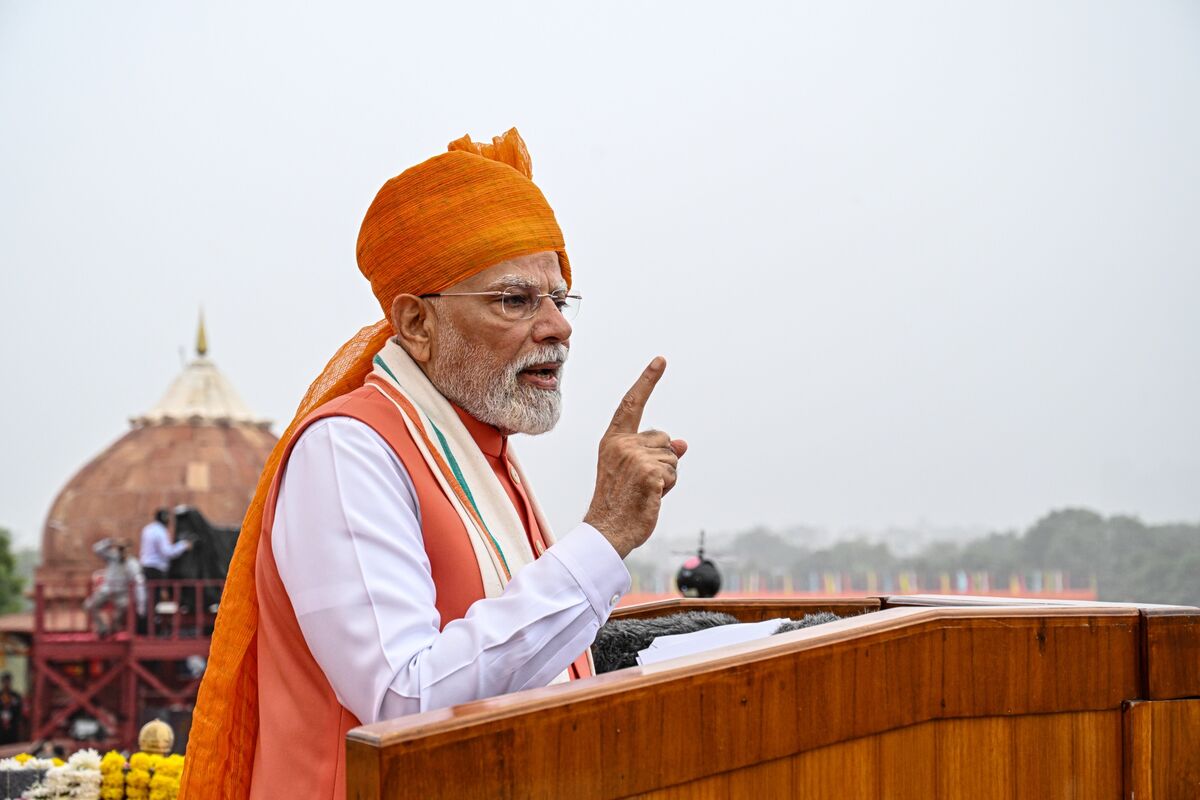
Indian Prime Minister Narendra Modi unexpectedly announced a cut to consumption taxes, surprising his own officials and state finance ministers. This unilateral decision, made without prior consultation, precedes a planned Goods and Services Tax (GST) overhaul and shifts the burden of managing revenue losses to state finance ministers.
Prime Minister Narendra Modi's unilateral announcement of a cut in consumption taxes signals a significant shift in India's fiscal policy execution, characterized by a centralized and politically-driven approach. The decision was made without consulting state finance ministers or the bureaucrats who had been negotiating a comprehensive Goods and Services Tax (GST) overhaul for the past year. This move preempts the established, more collaborative policy-making process, introducing considerable uncertainty. The primary immediate consequence is the transfer of the fiscal burden from the revenue loss directly onto state governments, which could strain federal-state relations and impact state-level fiscal stability. The surprise nature of the announcement, while potentially aimed at stimulating consumption or achieving a political objective, disrupts the predictability of India's regulatory environment and complicates the ongoing structural tax reforms.
AI-powered research, real-time alerts, and portfolio analytics for institutional investors.
Request DemoOverall Sentiment
mixed
Sentiment Score
0.00
