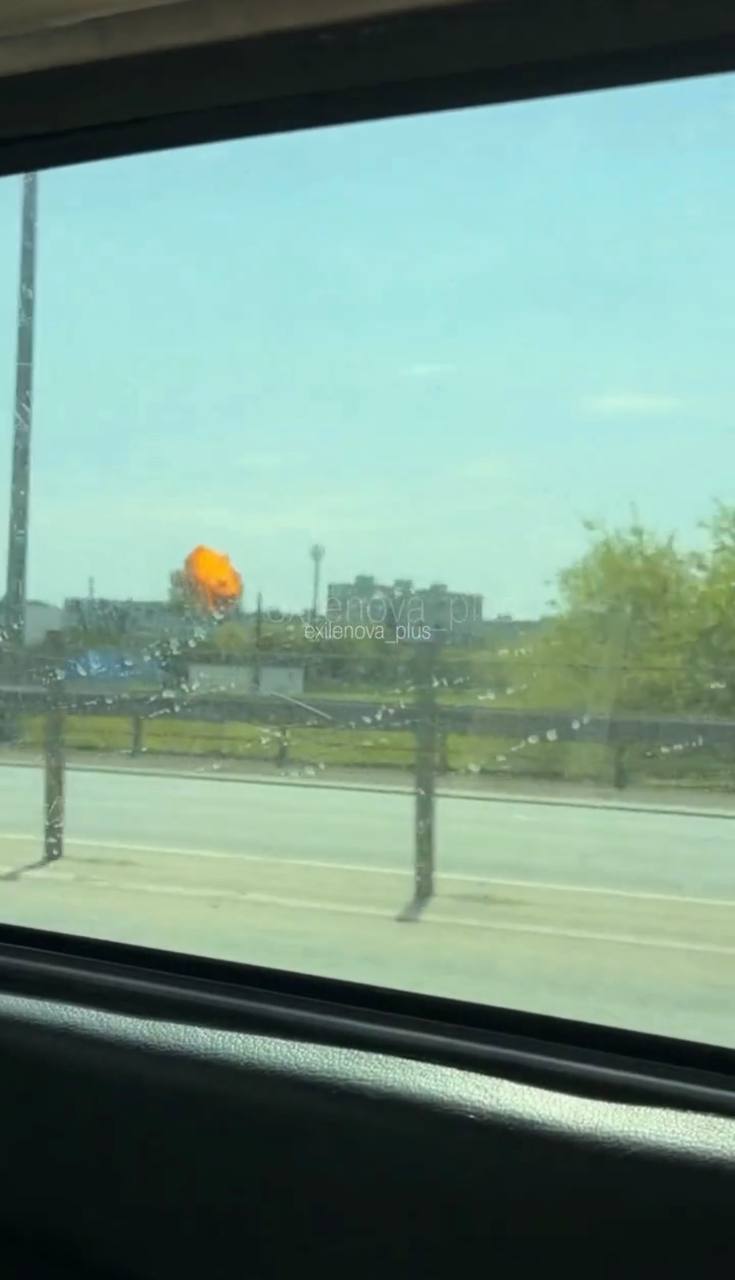
Ukrainian drones struck a gas industry facility in Russia's Orenburg Oblast, with Russian officials saying nine drones were downed and debris damaged a residential building, school, and kindergarten but caused no casualties. Separate reports alleged hits near the Strela missile plant and at Orsknefteorgsintez, one of Russia's largest refineries with 6.6 million tons of annual crude capacity, while smoke was also reported near a Chelyabinsk zinc processing plant. The attacks highlight continued cross-border escalation and risk to Russian energy and industrial infrastructure.
This is less about immediate physical damage than about the widening strategic radius of Ukraine’s strike campaign. Hitting deep-Urals energy and industrial nodes forces Russia to spend scarce air-defense inventory over a much larger geography, which is an attritional advantage for Kyiv even when no single asset is decisively disabled. The second-order effect is a higher probability of intermittent outages, rail delays, and unplanned maintenance across fuel-processing and defense-adjacent industrial chains, which tends to show up first in regional product spreads and logistics bottlenecks rather than headline crude prices.
For energy markets, the near-term impulse is more about domestic Russian product tightness than global benchmark disruption. Repeated refinery and processing threats can lift internal gasoline/diesel differentials, reduce exportable clean product volumes, and force Russia to redirect barrels into lower-value channels; that is modestly supportive for refined-product crack spreads outside Russia, especially in Europe and the Black Sea basin. The real risk is not one strike, but frequency: a multi-week cadence of successful deep strikes would start to price in a structural insurance premium on Russian midstream and downstream assets.
The contrarian angle is that this can remain underpriced if traders focus only on crude and ignore the more vulnerable bottlenecks: power, compression, rail loading, and repair crews. Even where damage is limited, the threat alone raises capex, operating downtime, and inventory buffers, which gradually degrades throughput and defense-industrial efficiency. If Western support remains stable, this campaign is more likely to erode Russian logistics over months than to create a sudden commodity shock over days.
AI-powered research, real-time alerts, and portfolio analytics for institutional investors.
Request DemoOverall Sentiment
mildly negative
Sentiment Score
-0.20
