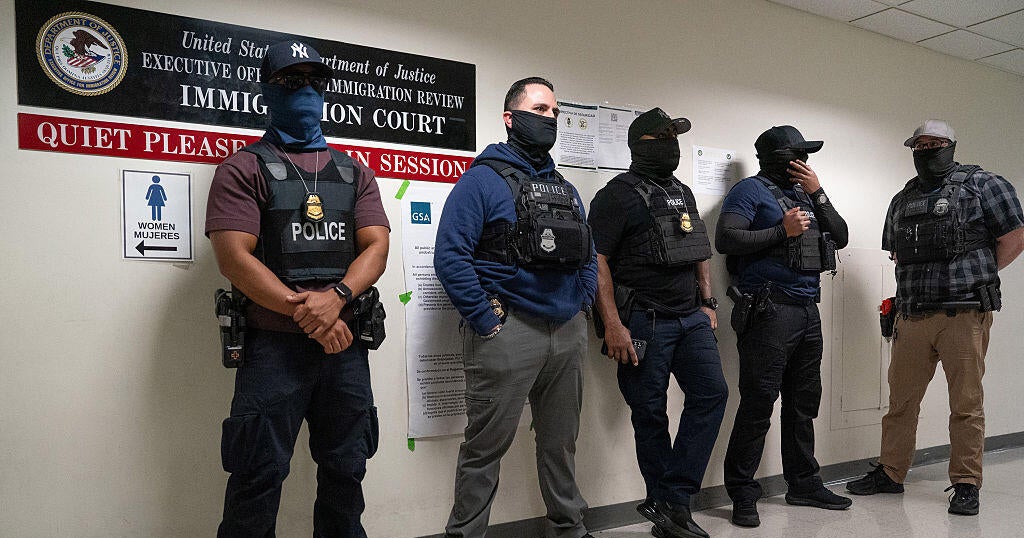
The Trump administration has launched a nationwide effort in immigration courts to dismiss more than 8,000 active asylum claims by filing 'pretermit' motions that argue applicants can be deported to third countries (including Guatemala, Honduras, Ecuador and Uganda) under so-called safe-third-country arrangements. A late-October Board of Immigration Appeals order directed judges to resolve these motions before considering asylum merits and placed the burden on applicants to show why deportation to a third country would expose them to persecution; immigration attorneys report the tactic is affecting cases from Iran, Nicaragua and Russia and is being challenged in court. DHS says it is using lawful bilateral arrangements to reduce the asylum backlog, while advocates argue the strategy effectively curtails access to U.S. protection and coerces withdrawals.
Market structure: Policy to pretermit thousands of asylum claims reallocates enforcement spend and operational demand toward government services, detention operators and removal logistics. Direct winners: private prison operators (GEO, CXW) and government IT/contractors (CACI, LDOS)—they capture incremental bed-days, transport charters and adjudication support; losers include labor-intensive small caps in agriculture/restaurant segments where low‑skilled immigrant labor comprises >15–25% of workforce. Cross-asset: expect idiosyncratic equity moves in the named contractors, modest regional muni stress in border counties, and knee‑jerk FX/remittance volatility in Central American currencies.
Risk assessment: Tail outcomes are binary and high-impact—if federal courts or the BIA reverse/limit the tactic within 30–90 days, beneficiary stocks could gap down 20–40%; if policy holds and is expanded, earnings upside for contractors could be +15–30% over 3–12 months. Hidden dependency: contracting cadence and DOJ/ICE budget allocations (not public) drive realized revenue; litigation timelines and election outcomes are primary catalysts. Monitor court dockets and DHS contract announcements as 1–3 month triggers.
Trade implications: Favor 3–6 month overweight in GEO/CXW (direct exposure to bed-day demand) and modest 1–2% positions in CACI/LDOS for services; hedge with short-dated puts sized 20–50% against litigation risk. Pair trades: long GEO/CXW vs short small-cap consumer discretionary names or XRT-like baskets that are labor-sensitive. Options: use 3–6 month call spreads on contractors to cap premium and buy protective puts around known court-decision windows.
Contrarian angles: Consensus underestimates litigation probability and labor-substitution effects—if courts block policy, private prison upside is limited and shares may be overbought; alternatively, a sustained policy shock could accelerate automation (DE, ABB) in low-skilled sectors, creating a multi‑quarter thematic winner. Historical parallel: 2018–2020 enforcement attempts were litigated and volatile; prudent positions are asymmetric and event‑hedged rather than directional full‑risk stakes.
AI-powered research, real-time alerts, and portfolio analytics for institutional investors.
Request DemoOverall Sentiment
moderately negative
Sentiment Score
-0.40
