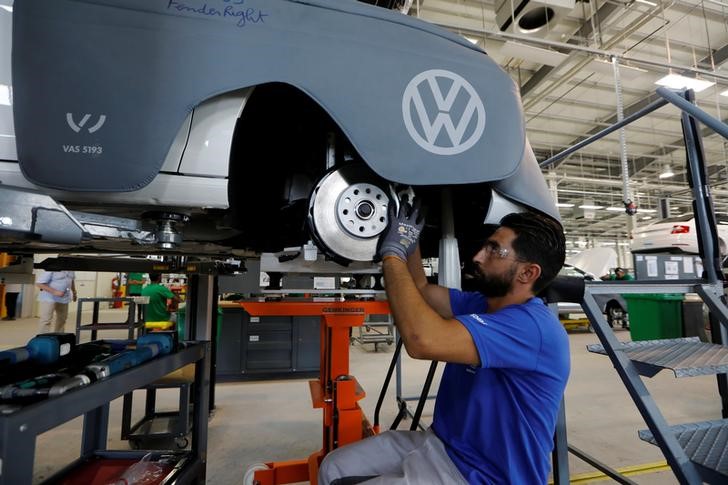
Volkswagen plans to cut ~50,000 jobs in Germany by 2030 and warns operating return could be as low as 4% this year, signaling material margin pressure. The group is enforcing plant-specific manufacturing cost targets and decentralizing its footprint to lower breakeven amid heavy EV capex and intensifying competition from lower-cost Chinese rivals. The restructuring is defensive and aimed at protecting margins and reallocating capex, and could meaningfully affect VW equity and supplier profitability in the near to medium term.
VW’s move to hard plant-level cost targets is effectively a signal that breakeven will be managed via capacity shrinkage rather than price competition. That shifts the competitive battleground from product-led volume share to structural cost delta—favoring OEMs and suppliers that can localize production near growth markets (China, Eastern Europe) and absorb fixed‑cost reductions quickly.
Second‑order supply‑chain winners will be Chinese OEMs and localized Tier‑1/Tier‑2 suppliers: more CKD/knock‑down assembly and component sourcing in Asia/Eastern Europe increases addressable volume for battery makers, stamping, and low‑cost electronics suppliers, while German heavy OEM suppliers with high fixed cost and long cycle time (tyre, powertrain castings, traditional braking systems) face multi‑year volume declines. This dynamic also opens M&A windows—private equity and non‑German OEMs can buy capacity cheaply if unions/politics slow headline restructuring.
Key tail risks are political and energy price reversals. A sustained fall in industrial electricity prices or a political intervention that limits layoffs or forces domestic production mandates would materially reduce the need for 50k cuts and re‑rate VW’s outlook within quarters; conversely, protracted German labor actions would accelerate outsourcing and inventory blows to suppliers over 3–12 months. Watch near‑term catalysts: VW quarterly guidance updates, union negotiation milestones, and EU trade responses to rising China‑made EV penetration.
Contrarian read: the market may be overstating structural demand loss in Europe and understating management’s ability to redeploy capital into higher‑margin, software‑defined features and local EV variants. If VW executes the footprint reset without brand erosion, the stock could re‑rate on margin expansion in 24–36 months—making selective, hedged exposure attractive versus naked short risk.
AI-powered research, real-time alerts, and portfolio analytics for institutional investors.
Request DemoOverall Sentiment
strongly negative
Sentiment Score
-0.60
