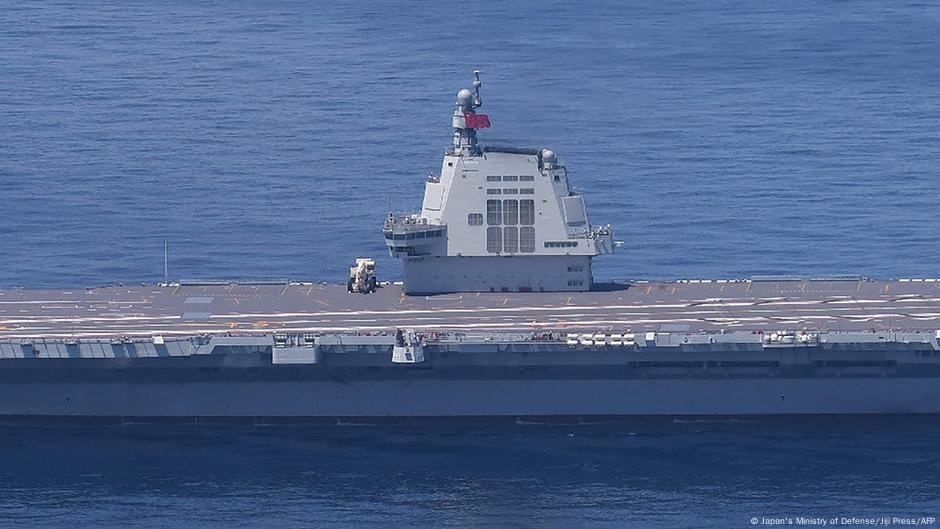
China's newest aircraft carrier, the Fujian, has transited the Taiwan Strait en route to the South China Sea for scientific research trials and training missions, a move closely monitored by Taiwan. This deployment, part of the Fujian's sea trials before formal service, underscores Beijing's accelerating naval expansion and its strategic intent to project power across the Pacific, potentially heightening geopolitical tensions in the region and challenging the U.S. and its allies.
China's naval modernization is advancing tangibly with its third aircraft carrier, the Fujian, transiting the Taiwan Strait to conduct sea trials in the South China Sea. This maneuver, officially termed a 'routine arrangement' for training, nonetheless serves as a clear demonstration of Beijing's growing power projection capabilities in a strategically vital waterway. The Fujian is reportedly more advanced than China's two active carriers, the Liaoning and Shandong, and is expected to support aircraft with larger payloads and more fuel, marking a significant step-up in naval aviation capacity. While the immediate market impact is low, the event reinforces a persistent geopolitical theme: China's long-term strategy to expand its military reach in the Pacific and challenge the regional influence of the U.S. and its allies. The close monitoring by Taiwan's Defense Ministry highlights the underlying tensions and the incident's role as a key data point for assessing regional stability.
AI-powered research, real-time alerts, and portfolio analytics for institutional investors.
Request DemoOverall Sentiment
neutral
Sentiment Score
0.00
