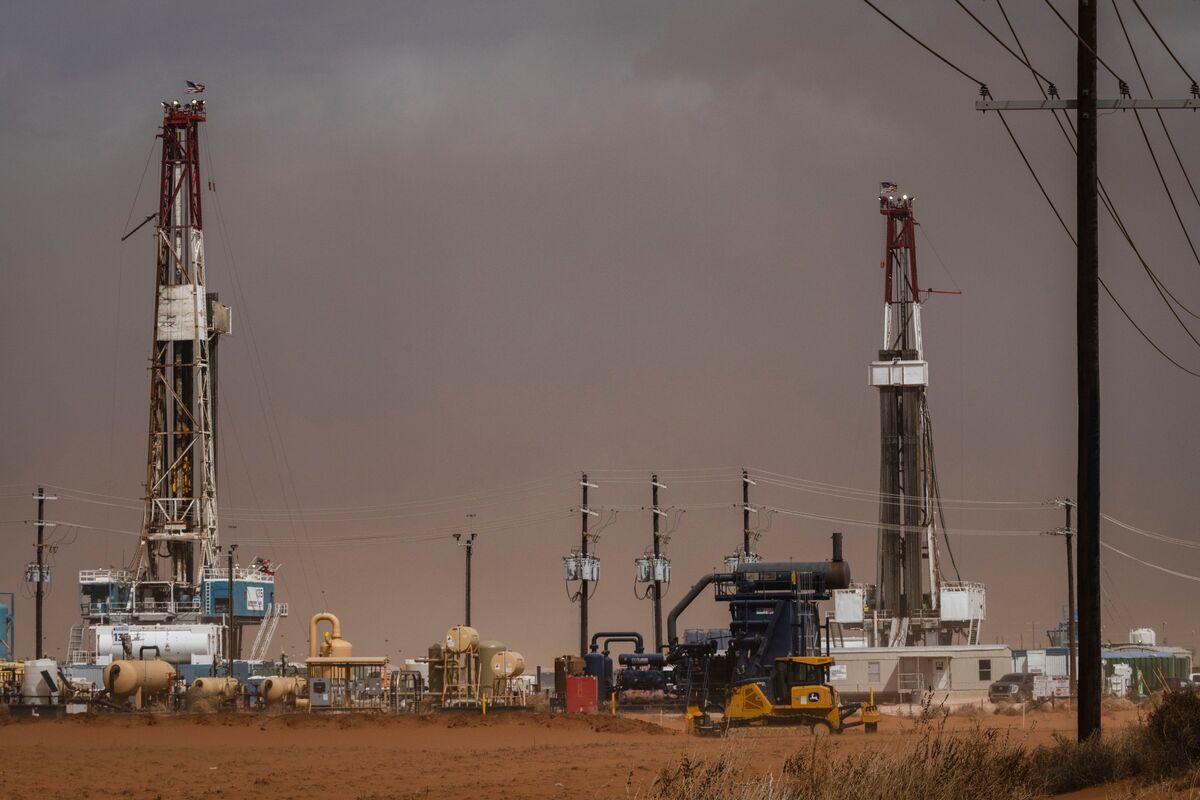
Citi forecasts US shale could add more than 100,000 barrels per day by 2027 as some large producers start adding rigs in H2 this year, and roughly 815,000 bpd of incremental US shale crude could hit the market through 2028. The analyst attributes the acceleration to higher oil prices driven by the Middle East conflict, implying a material increase in US supply that could weigh on global oil prices across 2026–28.
Winners will be those with operational optionality and immediate takeaway access: public E&Ps with Permian footprint and high-margin barrels can convert a modest production re-acceleration into outsized FCF quickly, while privately held operators will act faster but capture more margin volatility. Oilfield services (directional drilling, pressure‑pumping, completions) face a multi‑quarter lead time to add capacity, creating a window where dayrates spike and margins re‑rate for providers that have spare equipment and crews.
Midstream owners with spare gathering and takeaway capacity are asymmetric beneficiaries — incremental volumes flow to the lowest friction routes and widen regional price differentials, compressing refiners’ crude economics in the short run while increasing fee-bearing throughput for pipelines and storage owners. Conversely, refiners and coastal exporters that rely on tight differentials suffer margin pressure if incremental inland barrels displace imported crude or push blends away from preferred specs.
Key reversal risks operate on different clocks: a sudden demand shock (quarters), OPEC policy response or SPR releases (weeks–months), or rapid service‑industry capacity expansion that caps dayrates (6–18 months). Also watch the capital allocation cycle — if public E&Ps prioritize returns over growth, the supply response will be muted despite attractive price signals.
The consensus underestimates two things: the speed at which service inflation can erode per‑well IRR (raising the breakeven for incremental rigs) and the stickiness of takeaway constraints that convert volume growth into regional basis losses rather than global surplus. That makes a pure long‑E&P bet blunt; targeted exposure to midstream optionality and short‑dated service tightness offers cleaner asymmetric payoffs.
AI-powered research, real-time alerts, and portfolio analytics for institutional investors.
Request DemoOverall Sentiment
mildly positive
Sentiment Score
0.20
Ticker Sentiment
