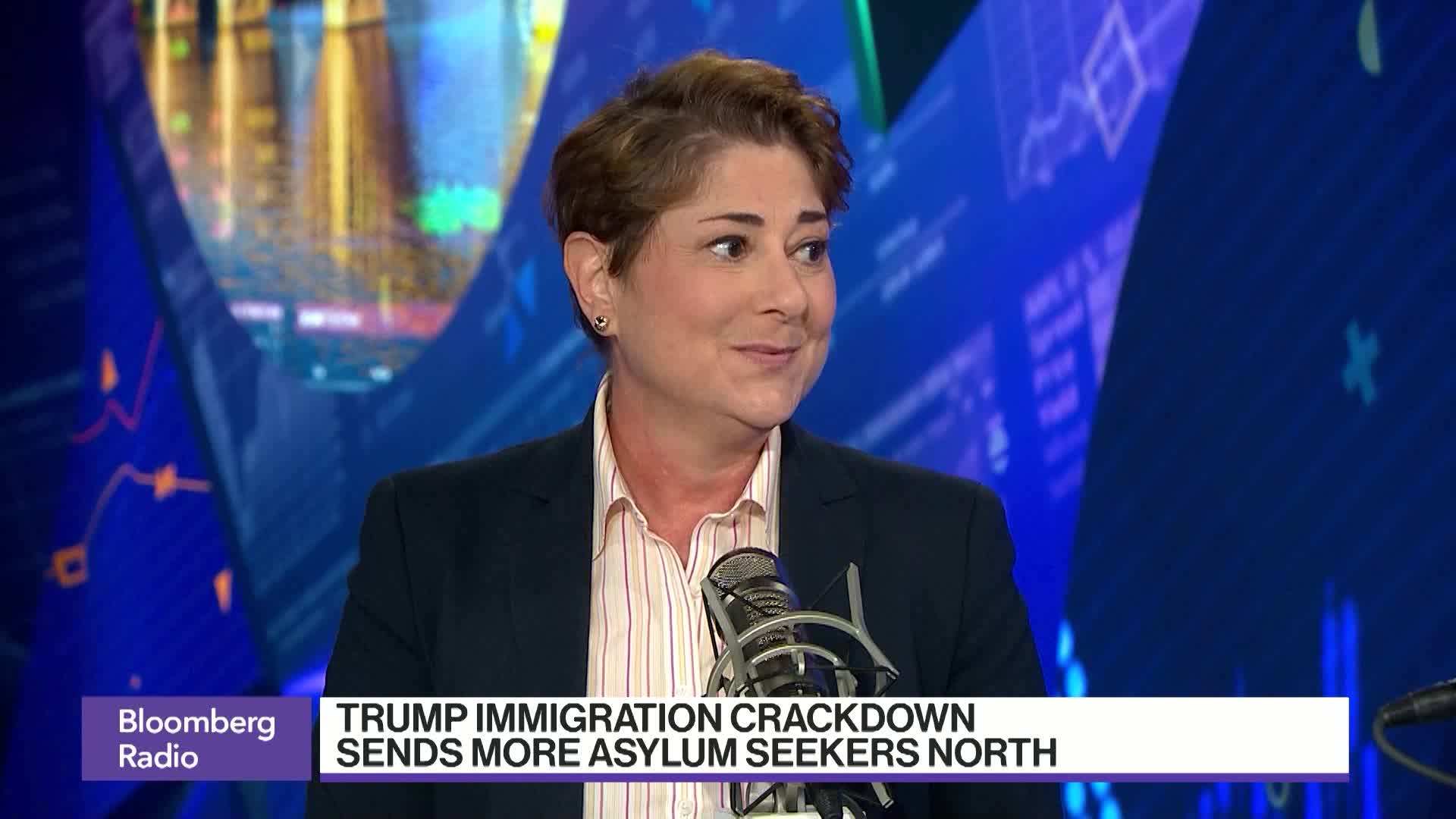
Recent financial news underscores the escalating debate surrounding Trump's tariffs, particularly their anticipated disruption to the food supply chain, even as some view their agricultural impact as a 'mixed bag.' Trade partners are racing to finalize deals before an August 1 deadline, while broader market discussions also address illiquidity as a persistent feature and the intensifying competition between traditional banks and private equity firms.
Current market discourse is dominated by significant political and economic uncertainty, primarily driven by anticipated trade policy shifts. The prospect of new tariffs under a Trump administration is forecast to cause major disruption to the entire food supply chain, according to Representative Gwen Moore. This view is partially counterbalanced by Agriculture Secretary Tom Vilsack, who characterizes the impact on the agriculture sector as a 'mixed bag,' suggesting a nuanced landscape with both winners and losers. The situation is intensified by an August 1 deadline, which is compelling international trade partners to accelerate deal-making, likely leading to heightened market volatility. Concurrently, broader market structure discussions highlight that illiquidity is being viewed as a persistent feature rather than a temporary anomaly, a condition that could be exacerbated by policy uncertainty. In a separate but relevant financial sector development, traditional banks are reportedly increasing their efforts to retain talent amid aggressive poaching from private equity firms, signaling ongoing competitive pressures within the industry.
AI-powered research, real-time alerts, and portfolio analytics for institutional investors.
Request DemoOverall Sentiment
mixed
Sentiment Score
-0.10
