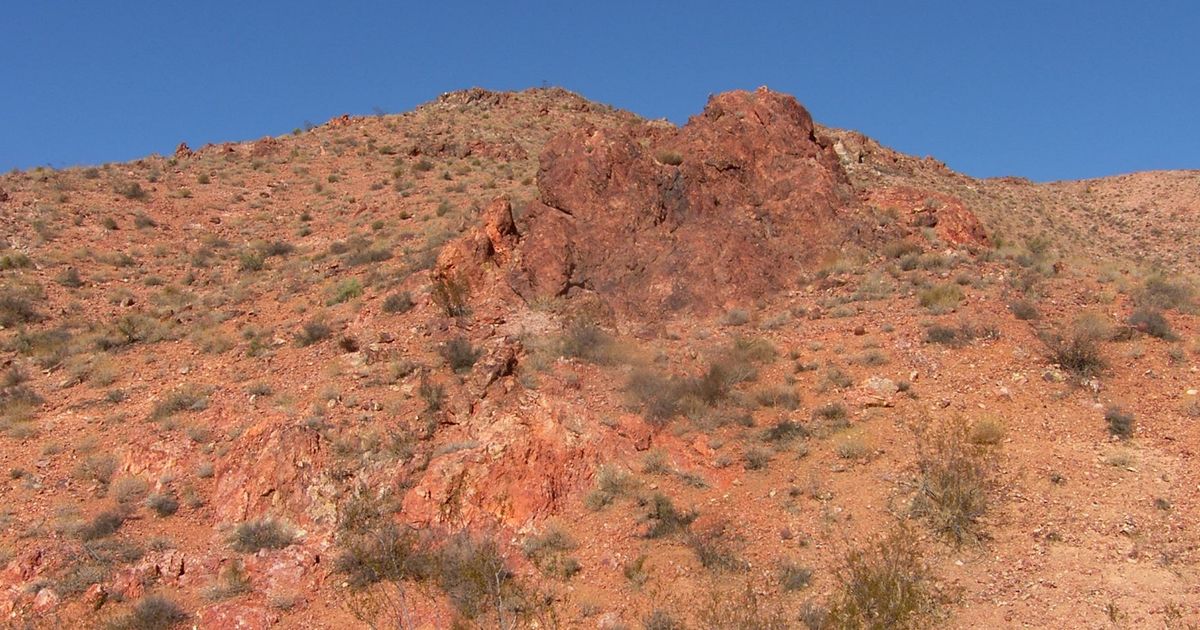
Arizona Gold & Silver reported assays from two core holes at its Philadelphia project: PC25-159 returned 28.41 m grading 0.68 g/t Au and 6.04 g/t Ag (from 318.61 m) with higher-grade subintervals, and PC25-160 returned 66.39 m at 0.293 g/t Au and 1.364 g/t Ag (from 327.66 m) with narrow higher-grade intercepts; the company estimates true thickness at ~60% of drilled thickness. Management says the Perry zone is now defined over ~165 m of strike but is truncated by sub east–west faults, the zone remains open at depth, deeper drilling is planned pending permits, and a CSAMT survey (10 lines by Zonge) has begun to refine targets and support a 3D integrated model.
Market structure: Near-term winners are Arizona Gold & Silver (AZASF) and service vendors (Zonge, drill contractors) if follow-up drilling and CSAMT validate strike/depth continuity; losers are nearby speculative explorers that compete for capital. This news is company-level (microcap) — it will not shift global gold supply/demand or bullion prices, but positive continuity could re-rate junior explorer multiples (potential reratings of +50–200% on discovery-type beats).
Risk assessment: Key tail risks are permitting delays (>6 months), structural complexity that prevents resource continuity (piano-key faulting), and equity dilution to fund deeper drills (could depress shares >40%). Immediate impact: price volatility over days as assays/CSAMT arrive; short-term (6–12 weeks) hinge on CSAMT and permit timing; long-term (6–18 months) depends on deep-drill results and resource conversion assumptions (true thickness ~60% currently).
Trade implications: For nimble risk budgets, a small speculative long in AZASF (2–3% of risk capital) is justified now, with staged adds to 5–7% if confirmatory triggers hit: permit within 3 months, CSAMT conductor across >300m, or follow-up assays >1.0 g/t over >30m true thickness. Use a 40% stop or 12‑month time stop; complement with a 6–12 month call-spread on GDXJ (buy 30% OTM / sell 60% OTM) sized 0.5–1% portfolio to capture sector upside with limited premium.
Contrarian angle: Consensus treats these holes as mildly positive, but markets underweight structural risk — if CSAMT+deep drilling confirm continuity at depth the stock could rerate materially; conversely, if CSAMT shows compartmentalization, expect a sharp repricing. Historical pattern: juniors with complex faulting often see early volatility then decisive moves once permits and deep rigs validate or refute continuity — plan positions around those binary catalysts.
AI-powered research, real-time alerts, and portfolio analytics for institutional investors.
Request DemoOverall Sentiment
mildly positive
Sentiment Score
0.25
Ticker Sentiment
