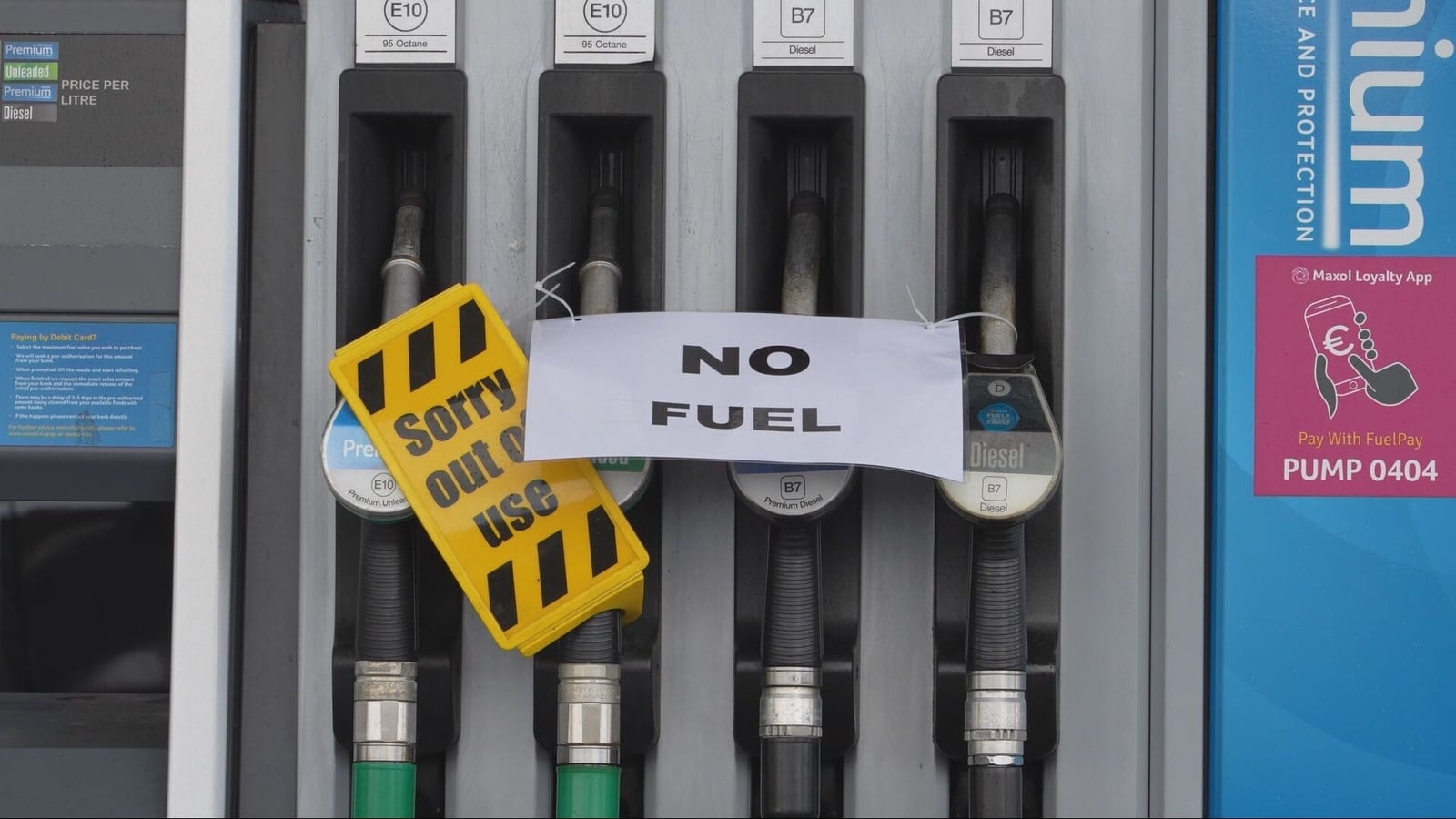
Fuel supply in Ireland could take up to 10 days to fully restore after days of blockades at key oil facilities, with around 600 of 1,500 filling stations already dry. Garda operations have cleared major blockades in Dublin, Galway and Foynes, and protesters at Rosslare are beginning to stand aside, but distribution is expected to recover in stages rather than all at once. The disruption is creating a national logistics bottleneck and near-term pressure on fuel availability and transport flows.
The market implication is not the headline disruption itself but the lagged normalization curve: even if physical access is restored, downstream distribution will likely stay tight for several days because tanker routing, station replenishment order, and driver scheduling all need to re-synchronize. That creates a short-lived but tradable spread between headline de-escalation and actual retail availability, which should preserve elevated local logistics costs and opportunistic pricing power for whoever can secure inventory first.
Second-order winners are not pure fuel retailers so much as asset-light transport and consumer businesses with better working capital and route flexibility. Smaller hauliers, delivery fleets, and regional distributors are most exposed because they cannot easily reroute or carry buffer inventory; larger integrated operators should be able to arbitrage the dislocation by supplying stranded geographies and capturing margin on emergency deliveries. The longer the recovery drags beyond a week, the more the issue shifts from a protest story to a service-reliability story, which tends to penalize convenience-led retail and time-sensitive logistics names.
The contrarian read is that the overhang may fade faster than expected once stations begin rationing demand and consumers top up opportunistically. If authorities keep reopening access points, the bottleneck becomes elasticity, not scarcity: buyers who stocked early will reduce near-term demand, causing a sharp but temporary normalization in volumes. That argues against chasing any outright energy-price momentum and instead favors relative-value exposure to businesses that benefit from volatility in freight and distribution rather than directional fuel prices.
Catalyst-wise, the key horizon is 3-10 days, not months: if the supply chain is still impaired after a full week, expect political pressure for emergency logistics support, temporary regulation, or priority allocation that can quickly compress margins for local intermediaries. Tail risk is another round of coordinated blockades or a safety-related bottleneck at a single port, which would turn a short disruption into a broader inventory event and amplify working-capital stress across transport-heavy sectors.
AI-powered research, real-time alerts, and portfolio analytics for institutional investors.
Request DemoOverall Sentiment
mildly negative
Sentiment Score
-0.34
