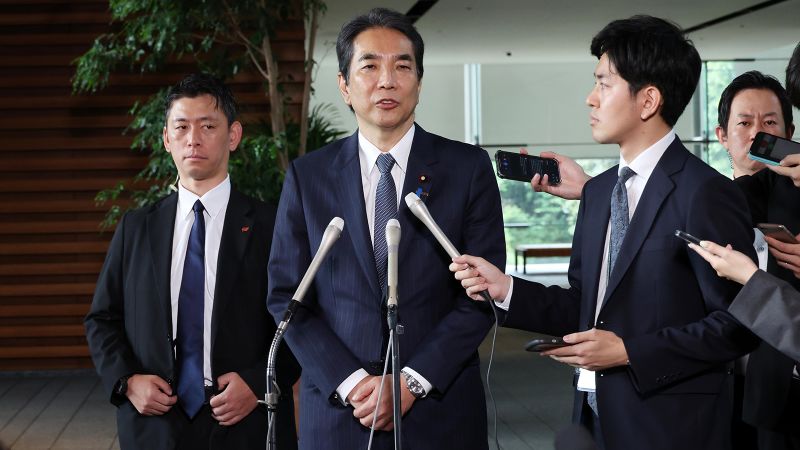
Japan's Agriculture Minister Taku Eto resigned after public backlash over comments suggesting he never buys rice, exacerbating concerns about soaring rice prices and the government's handling of the crisis. Rice prices have nearly doubled in the past year, prompting the government to release emergency reserves and import rice, yet prices remain high. The controversy and rising cost of living pose a significant threat to Prime Minister Ishiba's Liberal Democratic Party ahead of upcoming elections, with approval ratings already at a record low of 27.4%.
The resignation of Japan's Agriculture Minister, Taku Eto, following insensitive remarks about rice consumption, underscores the severity of the ongoing rice crisis and its significant political ramifications for Prime Minister Shigeru Ishiba's government. Rice prices have nearly doubled year-on-year, reaching 4,268 yen per five kilograms in mid-May, despite governmental interventions such as releasing emergency reserves and increasing imports, including from South Korea for the first time since 1999. This persistent food inflation is a key driver behind the cabinet's record-low approval rating of 27.4% according to a Kyodo poll, with almost one in nine households surveyed deeming government efforts to control prices insufficient. This situation poses a substantial challenge for the ruling Liberal Democratic Party in the upcoming July upper house elections, potentially impacting the stability of the ruling coalition and creating an environment of heightened political uncertainty. The appointment of Shinjiro Koizumi as the new Agriculture Minister signals an attempt to address the crisis, but the challenge in stabilizing this staple food cost remains significant.
AI-powered research, real-time alerts, and portfolio analytics for institutional investors.
Overall Sentiment
Negative
Sentiment Score
-0.50
