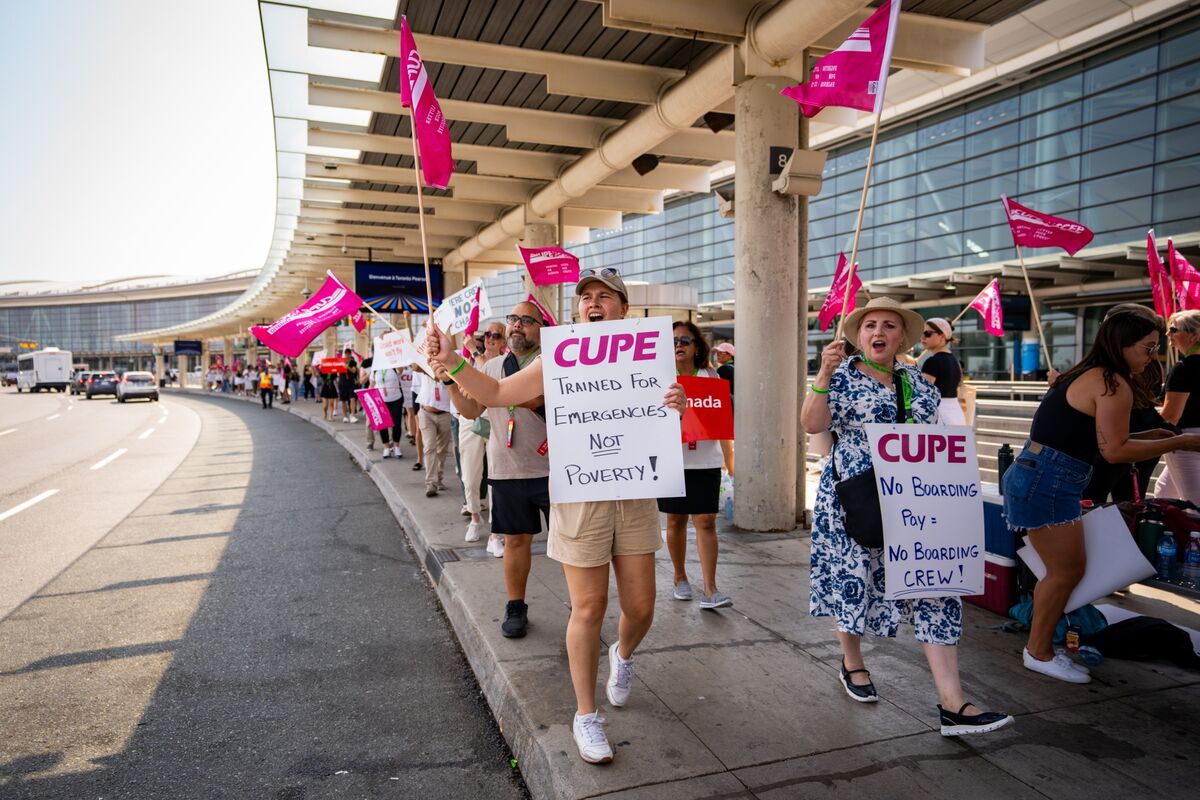
Air Canada is confronting a defiant labor action as striking employees reportedly resist a directive, signaling a potentially protracted dispute. Their collective stance, encapsulated by the phrase "'Can't Fire Us All'", highlights the risk of ongoing operational disruptions and increased costs for the airline.
Air Canada is confronting a significant operational and financial headwind due to a defiant labor strike, which signals a potentially protracted dispute. The collective stance of the striking employees, encapsulated by the sentiment “'Can't Fire Us All'”, suggests a high degree of resolve that complicates a swift resolution. This situation introduces considerable uncertainty into the airline's near-term outlook, directly threatening operational continuity and pointing to elevated costs. The primary risks to company fundamentals include revenue loss from flight disruptions and increased operating expenses, both from the immediate strike impact and the potential terms of an eventual settlement. The moderately negative sentiment and the nature of the dispute place a significant focus on management's ability to navigate complex labor negotiations and mitigate further damage to the airline's performance.
AI-powered research, real-time alerts, and portfolio analytics for institutional investors.
Request DemoOverall Sentiment
moderately negative
Sentiment Score
-0.55
