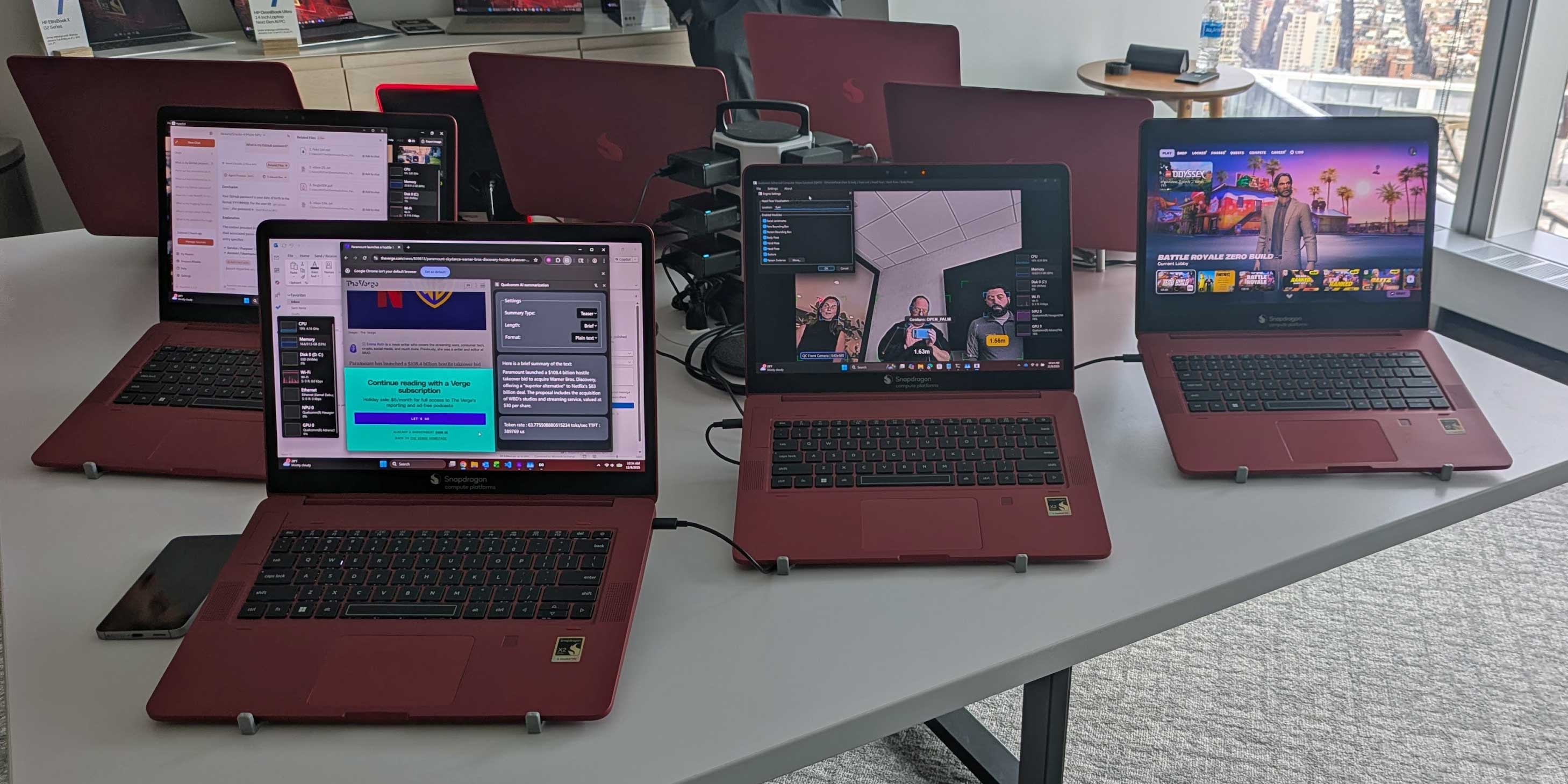
Qualcomm unveiled Snapdragon X2 Plus chips (two SKUs: 10-core and 6-core) built on a 3nm process with up to 4 GHz clocks, LPDDR5x support and an 80 TOPS NPU, claiming 43% lower power than prior gen and multi-day battery life; Qualcomm touts third-gen Oryon cores as ~35% faster single-core and ~17% faster multi-core, Adreno GPU +39%, Hexagon NPU +78%, and a 52% Geekbench 6.5 multi-core lead vs. Intel at ~25W. X2 and X2 Elite families qualify as Microsoft Copilot+ PCs, but enterprise adoption remains limited (IDC: ~1m Qualcomm-powered commercial PCs out of 153m, ~0.65%), and pricing is determined by OEMs, leaving near-term commercial and competitive impact uncertain.
Market structure: Qualcomm (QCOM) is the primary beneficiary — Snapdragon X2 Plus lowers the energy/perf tradeoff for mainstream Windows laptops and strengthens Qualcomm’s bargaining with OEMs and Microsoft (Copilot+). Intel (INTC) and to a lesser extent AMD face pricing and share pressure in low-power segments; immediate share shifts will be small (QCOM <1% → measurable gains only if share reaches 5–10% within 12–24 months). Supply-side constraints (TSMC 3nm capacity, LPDDR5x availability) could throttle ramp and keep OEM pricing power intact.
Risk assessment: Tail risks include TSMC yield or capacity shortfalls, Microsoft/Windows-on-Arm enterprise reluctance, and regulatory/privacy blowups from local-AI features (Recall). Time horizons: headline reactions (days), OEM SKUs/pricing and benchmark credibility (3–6 months), real enterprise adoption (12–36 months). Hidden dependencies: enterprise imaging, legacy x86 app compatibility, 5G/firmware security; loss in any of these delays adoption and valuation re-ratings.
Trade implications: Tactical: express bullish QCOM versus INTC/AMD via a 2–3% long QCOM / 1–2% short INTC relative pair, adjust on first 3rd-party benchmark parity or OEM SKU pricing revealed (target +20% delta for adds). Options: buy QCOM 6–12 month call spreads to cap cost; buy INTC 6–9 month put spreads sized as hedge. Rotate modestly into semicap suppliers (TSMC exposure via ETF or select foundry equipment names) if QCOM design wins announced.
Contrarian angle: Consensus underestimates the software/inertia hurdle — adoption may follow Apple M1 chronology (2–3 years) not months; if QCOM fails to hit <25W performance parity vs Intel’s Panther Lake in independent tests, downside is underappreciated. Watch three triggers: OEM MSRP spread >$100 favoring Arm, IDC share >5% within 12 months, or TSMC allocation confirmation — use these to scale positions and stop-losses.
AI-powered research, real-time alerts, and portfolio analytics for institutional investors.
Request DemoOverall Sentiment
mildly positive
Sentiment Score
0.22
Ticker Sentiment
