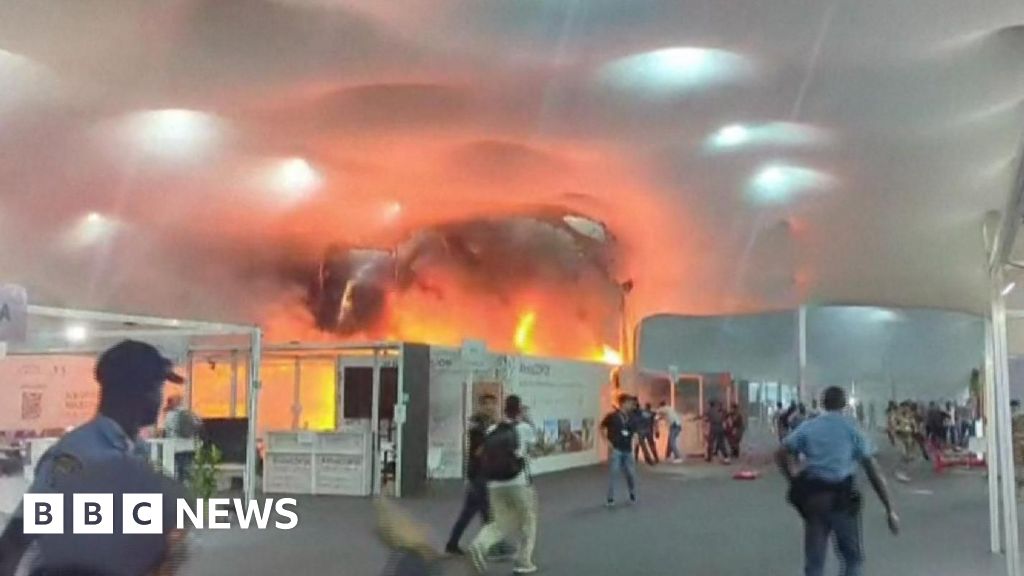
A fire erupted inside the COP30 venue in Belém, Brazil during the final hours of negotiations, forcing evacuation, temporarily closing the summit and likely delaying agreement on next steps; the blaze was extinguished after six minutes and 13 people were treated for smoke inhalation. Witnesses and medical staff reported heavy smoke, toxic fumes and panic as flames burned through the venue sheeting; the cause is unknown (an eyewitness suggested an electrical fault) and Brazilian authorities have taken over the site for safety checks. Hundreds of delegates from nearly 200 countries were displaced and talks were halted, creating immediate disruption to time‑sensitive climate negotiations.
A fire erupted inside the COP30 venue in Belém, Brazil during the final hours of negotiations; the UN said the blaze was extinguished after six minutes and 13 people were treated for smoke inhalation. Witnesses and medical staff reported heavy smoke, reports of toxic fumes and at least one lung injury, while flames burned a hole through the pavilion sheeting of the former aerodrome and prompted large-scale evacuation and panic. The cause remains unknown though an eyewitness suggested an electrical fault, and Brazilian authorities have temporarily taken over the site while the fire brigade assesses safety.
The incident forced talks to halt and displaced hundreds of delegates, with some sheltering under a petrol station roof, creating an immediate disruption to time-sensitive negotiations and likely delaying the closing of any deal. Nearly 200 countries and thousands of attendees were present, increasing the logistical and reputational stakes for the UN and host authorities as they manage safety checks and the restart timetable. Any delay or truncation of agreement text poses risk to the timetable for climate-policy outcomes and downstream planning by stakeholders awaiting clarity.
Sentiment signals attached to the report show a moderately negative tone (sentiment_score -0.45) and a low estimated direct market impact (market_impact_score 0.12), implying reputational and policy-delay risk exceed immediate market shock. Investors should treat this as a near-term operational disruption with potential knock-on effects for policy-sensitive assets rather than a systemic market event, and monitor official statements and the contents of any postponed or revised agreements for directional guidance.
AI-powered research, real-time alerts, and portfolio analytics for institutional investors.
Request DemoOverall Sentiment
moderately negative
Sentiment Score
-0.45
