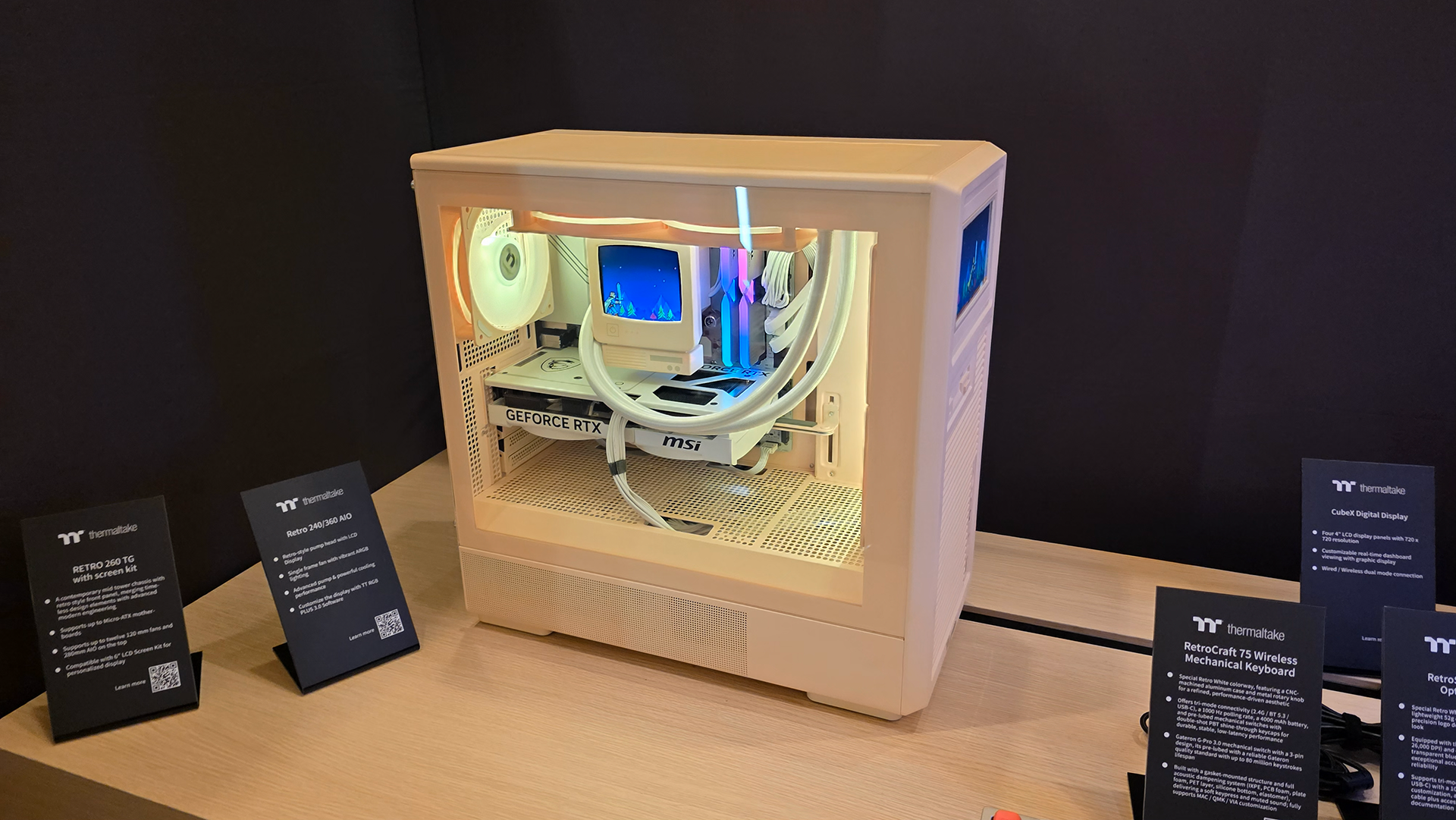
At CES 2026 Thermaltake unveiled a retro-themed product line including two 80s-styled PC cases (Retro 260 TG supporting micro-ATX and up to 240mm AIOs, and Retro 360 TG supporting ATX and up to 360mm AIOs) with optional 6-inch front LCDs, plus Retro 240 and Retro 360 AIO liquid coolers featuring a 4-inch 720p CRT-shaped LCD and aRGB-lit single fan frames. The company also revealed a compact 75% wireless mechanical keyboard (Gateron G-Pro 3.0, double-shot PBT keycaps) and a lightweight gaming mouse (PixArt PAW3395 26,000 DPI, 52g, 400mAh battery) targeting nostalgia-driven consumers. Product-level differentiation may bolster Thermaltake’s brand appeal in the enthusiast / retro niche, but the announcements contain no financial metrics and are unlikely to meaningfully move investor valuations.
Market structure: Retro-themed AIOs and peripherals create a small, high-ASP niche that benefits branded peripheral makers (Corsair CRSR, Logitech LOGI) and specialty display suppliers (AUO 2409.TW, LGD) while leaving mainstream OEMs largely neutral. Expect a modest ASP uplift for niche SKUs of ~3–7% if adopted by modding/influencer communities; unit volumes will remain low so revenue impact on large OEMs is immaterial in the next two quarters.
Risk assessment: Tail risks include a consumer discretionary shock (≥10% drop in gaming peripherals sell-through), supply-chain hiccups for custom 4” LCD modules, or poor review adoption that kills momentum. Immediate CES buzz can drive 1–4 week trading volatility; meaningful commercial validation (pre-orders, reviews) will take 1–3 months; long-term design trend adoption is a 3–18 month story.
Trade implications: Tactical long exposure to high-execution peripheral companies with strong retail channels is favorable; options can control downside if CES hype fades. Pair trades (long well-distributed players, short execution-risk peers) exploit relative execution; monitor short-term sentiment catalysts (influencer reviews, preorder sellouts within 30 days).
Contrarian angle: The market tends to over-index CES novelty as demand signal; the consensus is underestimating that retro SKUs are marketing-led, not volume drivers. If suppliers report meaningful OLED/LCD order uplifts (>20% QoQ) this narrative flips from niche to supply-chain growth — otherwise price in limited upside and cap weightings accordingly.
AI-powered research, real-time alerts, and portfolio analytics for institutional investors.
Request DemoOverall Sentiment
mildly positive
Sentiment Score
0.15
