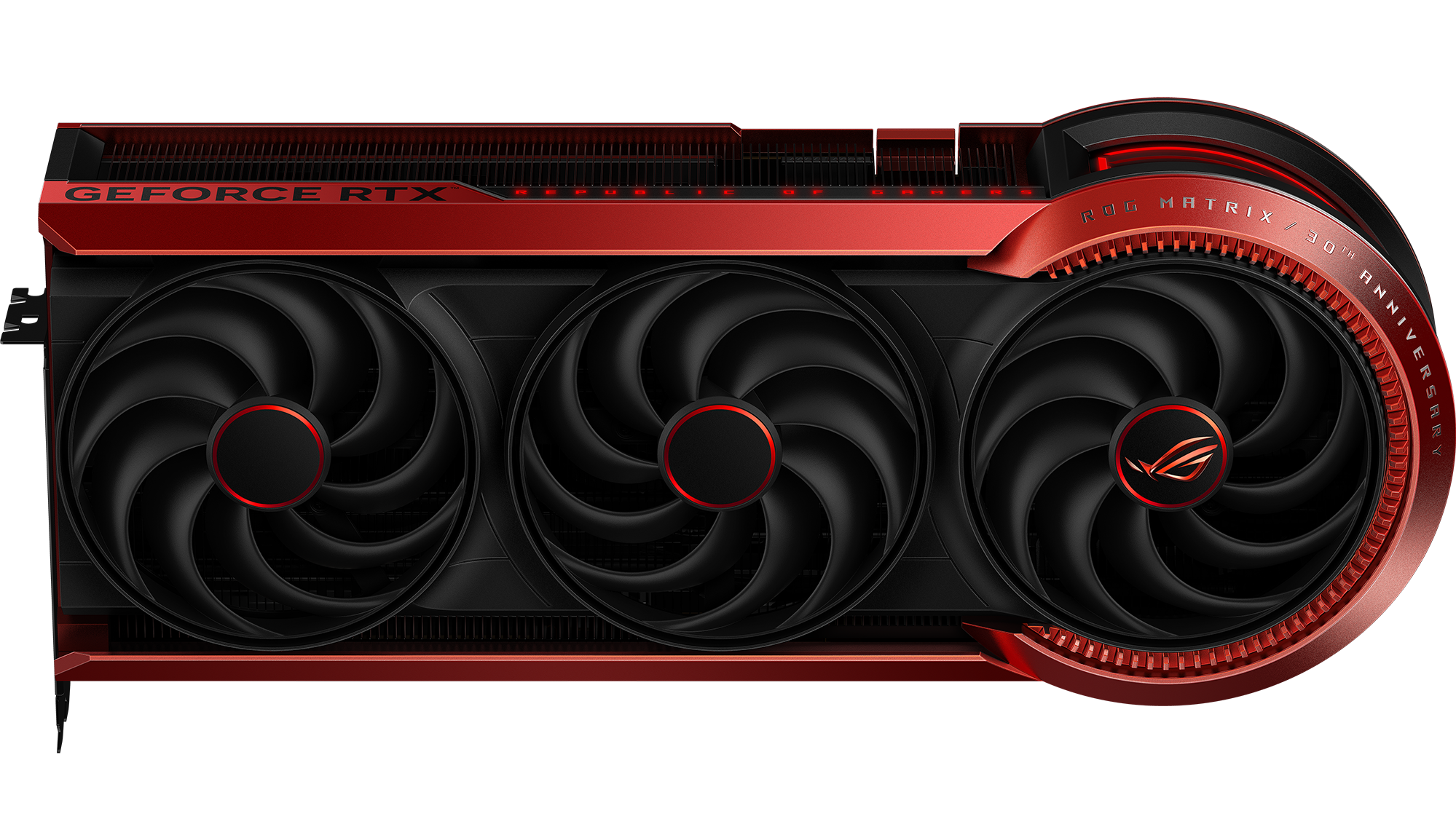
Asus launched a limited-run ROG Matrix Platinum RTX 5090 priced at $4,000 and reportedly sold all 1,000 units, a roughly 42% premium to the ~$2,800 standard RTX 5090. German tests confirm about a 10% performance gain when the card's 800 W power limit is enabled, but the design demands high-end motherboards (BTF slot) and dual power connectors, and the cooler assembly is large (370 x 150 x 77 mm) and heavy (~3.2 kg). The sellout underscores persistent demand for ultra-premium halo hardware and potential branding/margin benefits for Asus, though the tiny production run limits near-term revenue impact and broader market implications.
Market structure: The sellout of a 1,000‑unit ultra‑premium SKU signals a non‑negligible top‑end willingness to pay (willingness to pay ~+40% vs base), which can support 1–3% uplift in ASPs for premium consumer GPU lines if replicated at scale. Winners are board vendors, high‑end motherboard makers and boutique cooling/PSU suppliers; losers are low‑margin OEMs that cannot extract halo pricing. Expect limited immediate share shifts in GPU silicon (NVDA/AMD) but improved pricing power for brand‑led channel partners over next 1–3 quarters.
Risk assessment: Tail risks include a reputational or reliability failure forcing recalls (sales, warranty costs), or regulatory action on extreme power draws at data centers/regions — both low probability but >10% P(fall >5% rev) scenario for brand partners over 12 months. Near term (days-weeks) event risk is headline trading; medium term (3–9 months) depends on whether Asus scales halo SKUs beyond 1k; long term (12–36 months) hinges on ecosystem adoption of BTF slots and PSU standards. Hidden dependency: meaningful upside requires motherboard and PSU industry support; if adoption stalls, halo remains a one‑off.
Trade implications: Favor selective exposure to brand/channel capture — asymmetric trades that buy exposure to ASUS/board makers and suppliers while hedging silicon risk. Use option structures to express conviction in NVDA’s pricing power without full delta exposure. Rebalance sector tilts from broad PC OEMs into component specialists if incremental ASPs persist through two consecutive quarters.
Contrarian angle: Consensus may overstate macro demand — a 1k run is more marketing than TAM proof; risk that hype artificially inflates multiples of vendors with limited distribution. Historical parallels: past halo SKUs (limited edition GPUs) produced short lived margin headlines but no durable share shifts unless scaled. If Asus cannot expand SKUs to >5–10k units next cycle, early buyers should monetize gains within 3 months.
AI-powered research, real-time alerts, and portfolio analytics for institutional investors.
Request DemoOverall Sentiment
mildly positive
Sentiment Score
0.28
