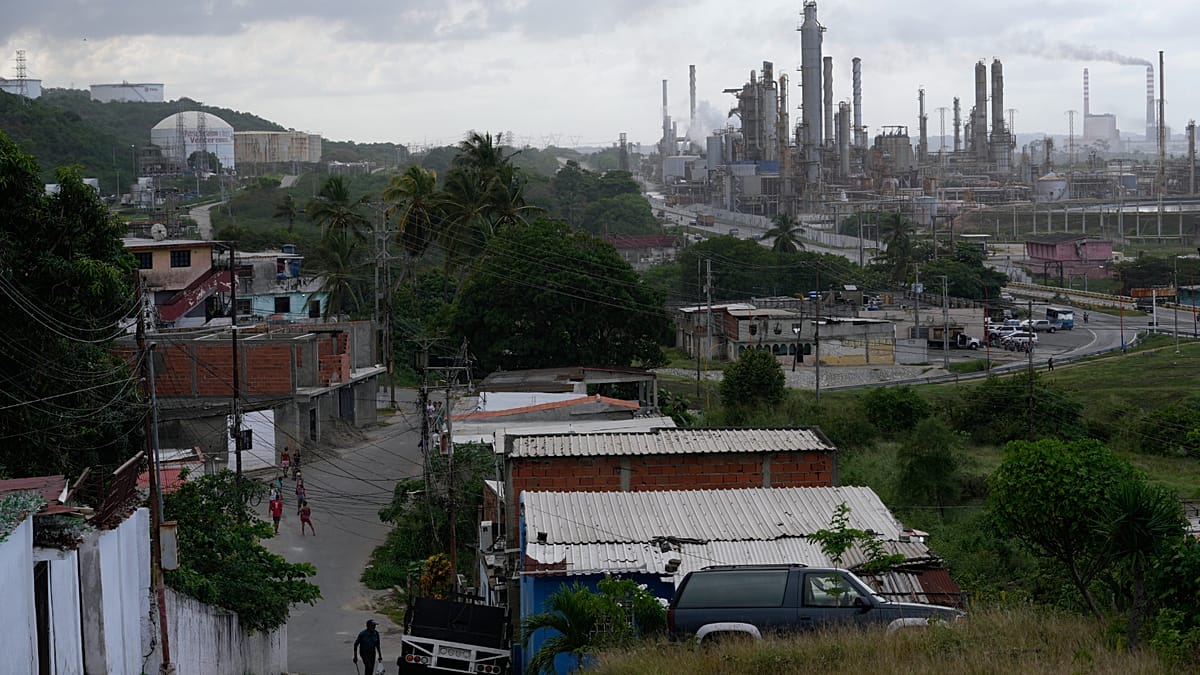
President Trump has pitched control of Venezuela’s oil resources as a means to boost US geopolitical leverage and corporate profits, while analysts warn the practical, legal and financial hurdles are substantial. Venezuela holds roughly 17% of proven oil reserves (reported here as ~3.3 billion barrels); Goldman Sachs projects production could rise from about 0.8 mb/d today to 1.4 mb/d in two years and 2.5 mb/d within a decade under US influence, but restoration would require tens-to-hundreds of billions of dollars, law changes, resolution of nationalization claims (ConocoPhillips cited ~$10bn owed) and removal of sanctions. Recent US military action removing Nicolás Maduro and continued political volatility heighten legal and security risk, making any near-term material re-entry by US majors uncertain despite Chevron’s limited licensed presence and White House promises of reimbursement.
Market structure: Chevron (CVX) and oilfield services/engineering firms are the obvious near-term beneficiaries because CVX already has a license and incumbency; Goldman’s scenario implies +0.6 mbd by 2 years and +1.7 mbd by 10 years (0.8→2.5 mbd) which, if realized, would exert 3–8% downward pressure on nominal oil prices beyond cyclical factors. Losers include Venezuela sovereign/PDVSA creditors, Conoco (COP) with ~$10bn claims, and firms without operating footprints (XOM faces higher re-entry costs). Winners depend on legal/sanctions clarity, not just geology.
Risk assessment: Tail risks include renewed conflict or full expropriation (high impact, low prob) and sustained U.S. sanctions/legal rulings blocking capital flows. Time buckets: immediate (days) = price/vol spikes on operations/news; short-term (30–180 days) = sanction policy, Chevron investment announcements; long-term (3–10 years) = multi-hundred-billion capex and workforce rebuild. Hidden dependencies: US reimbursement guarantees, court settlements (Conoco), and debt restructurings; catalysts are sanction relief, interim-govt investment law, or a Chevron funding commitment.
Trade implications: Tactical: establish a 2–3% long position in CVX and allocate 25% of that to 12-month call spreads (buy ATM, sell ~20% OTM) to cap cost; rotate 1–2% from XOM into CVX (pair: long CVX, short XOM) to express license premium. Hedge: buy 3–6 month Brent call spreads if instability spikes prices (>+$10 move) and buy 6–12 month puts on CVX equal to ~30% position size as tail protection. Avoid COP equity longs until legal settlement clarity; consider short protection or avoid lending exposure.
Contrarian angles: Consensus underestimates timing and cost — tens to hundreds of billions and a 5–10 year timeline make rapid supply gains unlikely, so the market may underprice persistent oil upside. History (Iraq/Libya) shows regime change rarely translates to immediate corporate gains; majors may demand sovereign guarantees or US-backed indemnities. If sanctions persist beyond 60–90 days, cut CVX exposure; if majors publicly commit >$10bn aggregate within 6 months, re-rate long energy cyclicals.
AI-powered research, real-time alerts, and portfolio analytics for institutional investors.
Request DemoOverall Sentiment
moderately negative
Sentiment Score
-0.50
Ticker Sentiment
