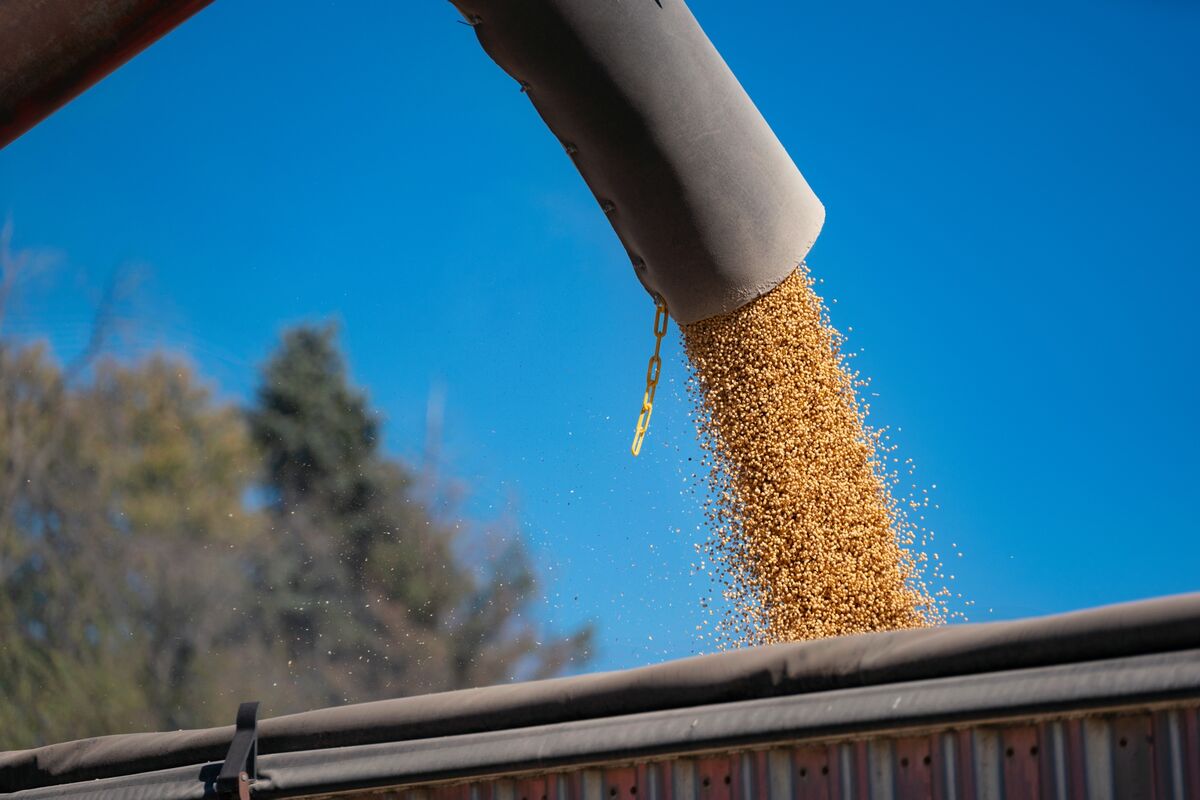
U.S. Treasury Secretary Scott Bessent said China is "in a perfect cadence" to meet its pledge to buy 12 million tons of U.S. soybeans by the end of February, an apparent extension of a White House timeline that had framed deliveries in the last two months of 2025. The remark signals firm Chinese demand that should support U.S. soybean prices and exporters in the near term and could affect shipping/logistics and agricultural commodity flows.
Market structure: A 12m-ton China purchase over ~3 months is material (~3–4% of annual global soybean supply) and should lift CBOT soybean futures and US export premiums into end-Feb. Direct winners: US farmers, US-based merchandisers/processors (ADM, BG parity swing to ADM), freight/port operators; losers: Brazil-origin exporters and any domestic crushers if inbound US supply suppresses crush margins. Pricing power shifts toward US origin basis on the Gulf and Pacific Northwest during the shipment window, compressing Brazilian FOB differentials.
Risk assessment: Tail risks include a political reversal, delayed shipments (shipping/logistics bottlenecks), or substitution with soymeal/processed imports; any of these could erase short-term price moves. Immediate (days–weeks) risk is execution/inspection data; short-term (1–3 months) depends on arrival cadence and port throughput; long-term (>3 months) depends on whether China repeats purchases or reverts to South America. Hidden dependency: US crush capacity and soybean-meal pricing — large US inflows can lower meal prices and hurt processors’ margins despite higher volumes.
Trade implications: Direct plays are long soybean futures/call spreads into end-Feb and long US processors/merchandisers (ADM, BG with relative tilt to ADM). FX: consider tactical USD/BRL appreciation trade if flows displace Brazilian demand; bonds may see slight curve steepening on commodity-driven inflation risk. Use options to express asymmetric bets around USDA inspections and shipping manifests (weekly cadence).
Contrarian angles: Consensus assumes full delivery; history (2018–19 US–China pledges) shows partial fulfillment and substitution with processed goods. Reaction could be underdone for exporters’ equities but overdone for soybean spot if imports are transitory or offset by withheld US farmer selling. Unintended consequence: weaker soybean meal prices hurting US livestock margins and processors’ earnings despite higher export volumes.
AI-powered research, real-time alerts, and portfolio analytics for institutional investors.
Request DemoOverall Sentiment
mildly positive
Sentiment Score
0.25
