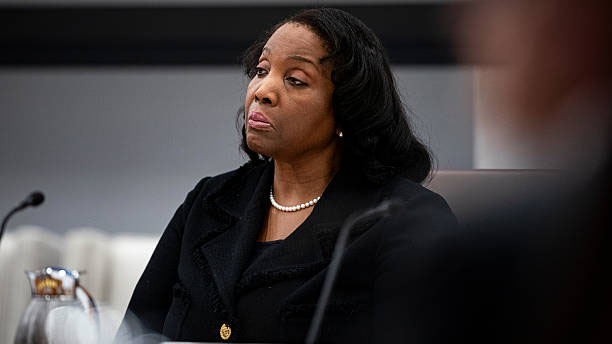
A Bloomberg article explores the critical question of whether a U.S. President, specifically Donald Trump, possesses the authority to dismiss a Federal Reserve Governor like Lisa Cook. This inquiry underscores potential challenges to the Federal Reserve's operational independence, a cornerstone of financial market stability, and carries significant implications for future monetary policy and investor confidence.
The inquiry into a U.S. President's authority to dismiss a Federal Reserve Governor, specifically referencing Donald Trump and Governor Lisa Cook, introduces a significant political risk to the central bank's perceived independence. This issue, flagged with a mildly negative sentiment and speculative tone, directly challenges a foundational principle of modern monetary policy that underpins market stability. The discussion highlights a potential future conflict between the executive branch and the Federal Reserve, which could have substantial implications for monetary policy predictability, inflation expectations, and overall investor confidence. The matter sits at the critical intersection of domestic politics and financial governance, and its emergence as a topic of discussion suggests a heightened risk of political influence over central banking operations, a key concern for institutional investors.
AI-powered research, real-time alerts, and portfolio analytics for institutional investors.
Request DemoOverall Sentiment
mildly negative
Sentiment Score
-0.30
