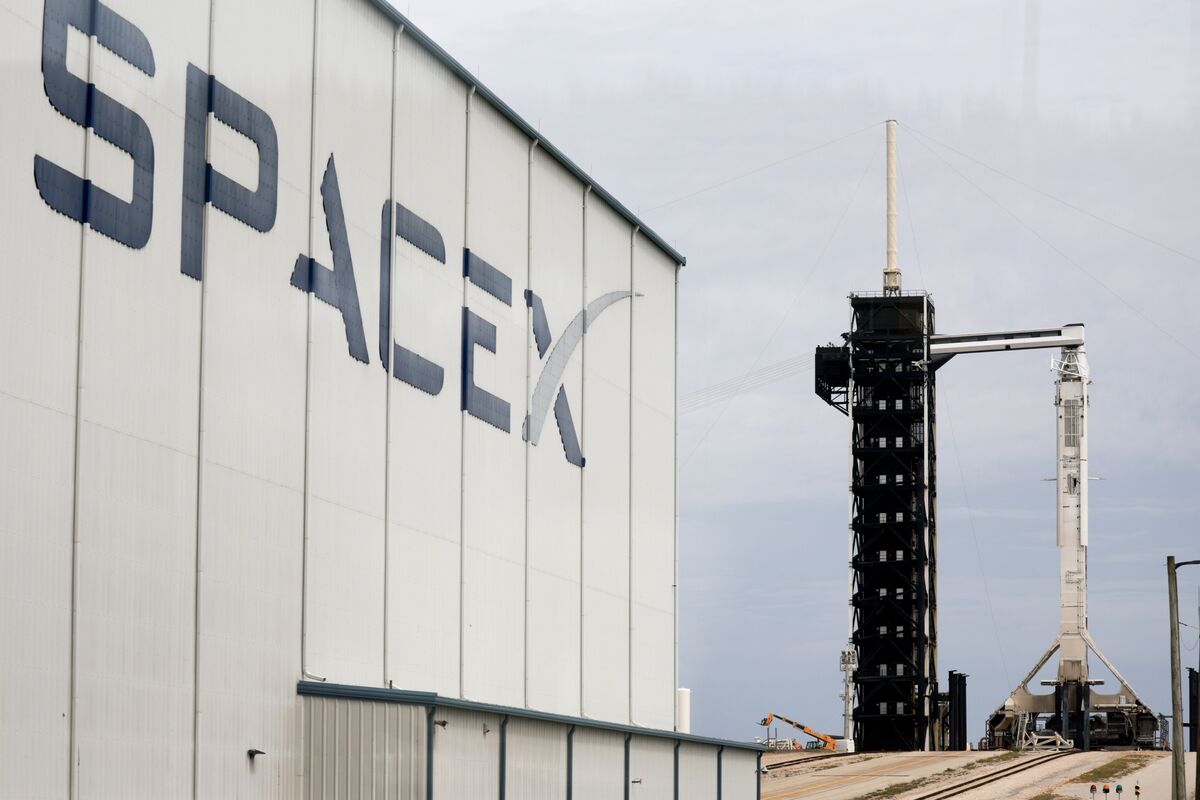
Three major index providers are weighing rule changes to allow inclusion of potential trillion-dollar IPOs from SpaceX, OpenAI and Anthropic. Critics warn such changes could distort benchmark composition and passive flows, raising concerns about market tracking integrity and long-term index governance. The debate poses meaningful implications for passive allocation mechanics and investor positioning if adopted.
Modeling the mechanical impact is the easiest way to see the stakes: a single $1T market‑cap company would command roughly 2.5% of a $40T benchmark, which implies a $400B passive ETF would need to allocate ~$10B at full weight. That scale turns index inclusions from marginal flows into market‑moving orders, concentrating liquidity and forcing dealers to warehouse directional exposure—gamma hedging alone can create intraday flows that are a meaningful fraction of a name’s ADV and thus raise realized volatility. Winners and losers will be determined more by plumbing than by fundamentals. Exchanges and index licensors benefit from a persistent stream of listing, licensing and ETF creation activity (recurring fee pools and trading volume), while mid‑cap and index‑adjacent names are vulnerable to outflows and multiple compression as dollars concentrate. A less obvious second‑order effect: prime brokers and dealers will see higher average margin and balance‑sheet usage, which raises clearing costs and could widen bid/ask spreads for other thinly traded growth names. Timing and tail risks are asymmetric. Expect headline‑driven repricings in days around announcements and the first post‑listing rebalances, structural impacts across 6–36 months as products and rules settle, and a high‑impact tail risk where a liquidity mismatch (large ETF buying vs limited secondary float) triggers a rapid, correlated drawdown and spikes implied vol. Catalysts that would reverse the trend include explicit capped‑weight indexing rules, regulator‑mandated transition smoothing, or a sustained drop in IPO cadence. The consensus assumes permanent reallocation to a handful of giants; the contrarian is that index providers and issuers will innovate mitigants (capped ETFs, staggered inclusion windows, custody/creation tweaks) that recapture fee pools but diffuse mechanical concentration. That suggests a trade set that is both pro‑piping (exchanges/index licensors) and defensive (volatility hedges / breadth exposure).
AI-powered research, real-time alerts, and portfolio analytics for institutional investors.
Overall Sentiment
mixed
Sentiment Score
-0.05
