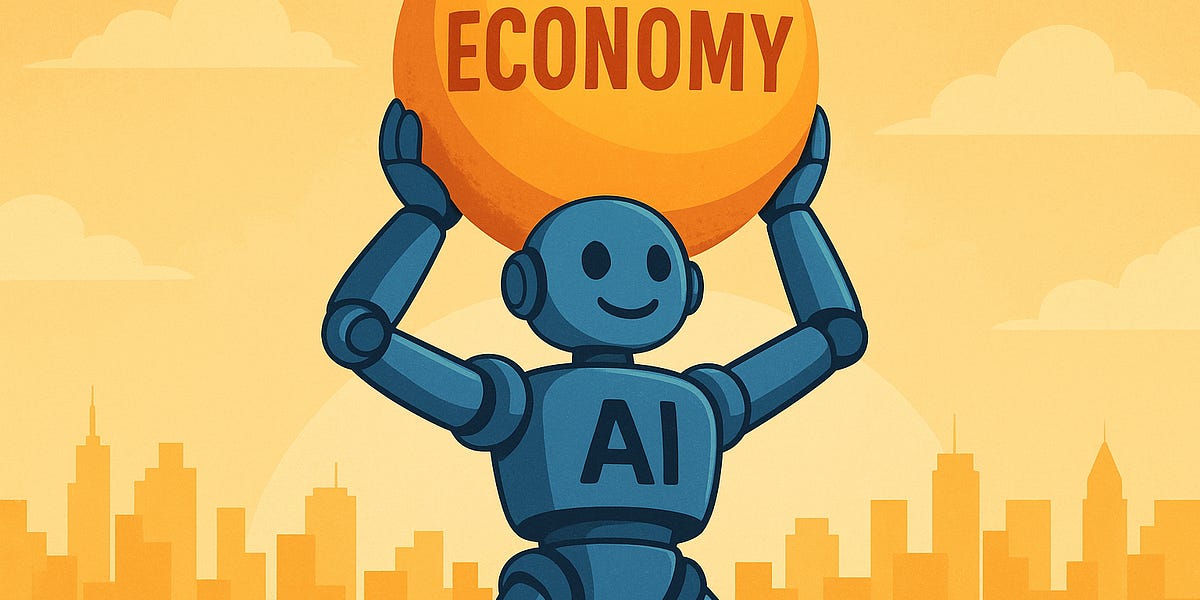
The AI boom, particularly investment in data centers and information processing, is identified as the dominant driver of economic growth, accounting for over 90% in H1 2025, which is fueling concerns about a potential market bubble. This speculation is underpinned by instances of minimal scrutiny in AI startup funding and unorthodox financial arrangements, including OpenAI's warrant-based deal with AMD and Nvidia's circular investment in xAI to secure chip sales. While these practices highlight unusual market dynamics and potential risks like technological plateaus or competitive saturation, the article posits that the current situation differs from past 'true bubbles' due to genuine rapid revenue growth among leading AI companies, though the sustainability of this concentrated growth remains a critical debate.
The AI boom is currently the primary driver of economic expansion, with investment in information processing equipment and software, largely driven by data centers, accounting for over 90% of economic growth in the first half of 2025. This concentrated growth fuels concerns about a potential market bubble, despite the author's distinction from historical "true bubbles." However, the general sentiment is moderately negative, reflecting caution.
The sector is characterized by unorthodox financial arrangements, exemplified by OpenAI's deal with AMD, where warrants allowed OpenAI to profit from AMD's stock surge, effectively offsetting chip costs. Similarly, Nvidia's investment in xAI, which then purchased Nvidia chips, illustrates a circular financing model. These deals, while potentially beneficial to involved parties (e.g., AMD's stock rose significantly), highlight unusual market dynamics and raise questions about underlying value creation.
While leading AI labs exhibit genuine rapid revenue growth, the sustainability of this trajectory faces several risks. These include the potential for "scaling laws" to fail, a lack of meaningful competitive moats among frontier companies, and the risk of a crisis of confidence stemming from complex, potentially "scammy" deal structures.
Furthermore, this AI-driven growth appears highly concentrated, with the broader economy showing signs of slowing and labor/wage indicators flattening. This suggests a potential disconnect where AI's top-line contribution may not translate into widespread economic benefit, and companies could eventually balk if productivity gains do not justify significant AI spending.
AI-powered research, real-time alerts, and portfolio analytics for institutional investors.
Request DemoOverall Sentiment
moderately negative
Sentiment Score
-0.50
Ticker Sentiment
