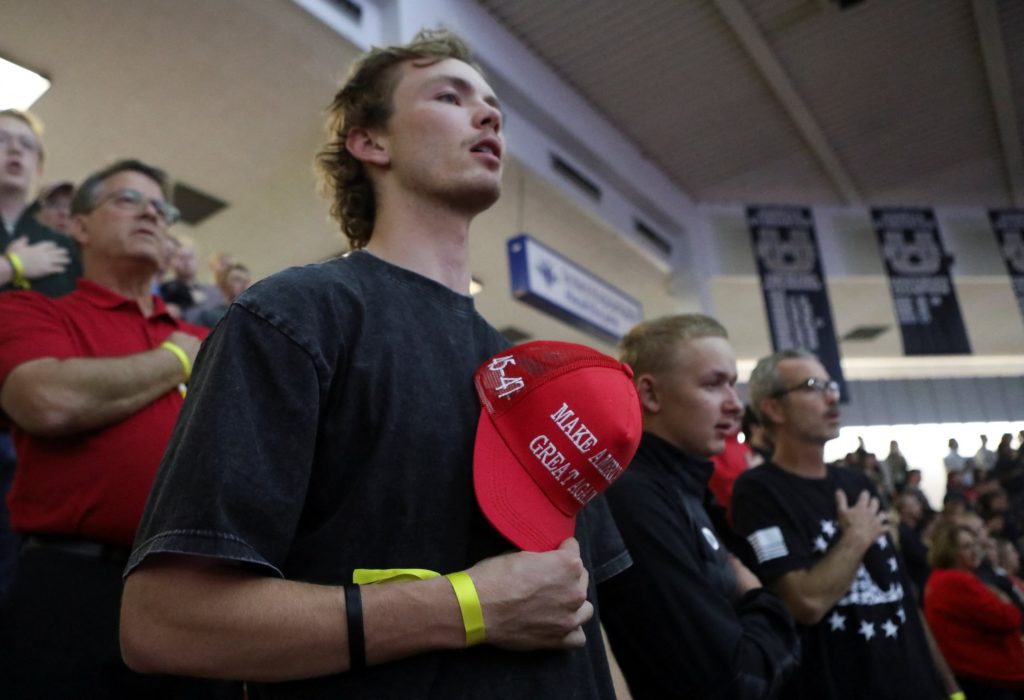
49% of Republicans under 30 approve of President Trump's handling of the Iran conflict, per a Pew poll cited in the report. Reporting from a Turning Point USA event at George Washington University captures a rare rift among conservatives with mixed reactions—some students backing the president, others opposing the war or expressing domestic priority concerns. Expert commentary links shifting youth attitudes to the 2023 Gaza war and 'America First' messaging, suggesting potential long‑term erosion of GOP support among younger voters even if many attendees said the conflict alone may not decide their November vote.
A durable political resistance to extended overseas operations will reshape demand, not simply lift defense equities uniformly. Expect a front-loaded burst in replenishment buys (missiles, precision munitions, avionics spares) as inventories are drawn down, followed by a reallocation of budget toward homeland security, ISR and cyber platforms if political appetite for expeditionary campaigns weakens.
Supply-chain winners in the near-term are munitions assemblers, avionics sub‑suppliers and naval shipyards with available capacity; second-order beneficiaries include titanium/aluminum suppliers, precision machine shops and logistics firms that can scale production quickly. Conversely, legacy prime contracts tied to long-term overseas sustainment (depot-level maintenance, foreign contractor-led FMS programs) are at risk if political winds push for rapid drawdown or reprioritization to domestic-focused programs.
Market risk is binary and time-sensitive: an escalation event within weeks would favor tactical defense exposures and safe havens; de‑escalation over months flips the script and hits overstretched defense multiples. The structural contrarian is that the consensus “defense = multi-year winner” trade may be front‑loaded and crowded — there’s asymmetric upside in short-duration, event‑driven instruments and in secular homeland-security / cyber names if the policy shift away from foreign intervention persists over an election cycle.
AI-powered research, real-time alerts, and portfolio analytics for institutional investors.
Overall Sentiment
neutral
Sentiment Score
0.00
