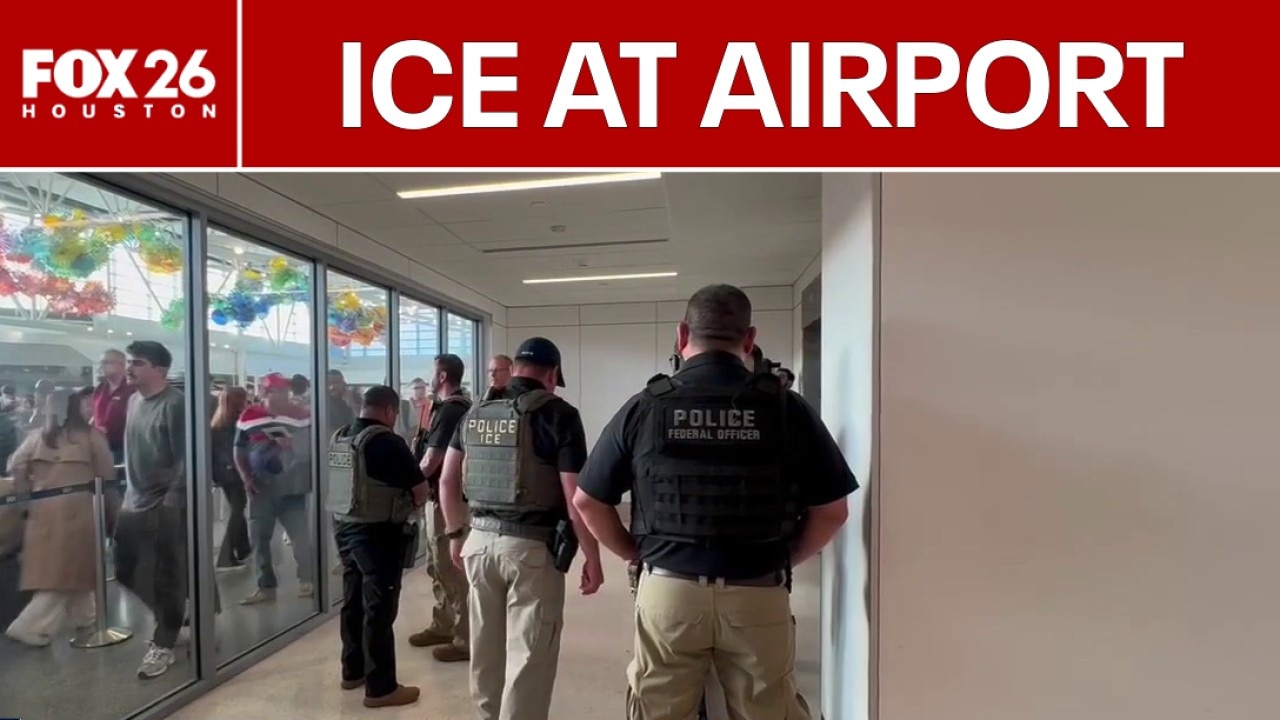
IAH reported TSA screening wait times over 1 hour while Hobby (HOU) had sub-15-minute waits; travelers are advised to check terminal status and Pre-Check/CLEAR availability before departure. The disruptions are driven by a partial federal government shutdown that lapsed Feb. 14, leaving hundreds of thousands of DHS employees (including TSA) working without pay and prompting increased sick calls, resignations and occasional checkpoint closures, producing volatile and longer waits for passengers.
An exogenous shock to airport screening capacity acts like a tax on travel convenience that disproportionately amplifies operational fragility in carriers with tight turnarounds and point-to-point networks. Even a small rise in missed-connection rates (0.5–1% of daily passengers) forces outsized rebooking costs and crew-disruption cascades that hit low-margin, high-frequency operators first; the mechanism is cascading delay minutes per aircraft rather than a linear passenger revenue loss.
Secondary beneficiaries are companies that monetize friction: private fast-lane providers, last-mile transport (rideshare/car-rental) and travel platforms that capture rebooking/spill revenue; their incremental margin per affected passenger can be 2–5x that of legacy carriers. Conversely, concession-dependent airport REITs and smaller regional carriers face asymmetric downside because fixed parking and retail footprints don’t scale down quickly with shorter passenger dwell times.
Political resolution risk dominates timeframe: an operational shock that lasts days creates tradeable volatility; one that persists for months accelerates labor attrition and permanent capacity shrinkage in screening services, shifting structural demand toward paid alternatives. The largest tail risk is abrupt policy intervention or rapid funding resolution, which would snap operational metrics back and invert winners into mean-reversion losers within 1–2 weeks.
Consensus positioning likely overestimates a multi-quarter revenue hit to the industry; most financial pain is operational and front-loaded into opex and irregularity costs, not lost annual ticket revenue. That asymmetry creates actionable relative-value opportunities: target names with fragile ops or direct exposure to friction monetization and size trades for short-to-intermediate resolution horizons.
AI-powered research, real-time alerts, and portfolio analytics for institutional investors.
Request DemoOverall Sentiment
mildly negative
Sentiment Score
-0.25
