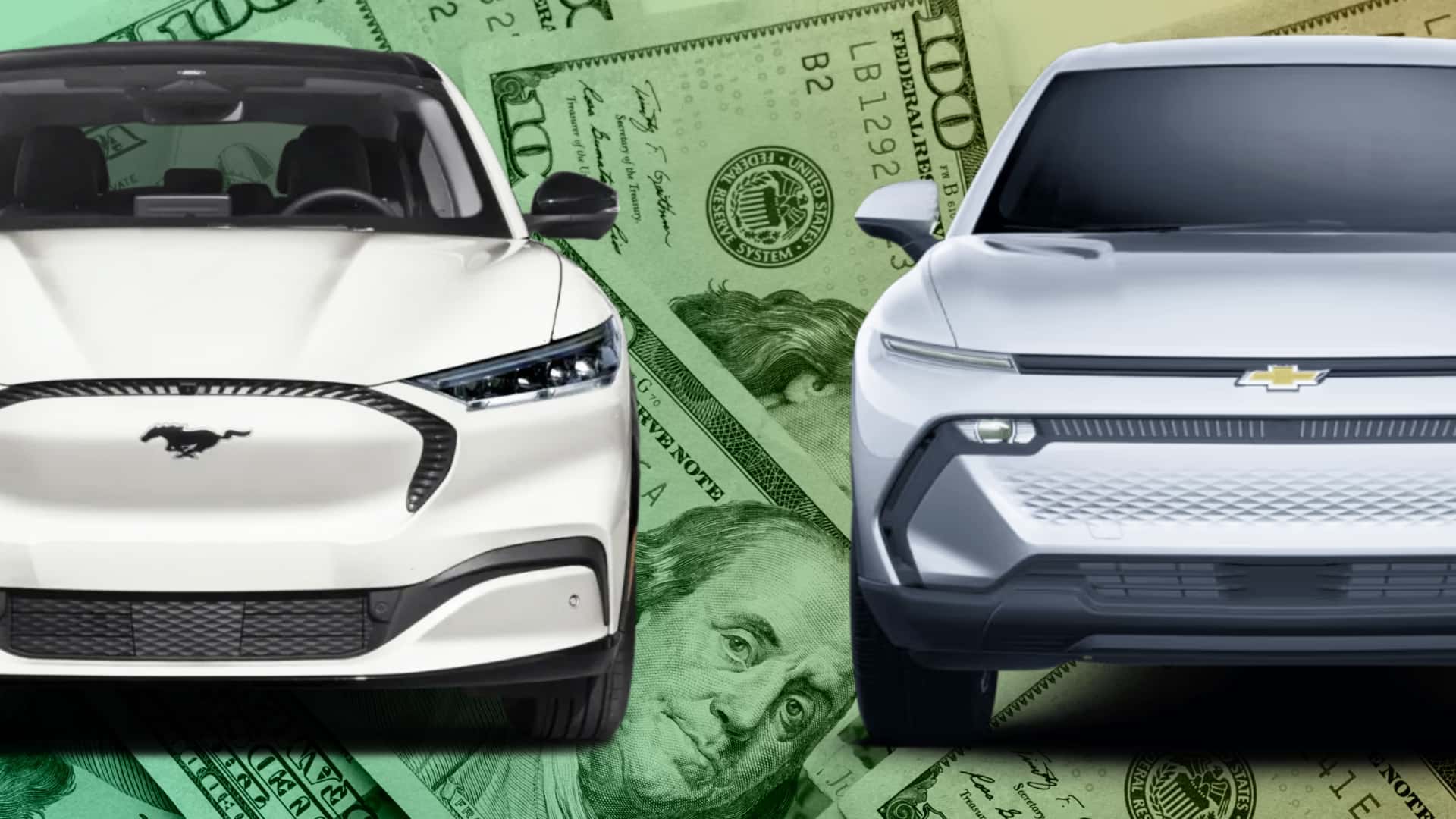
General Motors and Ford are implementing programs to effectively extend the $7,500 federal EV tax credit for leased vehicles, leveraging a 'lease loophole' where their financing arms purchase the EVs and claim the credit before leasing to customers. This strategy aims to prevent a slowdown in EV sales following the official expiration of the direct purchase credit, with Ford's program running until December 31st and GM's 'while supplies last.' This temporary measure seeks to maintain sales momentum and clear inventory amidst analyst expectations of declining EV demand without the subsidy.
General Motors (GM) and Ford (F) are implementing a tactical maneuver to sustain EV sales momentum following the legislative termination of the $7,500 federal tax credit. By having their captive finance arms purchase their own EV inventory, the companies can claim the credit under the 'lease loophole' and subsequently pass the savings to consumers via subsidized lease rates. This is a defensive strategy designed to prevent an inventory build-up and a sharp decline in sales, which analysts widely anticipate for the broader EV market in late 2025 and 2026 without subsidies. The program's temporary nature is a key detail, with Ford's initiative explicitly ending on December 31 and GM's lasting 'while supplies last.' This move underscores the critical role subsidies have played in driving EV adoption, as evidenced by Cox Automotive data showing lease share holding above 50% for eight consecutive months, and it provides a short-term competitive advantage for GM and Ford over rivals who may not be able to offer a similar stopgap measure.
AI-powered research, real-time alerts, and portfolio analytics for institutional investors.
Request DemoOverall Sentiment
moderately positive
Sentiment Score
0.45
Ticker Sentiment
