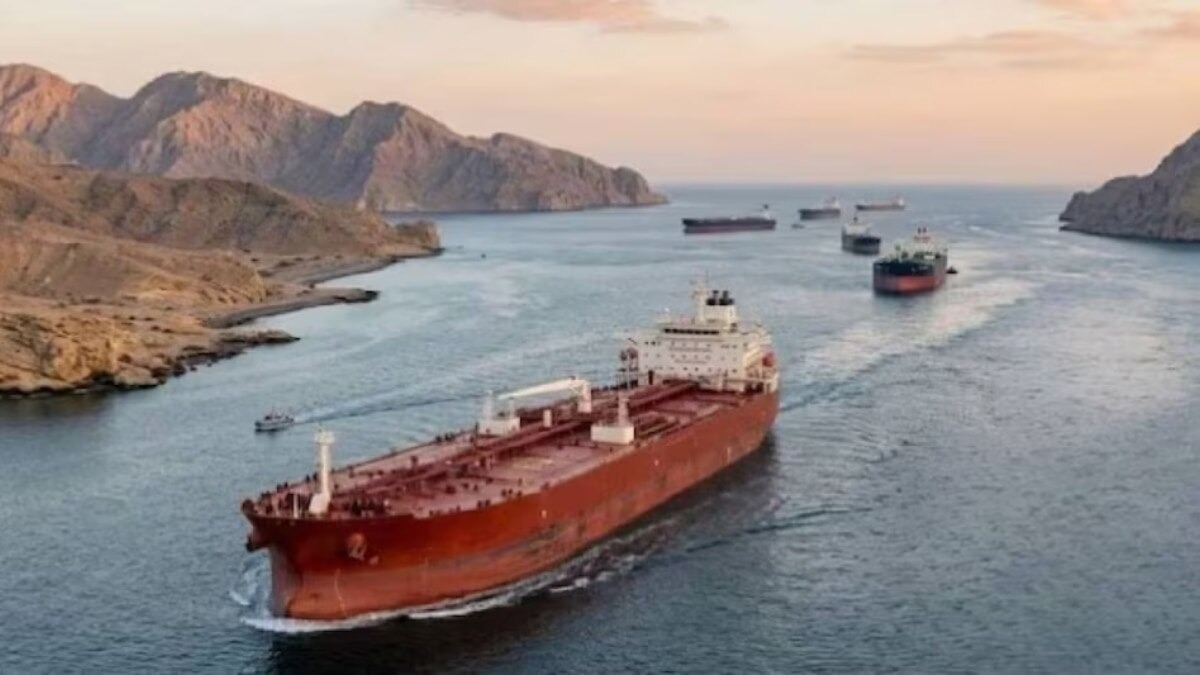
Key event: Iran's IRGC asserts 'full and decisive control' of the Strait of Hormuz and rejects US demands to reopen it; Tehran has also struck an oil tanker off Qatar and targeted Kuwait’s airport while airstrikes hit Tehran, escalating regional hostilities. This materially raises the risk to global oil shipments and energy infrastructure and could drive oil prices and shipping costs higher (potentially moving crude prices several percent, e.g., ~3–7%), warranting risk-off positioning and hedges for energy and transportation exposures and close monitoring for any actual closure or US strikes.
A sustained Iranian hold on the Strait materially raises seaborne crude voyage costs by forcing long-haul rerouting around Africa; that mechanically increases effective delivered crude prices to Asia and compresses available tanker capacity, creating a tight, time-charter-driven market where VLCC/Tanker dayrates could spike several-fold within weeks. Because the marginal cost of physical supply rises (longer sailing time + war-risk premiums + fuel burn), market structure will move toward steep backwardation, amplifying front-month Brent moves more than longer-dated curves and favoring holders of spot barrels and short-dated call options.
Second-order winners include owners of large crude tankers (who capture increased time-charter income and TCE upside) and defense/ISR suppliers whose orderbooks and service contracts accelerate under sustained regional tensions; losers include refiners/geographies that rely on Gulf sour barrels and insurance providers exposed to war-risk losses or contingent tail events. Freight, insurance and credit lines to traders will be the chokepoints — if insurers push war-risk premiums meaningfully higher, some charterers will be forced to defer cargoes, which can create abrupt liquidity squeezes at terminals and spikes in inland product spreads (diesel/gasoil) in Asia and Europe over the coming 2–8 weeks.
Timing/catalysts are binary and clustered: expect largest price volatility in days-to-weeks following kinetic escalations or US strikes; diplomacy (Oman/Russia/China) or covert re-openings would compress the risk premium within 2–6 weeks. Investors should size for asymmetric tail risk rather than permanent shifts — if the strait remains contested for months, structural outcomes (higher long‑run shipping insurance, accelerated energy security capex) become entrenched and justify longer-duration positions and upstream capex plays.
AI-powered research, real-time alerts, and portfolio analytics for institutional investors.
Request DemoOverall Sentiment
strongly negative
Sentiment Score
-0.65
