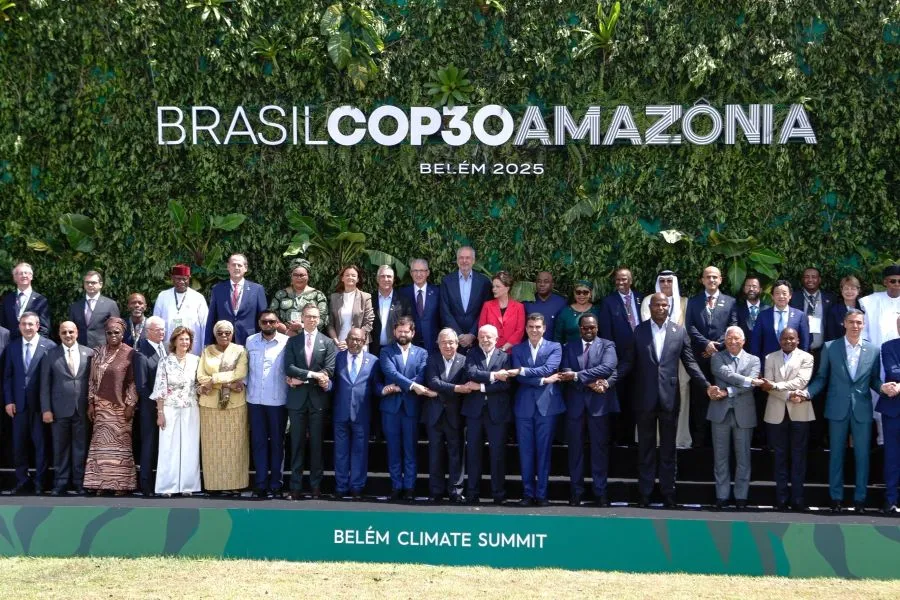
The International Institute for Sustainable Development (IISD) is urging governments at COP30 to cease fossil fuel subsidies and public financing, warning that current production plans significantly exceed the 1.5°C global warming limit and jeopardize the Paris Agreement's credibility. The IISD advocates for strengthened Nationally Determined Contributions (NDCs), noting current pledges fall far short of necessary emission reductions, and calls for an equitable transition away from fossil fuels, with developed nations leading financial and policy reforms. This highlights increasing regulatory and political pressure on the fossil fuel industry, signaling potential policy-driven shifts in energy markets and investment landscapes.
The International Institute for Sustainable Development (IISD) at COP30 is strongly advocating for governments to cease fossil fuel subsidies and public financing, citing a critical misalignment with Paris Agreement goals. Current global production plans are projected to exceed the 1.5 degrees Celsius warming limit by 120% by 2030, highlighting a significant ambition gap. This continued dependence, despite prior commitments at COP28, places the credibility of global climate targets at severe risk.
The IISD notes that Nationally Determined Contributions (NDCs) are largely undelivered, with existing pledges only achieving a 17% emission reduction by 2035 against a required 60% for the 1.5°C pathway. This shortfall, coupled with an International Court of Justice advisory opinion suggesting fossil fuel expansion via subsidies may breach international law, underscores escalating regulatory and political pressure on the fossil fuel industry. The packaging sector's ongoing reliance on fossil fuels further exemplifies the systemic challenge.
The call for strengthening the Just Transition Work Programme (JTWP) beyond dialogue into a coordinating mechanism, particularly for the Global South, signals a growing focus on equitable and structured energy transitions. This increasing pressure from organizations like IISD, combined with the identified policy gaps, suggests potential for significant policy-driven shifts in energy markets and investment landscapes, reflected in the moderately negative sentiment and high market impact score.
AI-powered research, real-time alerts, and portfolio analytics for institutional investors.
Request DemoOverall Sentiment
moderately negative
Sentiment Score
-0.50
