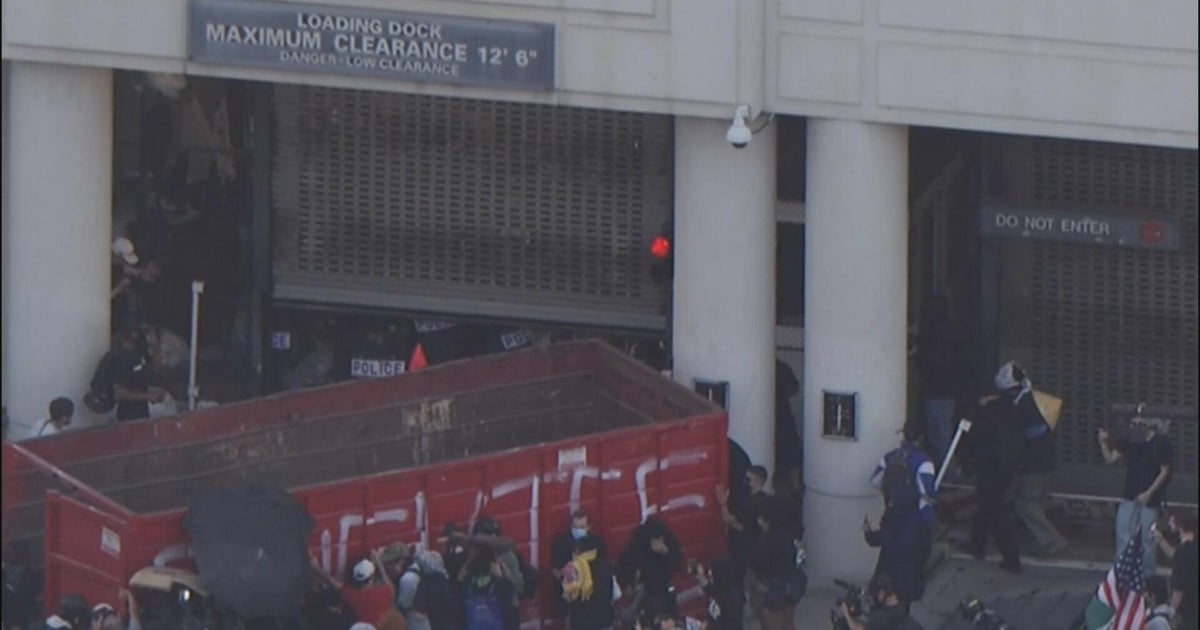
Thousands of protesters marched through downtown Los Angeles in a nationwide day of action over recent fatal shootings by federal immigration officers, culminating in clashes at the Edward R. Roybal Federal Building where demonstrators hurled projectiles, set a dumpster fire and federal agents deployed pepper balls and tear gas. LAPD issued a tactical alert, formed skirmish lines, issued dispersal orders by 5:56 p.m., and made unspecified arrests while several businesses closed or participated in solidarity actions and students staged walkouts, temporarily blocking roads and buses. The unrest creates localized operational and security risks for businesses and transit but is unlikely to materially move broader financial markets.
Market structure: Winners are government contractors and security/surveillance vendors (Palantir PLTR, Axon AXON, Teledyne TDY) and providers of detention capacity (GEO Group GEO, CoreCivic CXW) as stepped-up immigration operations raise secular demand for analytics, crowd-control tech and bed space. Losers are downtown-dependent retail/hospitality and regional transit/logistics routes that face intermittent closures; expect localized revenue hits of 5–15% for exposed small businesses if protests repeat over weeks. Cross-asset: expect small bid to defense/govt contractors and short-dated safe-haven moves in Treasuries; municipal credit of large cities (LA) sees modest pressure if security costs rise >1% of budget, while options vol on regional names will spike near events.
Risk assessment: Tail risks include escalation into multi-week unrest causing tourism declines of 10–20% and large municipal budget re-allocations, or federal litigation halting private prison expansion (high-impact, low-probability). Time horizons: immediate (days) = headline-driven vol and retail foot-traffic shocks; short-term (1–3 months) = procurement signals and municipal budget actions; long-term (6–24 months) = regulatory/legal rulings that can reverse vendor gains. Hidden dependencies: contract award timing (procurements often 3–9 months) and political shifts that can rapidly de-risk or weaponize exposed names. Watch DOJ/ICE contract releases and city council budget votes in next 30–90 days.
Trade implications: Tactical small overweight 1–2% in PLTR (govt analytics exposure) and 0.5–1% in AXON (body-cam/crowd-control tech) using call options to target 30–50% upside in 3–9 months, hedged by a 0.5% short in consumer discretionary ETF XLY to offset local retail weakness. For detention plays, consider a cautious 0.5–1% long in GEO or CXW only after a 10% pullback and with a 20% stop-loss due to regulatory tail risk. Rotate 1–3% cash from downtown-exposed retail/REIT holdings into defensives (TDY/AXON) if protests recur within 30 days.
Contrarian view: The market may overstate national economic impact—similar 2018/2019 enforcement spikes produced procurement wins but also sharp political backlash that capped multiples; private-prison upside is often priced already, so asymmetric risk favors tech contractors (PLTR, AXON) over GEO/CXW. If ICE/DOJ contract announcements materialize in 60–120 days, that would validate the tech trade; absent such proof, expect mean reversion and tighten positions within 25–40% of entry size.
AI-powered research, real-time alerts, and portfolio analytics for institutional investors.
Request DemoOverall Sentiment
mildly negative
Sentiment Score
-0.25
