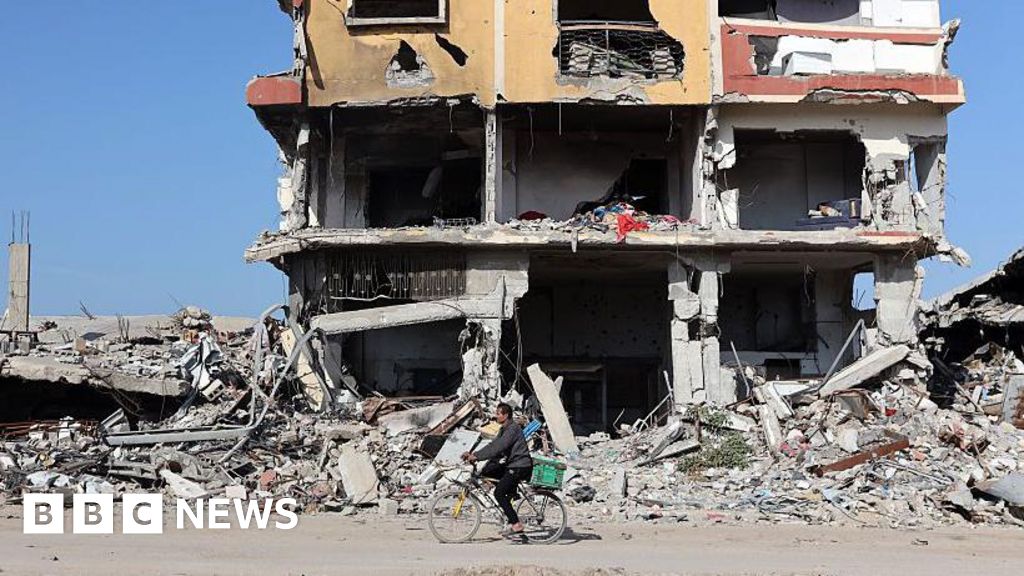
Israeli air strikes in Gaza killed at least eight people, including four children, in the last 24 hours, with incidents reported near Jabalia, Khan Younis and Deir al-Balah and a drone strike on a tent shelter for displaced people. The violence represents continued alleged breaches of a US-brokered ceasefire that took effect on 10 October — Gaza's health ministry says Israeli forces have killed at least 425 Palestinians since that truce — while progress on a stalled phase-two political deal requiring Hamas disarmament remains blocked amid Israeli political resistance. The developments raise localized geopolitical risk and downside tail risk for regional assets and risk-sensitive markets if escalation widens, though the immediate market-moving potential is limited absent broader regional spillover.
Market structure: Near-term winners are large US defense primes (LMT, NOC, RTX) and liquid safe-haven/commodity plays (GLD, USO, XOM/CVX) due to rising risk premia and potential US aid/contract flows; losers include Israeli equities (EIS/TA-35), regional tourism/airlines (AAL, LUV) and EM credit that reprice geopolitical risk. Pricing power shifts toward defense suppliers and insurers; energy suppliers gain asymmetrically if Brent re-tests $90–100/bbl within 1–3 months, raising upstream cashflows by mid-teens percent vs pre-conflict baselines.
Risk assessment: Tail risk—limited regional escalation to multi-front conflict—has an estimated 10–20% probability over 3 months and would likely push Brent >$100 and cause a >150bp move lower in 10y Treasuries as havens bid yields. Immediate (days) effects are volatility spikes and FX stress (ILS weakness, USD strength); short-term (weeks) is sector rotation into defense/energy; long-term (quarters) depends on US fiscal response and reconstruction timelines.
Trade implications: Implement short-duration hedges first (GLD/long TLT) and targeted equities exposure to defense contractors; use option structures to control downside. Monitor crude moves to $85/$100, ILS moves >5% intraday, and US Congress aid votes as catalysts for step-ups or unwind.
Contrarian angles: Consensus may overstate sustained oil shock—histor precedents (2014 Gaza) show limited long-run commodity impact absent regional widening; defense stocks frequently price headline risk quickly—if LMT/NOC rally >10% on headlines, consider fading with call spreads. Unintended consequence: rapid order announcements can face multi-quarter delivery and political scrutiny that delays revenue realization.
AI-powered research, real-time alerts, and portfolio analytics for institutional investors.
Request DemoOverall Sentiment
strongly negative
Sentiment Score
-0.70
