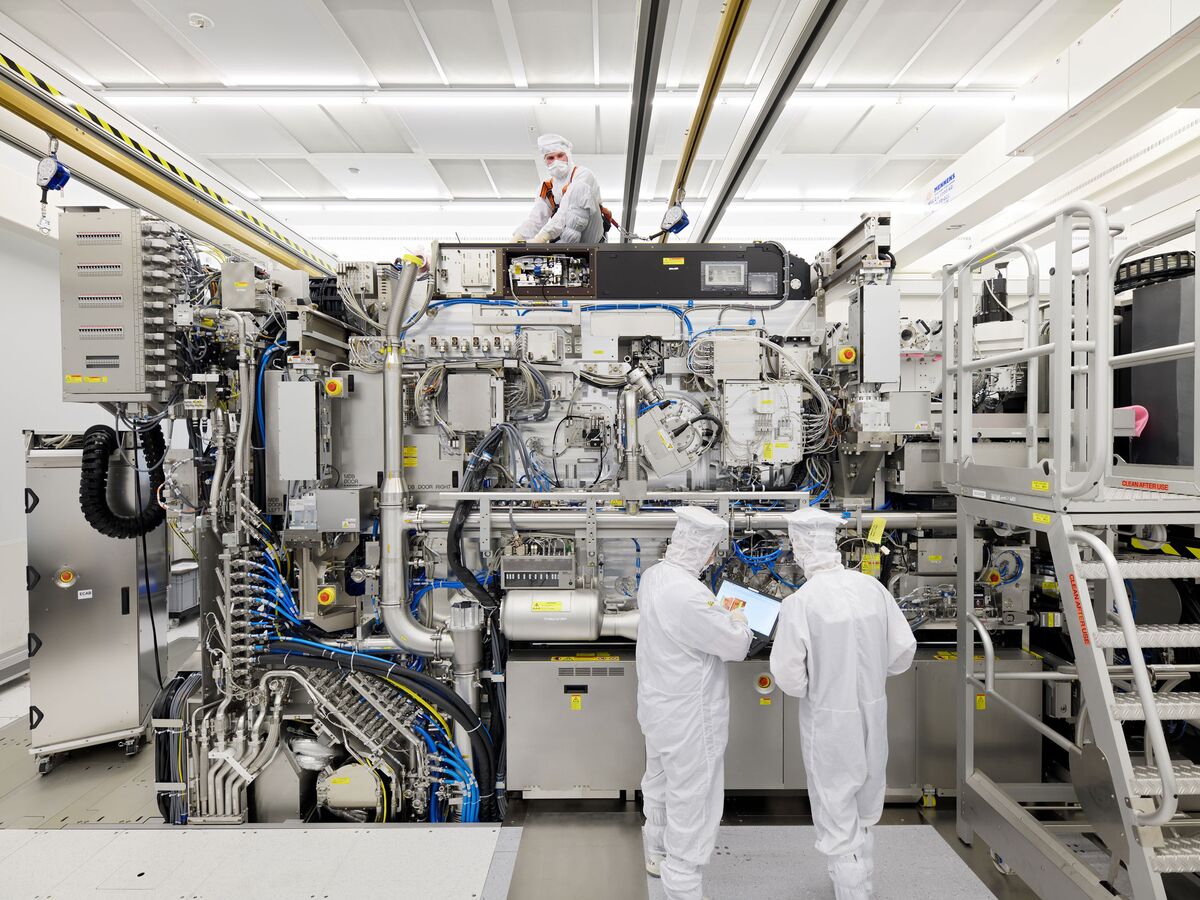
Shares of major semiconductor equipment suppliers, including Applied Materials and ASML Holding, declined after a U.S. House committee criticized their substantial sales to Chinese state-owned and military-linked companies, alleging these transactions bolster China's semiconductor industry and military capabilities. The panel's report, which cited company sales data, heightened concerns among investors regarding the potential for new, more stringent export controls, despite acknowledging no current legal violations by the equipment manufacturers.
ASML, Applied Materials Fall After US Panel Slams China Sales Semiconductor companies including Applied Materials Inc. and ASML Holding NV fell after a US House committee said that the industry was boosting China’s semiconductor industry and supporting its military, raising the specter of further export controls. Applied Materials, ASML, Tokyo Electron Ltd., KLA Corp. and Lam Research Corp. “made sizable returns selling equipment to Chinese state-owned and military-linked companies,” the House China panel said on Tuesday, citing the companies’ sales data. There is no claim that any tool maker has violated US, Dutch or Japanese law. Semiconductor equipment manufacturers, including ASML and Applied Materials, saw their shares decline following a critical report from a US House committee. The committee alleged these companies generated "sizable returns" from sales to Chinese state-owned and military-linked entities, thereby bolstering China's domestic semiconductor industry and military capabilities. This immediate market reaction reflects investor apprehension regarding future regulatory actions. The report, while explicitly stating no current legal violations by the tool makers, significantly raises the "specter of further export controls." This escalating geopolitical tension between the US and China, particularly concerning technology transfer, introduces a substantial and growing regulatory risk for firms like ASML, AMAT, KLAC, and LRCX. The criticism highlights the contentious nature of these sales, despite their current legality. Such heightened scrutiny signals a potential tightening of trade policy and increased government intervention in the technology supply chain. Future policy actions could directly impact these companies' revenue streams and market access, necessitating a strategic re-evaluation of their exposure to the Chinese market and overall global sales strategies.
AI-powered research, real-time alerts, and portfolio analytics for institutional investors.
Request DemoOverall Sentiment
strongly negative
Sentiment Score
-0.70
Ticker Sentiment
