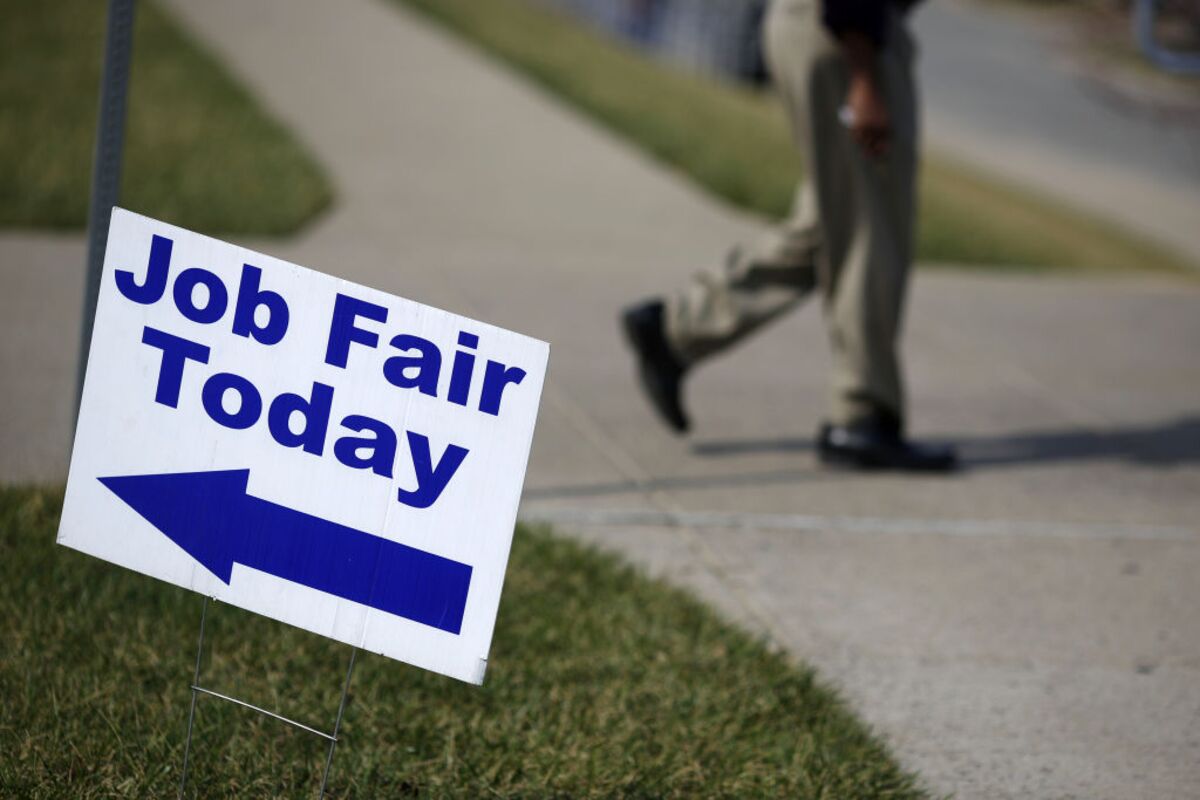
US payrolls rose by 178,000 in March and the unemployment rate fell to 4.3%, signaling the labor market's current balance. Brookings research indicates that a slowdown in short-run labor supply helped enable the 'soft landing' by offsetting a labor-demand decline since mid-2022 comparable to prior recessions. However, the piece warns that the war in Iran poses a geopolitical risk that could upend this fragile balance and affect policy and market sentiment.
The labor market’s fragility is less about headline payrolls and more about elasticities: a 1ppt change in participation equals ~1.6M workers and can move aggregate hours and wage growth enough to swing core inflation by a few dozen basis points over 6–12 months. That means short-run supply shifts (seasonal returns-to-work, migration waves, or pandemic-era labor exits reversing) are effective policy levers — small net inflows or outflows of workers quickly alter Fed calculus without needing large demand shocks.
Geopolitical risk in the Middle East operates through two competing mechanical channels: an oil-price shock that lifts input costs and reaccelerates measured inflation (forcing tighter policy and compressing risky assets) versus migration and supply-chain disruptions that can either tighten local labor markets or, conversely, boost labor supply in adjacent economies and lower global wage pressure. The net market move will hinge on timing: oil-driven inflation shows up within weeks; labor-supply mechanical rebalances play out over quarters.
Second-order winners include capital-intensive automation suppliers (robotics, cloud compute, industrial automation) because persistent hiring difficulty accelerates capex replacement of labor — favor firms with >20% exposed revenue to factory/warehouse automation. Losers are firms with high labor operating leverage in a tight-margin, fuel-sensitive cost base (regional airlines, casual dining, event staffing) where a 10% fuel or labor-cost shock can erase 3–6% of EBITDA within two quarters.
Consensus risk is mistaking a temporary inflation blip for a permanent regime change. If short-run labor supply reverts (return-to-work, targeted immigration relief, or repaired schooling coverage) in the next 3–9 months, markets will reprice lower terminal rates and favor duration and growth — the current geopolitical premium to real rates is therefore a crowded, time-sensitive tradeable tension.
AI-powered research, real-time alerts, and portfolio analytics for institutional investors.
Request DemoOverall Sentiment
neutral
Sentiment Score
0.00
