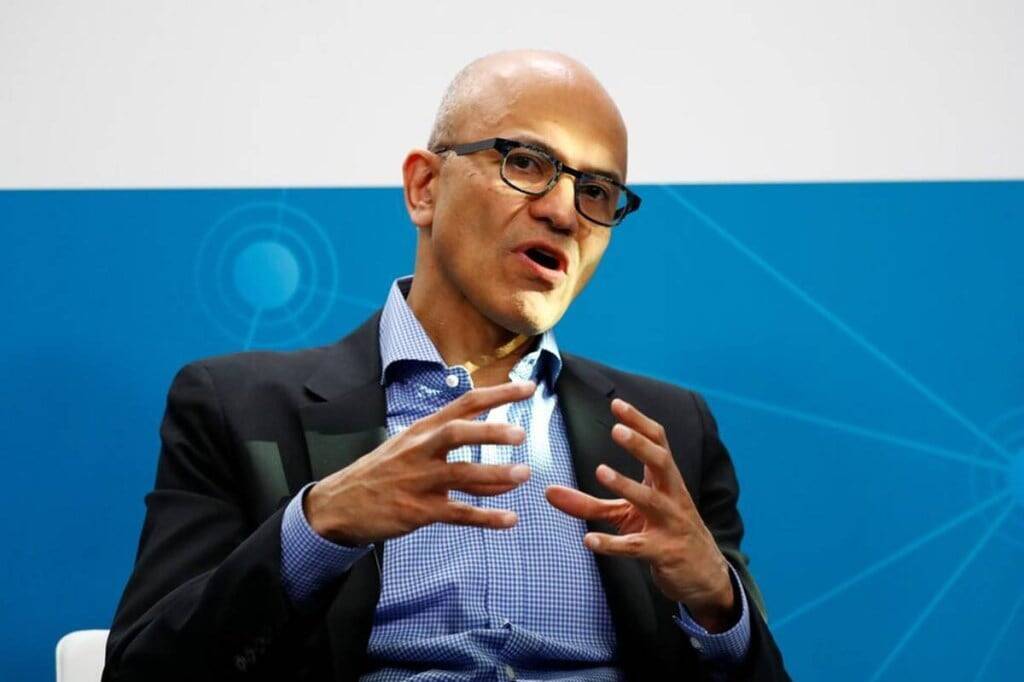
Microsoft CEO Satya Nadella has instituted a weekly AI accelerator meeting that excludes senior executives and invites lower-level technical staff to present AI updates, according to a memo seen by Business Insider. The format is intentionally decentralized and described as somewhat messy and chaotic to avoid top-down direction; the move signals a cultural shift toward grassroots AI development that could speed internal experimentation and influence product execution, but it is unlikely to produce immediate material market effects.
Market structure: Microsoft’s move to democratize AI idea flow lowers internal coordination friction and increases experiment volume, favoring incumbents with deep cloud scale and developer ecosystems (MSFT, NVDA as infrastructure winners). Expect modest share gains in AI services if even 10–30% of experiments productize; losers are niche SaaS/AI vendors with slower go-to-market and lower M&O budgets. Cross-asset: limited immediate bond/FX impact; equity implied vol for MSFT should drift down if execution reduces headline risk, while sector flows rotate into software/infrastructure over 3–12 months.
Risk assessment: Tail risks include significant data/security breaches from decentralized projects or regulatory intervention (FTC/SEC/Europe) leading to fines or forced product rollbacks; probability low-medium but impact high (>$1–5bn). Immediate (days) effect = sentiment noise; short-term (1–6 months) = pipeline signals from Azure AI metrics; long-term (12–24 months) = measurable revenue/ARR lift or wasted R&D spend. Hidden dependencies: success requires integration with GTM, Azure capacity and chip supply; second-order risks include partner channel friction and IP disputes.
Trade implications: Favor asymmetric long exposure to MSFT via concentrated equity (2–3% portfolio) and cost-controlled options (9–15 month call spreads) to target 12–18 month 12–25% upside. Relative trade: long MSFT vs short GOOGL (equal notional) over 6–12 months if Azure AI consumption growth exceeds Alphabet’s ad/Cloud AI monetization. Entry on <5% pullbacks; reassess after next two quarters of Azure AI usage data.
Contrarian angles: Market may underweight execution risk and security liabilities — decentralization can produce both breakthrough products and costly compliance events. Consensus may underprice upside optionality from many small experiments becoming sticky enterprise features; conversely, overexposure risks exist if company cannot productize or control outputs. Historical analogy: Google’s ‘20% time’ created hits but also fragmentation; watch metrics, not headlines.
AI-powered research, real-time alerts, and portfolio analytics for institutional investors.
Request DemoOverall Sentiment
neutral
Sentiment Score
0.10
Ticker Sentiment
