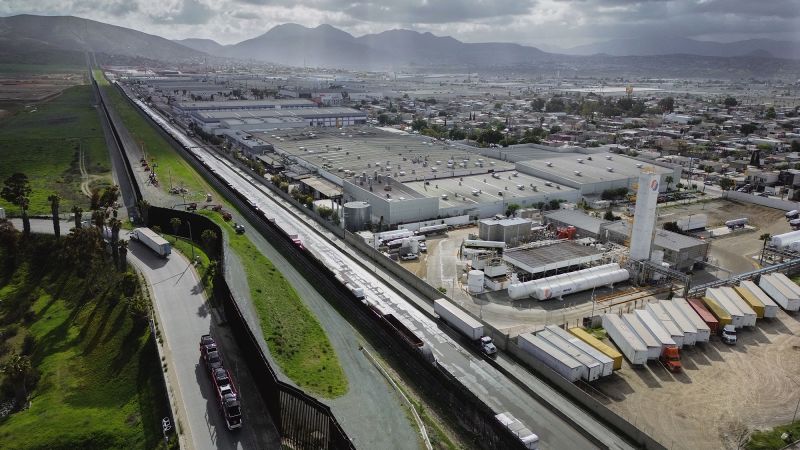
President Trump announced a 90-day extension of the existing 25% tariffs on Mexican goods, pausing higher tariffs that were slated to take effect. This decision maintains the status quo with America's largest trading partner while allowing for negotiations with Mexican President Claudia Sheinbaum on a new trade deal. The move comes amid broader uncertainty regarding potential tariff escalations on other key trading partners like Canada and a threatened increase in universal tariff rates, signaling continued trade policy shifts.
The decision to extend existing 25% tariffs on Mexican goods for 90 days provides a temporary reprieve from further trade escalation but introduces a period of significant uncertainty for US supply chains. This pause defers a threatened tariff hike on America's largest trading partner, a status Mexico achieved in 2023 after surpassing China amidst prior tariff actions. While the extension facilitates a 90-day negotiation window for a new trade deal with Mexican President Claudia Sheinbaum, it also carries the explicit risk of retaliatory tariffs, which Sheinbaum has vowed to implement if talks fail. The situation is compounded by broader trade policy ambiguity, including a looming deadline for a potential tariff increase on Canada, the second-largest trading partner, to 35%. The recent enactment of a 40% tariff on Brazil demonstrates a credible threat of further protectionist measures, and this specific action, coupled with stated intentions to raise the universal tariff rate to between 15% and 20%, signals a sustained period of volatility for companies reliant on international trade, particularly those in the automotive, electronics, and apparel sectors.
AI-powered research, real-time alerts, and portfolio analytics for institutional investors.
Request DemoOverall Sentiment
mixed
Sentiment Score
-0.15
Ticker Sentiment
