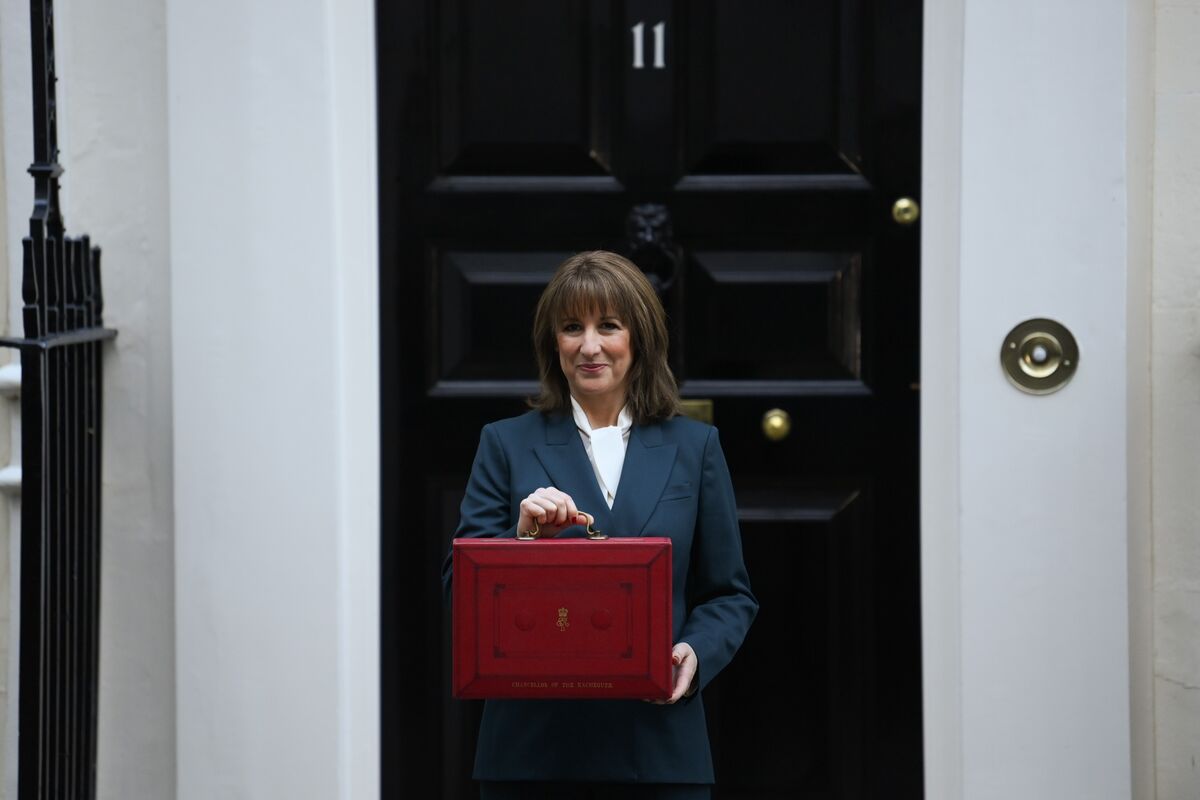
UK Chancellor Rachel Reeves unveiled a budget on Nov. 26 comprising more than 80 measures that the Office for Budget Responsibility estimates will raise £26 billion ($34 billion), pushing the overall tax take to a record high. The package doubled the government's fiscal buffer while preserving a manifesto pledge on income tax rates, but the reliance on many small measures creates clear winners and losers across households and sectors and will have implications for sovereign finances and market sentiment.
Market structure: The budget’s £26bn of many small tax increases is a modest fiscal tightening that should increase the UK government’s credit cushion and favour fixed-income holders and sterling in the near term. Direct winners: sovereign bond holders, cash-rich corporates and defensive consumer staples; losers: discretionary retailers, leisure and real-estate-exposed names where post-tax disposable income and demand are most elastic. Cross-asset: expect 5–30bp downward pressure on short–mid gilt yields and a 1–2% GBP appreciation vs USD over 1–6 weeks if markets price lower sovereign tail risk; equity cyclicals likely to lag and equity vol to compress.
Risk assessment: Tail risks include a political backlash triggering fiscal U‑turns (1–10% probability) or a sharper-than-expected consumer slowdown that raises borrowing — both would steepen yields and weaken GBP. Time horizons split: immediate (48–72 hours) = FX/gilt repricing; short-term (1–3 months) = corporate earnings and consumer data hits; long-term (6–24 months) = growth drag on capex and credit demand. Hidden dependencies: BoE reaction function (could delay cuts) and OBR revisions that materially change market pricing; catalysts include next BoE minutes, monthly OBR updates and December/January retail sales releases.
Trade implications: Tactical trades should be duration and FX biased: buy 2–4yr gilts or 5yr gilt futures for a 0.5–1% portfolio move targeting a 10–30bp yield decline over 1–3 months, and take a 1–3% notional long in GBP via FXB or GBPUSD forward for 1–3 months. Equity pair trades: go modest long on UK banks (HSBA.L, LLOY.L) vs short UK consumer discretionary (TSCO.L, NXT.L) for 3–9 months to capture defensive shift and relative earnings resilience. Use GBP call spreads (1-month, 1–2% OTM) and protective put collars on gilt positions if volatility spikes.
Contrarian angles: Consensus may overstate permanent downside to gilts — the doubled fiscal buffer materially reduces tail-risk and underprices room for yield compression; a 20–40bp gilt rally is plausible if OBR revisions are confirmed. Markets may be over-selling UK cyclicals; if BoE signals no rate hikes and data hold, expect a snap reversal. Unintended consequence: many small measures raise compliance complexity and could slow business investment more than headline figures suggest, keeping the trade case nuanced and time‑limited.
AI-powered research, real-time alerts, and portfolio analytics for institutional investors.
Request DemoOverall Sentiment
mildly negative
Sentiment Score
-0.25
