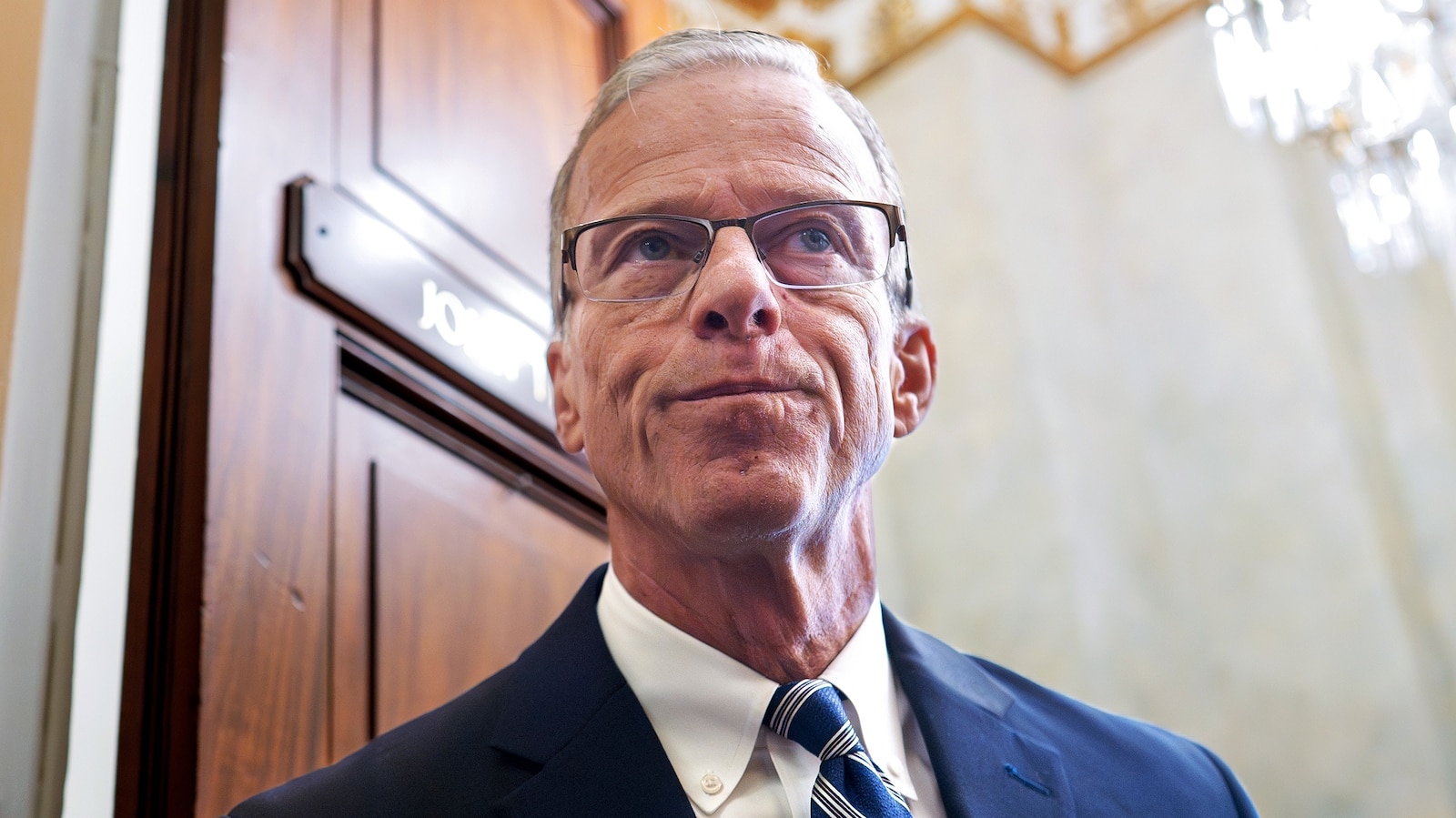
Speaker Mike Johnson announced the House will pursue a standalone vote to strip a controversial provision from a recently passed government funding bill, which would allow senators to sue the government for up to $500,000 if their phone records are subpoenaed without notification. This measure, inserted by Senate Majority Leader John Thune, directly addresses Special Counsel Jack Smith's subpoena of eight Republican senators' phone records related to the Jan. 6 investigation, with one senator already expressing intent to sue for over $1 million. Johnson and other House members criticized the provision as "self-serving" and an "unacceptable giveaway of tax dollars," indicating potential future government liabilities and legislative friction.
Speaker Mike Johnson announced a standalone House vote next week to strip a controversial Senate provision from the government funding bill, highlighting significant legislative friction. This provision, inserted by Senate Majority Leader John Thune, allows senators to seek up to $500,000 in statutory damages if their phone records are subpoenaed without notification, directly addressing Special Counsel Jack Smith's investigation into eight Republican senators. House Republicans, including Reps. Tom Cole and Chip Roy, sharply criticized the measure as "self-serving" and an "unacceptable giveaway of tax dollars."
The provision introduces a new potential liability for the U.S. government, with Senator Lindsey Graham already stating intent to sue for "more than a million dollars," exceeding the $500,000 statutory damages. This sets a precedent for significant payouts from taxpayer funds, particularly as the provision does not extend to House members like Rep. Mike Kelly, whose records were also subpoenaed. The "moderately negative" sentiment score reflects the contentious nature and potential financial drain.
This debate underscores broader concerns regarding government surveillance, data privacy, and the potential for legislative processes to be used for personal or political gain, as highlighted by Senator Ron Wyden. While the immediate market impact is low (0.1), ongoing political infighting over budget provisions and legal liabilities could introduce uncertainty into future fiscal policy discussions. Investors should monitor the House's vote next week for signals on inter-chamber cooperation and fiscal stability.
AI-powered research, real-time alerts, and portfolio analytics for institutional investors.
Request DemoOverall Sentiment
moderately negative
Sentiment Score
-0.40
Ticker Sentiment
