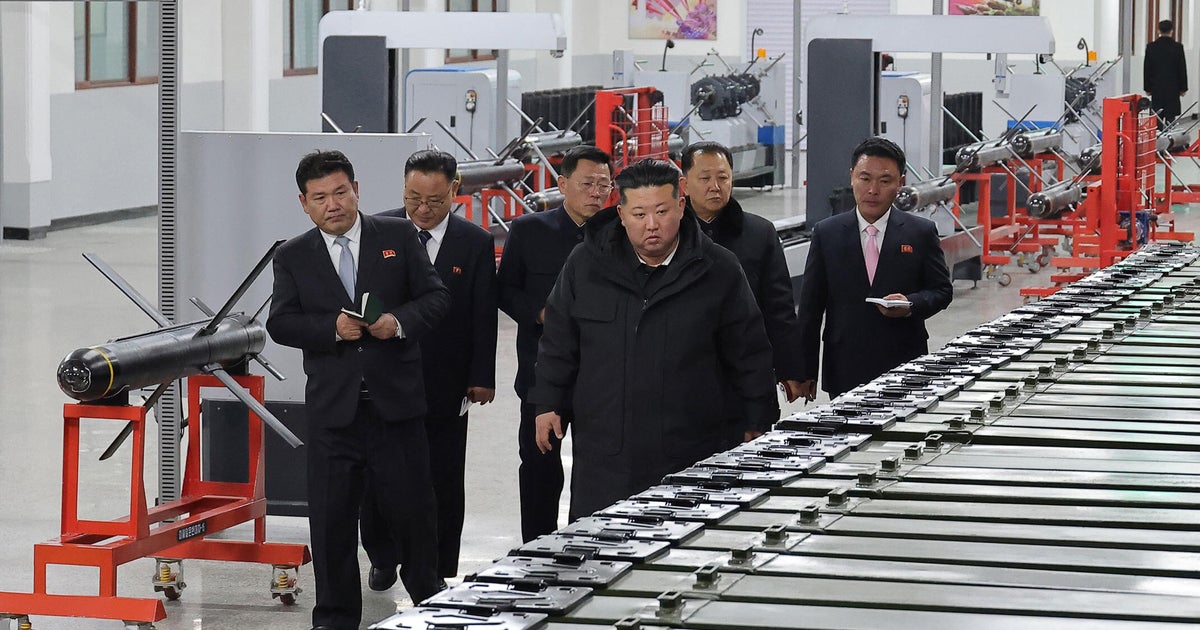
North Korea launched multiple ballistic missiles from its capital region around 7:50 a.m., with projectiles flying roughly 560 miles, hours before South Korean President Lee departed for talks in China; Seoul convened an emergency national security council and said the launches violate U.N. Security Council resolutions. The U.S. Indo-Pacific Command assessed there was no immediate threat to U.S. personnel or territory, while Pyongyang’s state media reported Kim Jong Un ordered a roughly 2.5x expansion in production capacity for precision-guided weapons ahead of a likely Workers’ Party congress. The incident raises regional geopolitical risk, pressures diplomatic channels with China, and could spur short-term safe-haven flows and increased attention to defense-sector exposure.
Market Structure: Immediate winners are defense primes and listed defense ETFs (e.g., LMT, NOC, ITA/XAR) as governments signal higher procurement; expect a 5–15% re-rating catalyst over 3–12 months if SK/JP increase budgets. Losers are short-duration Korean equities (EWY), regional travel/tourism, and select semiconductor/smartphone suppliers exposed to SK demand shocks; expect 3–8% downside risk in those pockets within days–weeks if investor risk-off persists.
Risk Assessment: Tail risks include a kinetic escalation to a localized conflict (low prob <5% in weeks but high impact), which would spike regional FX volatility (USD/KRW +5–10%), widen Korea CDS >50bps, and push oil higher by $5–$15/bbl. Immediate horizon (48–72 hrs) is risk-off; short-term (1–3 months) diplomacy and Xi–Lee talks can reverse moves; long-term (1–3 yrs) likely higher defense capex and persistent supply-chain re-shoring.
Trade Implications: Direct plays: size tactical longs in ITA/XAR (2–4% portfolio) and conviction positions in LMT/NOC (0.5–1% each) with 6–12 month targets of +12–20%; hedge with 1–2% GLD and 1% TLT for tail protection. Short/hedge Korea exposure via EWY puts (3-month) or a -2% EWY position; consider pair trade long ITA vs short EWY sized market-neutral; enter within 48–72 hrs, set stop-loss at 4–6% adverse move, take profits at +12–15%.
Contrarian Angles: Consensus may overprice perpetual instability; historical parallels (NK tests 2017–2019) show ~1–3 month market reprieves after diplomacy — defense premiums often mean-revert after an initial spike. Watch for mispricings: if ITA/XAR run >20% in 4 weeks without new escalation, trim to lock 8–12% gains. Key hidden dependency: China’s limited leverage on Pyongyang could blunt diplomatic reversals, keeping a structurally higher baseline for defense demand.
AI-powered research, real-time alerts, and portfolio analytics for institutional investors.
Request DemoOverall Sentiment
strongly negative
Sentiment Score
-0.60
