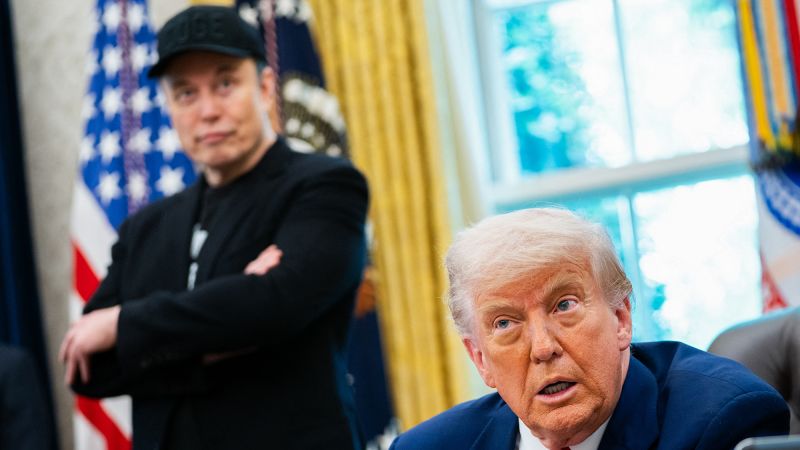
Elon Musk criticized President Trump's economic bill on social media, highlighting concerns about its cost and potential impact on the national debt. This amplifies existing worries among economists, budget analysts, and Wall Street regarding the bill's projected trillions in added debt, despite the White House's insistence that it will not increase the debt over 10 years, citing potential economic growth and revenue from tariffs. The White House's projections contrast with widespread consensus, raising concerns among bond investors already jittery about rising US debt levels, potentially impacting the Treasury market and Trump's broader economic agenda.
A significant domestic policy bill under President Trump is encountering substantial skepticism regarding its fiscal impact, with Elon Musk's recent public denunciation of the bill as a "disgusting abomination" due to its cost amplifying existing concerns. The White House projects the "One Big, Beautiful Bill" will not add to the U.S. debt over ten years, citing anticipated economic growth spurred by the bill, substantial revenue from tariffs (projected at $3.7 trillion over 10 years, though not included in official budget scores), and $1.3 trillion in mandatory spending cuts. This optimistic view starkly contrasts with a widespread consensus among economists, nonpartisan budget scorekeepers, and Wall Street analysts, who anticipate the bill will add trillions to the national debt. This divergence is fostering unease among bond investors, evidenced by a recent credit rating downgrade from Moody's attributed to escalating debt concerns, and public warnings from figures like JPMorgan CEO Jamie Dimon about an inevitable fiscal crisis if the current U.S. fiscal trajectory remains unchanged. Despite these concerns and a "strongly negative" sentiment score (-0.7) with a "high" market impact score (0.8) associated with the situation, Trump administration officials, including Treasury Secretary Scott Bessent, dismiss these criticisms and maintain their projections are accurate, betting on a repeat of what they perceive as underestimated economic performance during Trump's first term. The administration's stance relies on several critical assumptions, including tariffs generating significant revenue without hindering U.S. economic growth and the successful implementation of backloaded spending cuts requiring bipartisan support, which are widely contested.
AI-powered research, real-time alerts, and portfolio analytics for institutional investors.
Request DemoOverall Sentiment
strongly negative
Sentiment Score
-0.70
Ticker Sentiment
