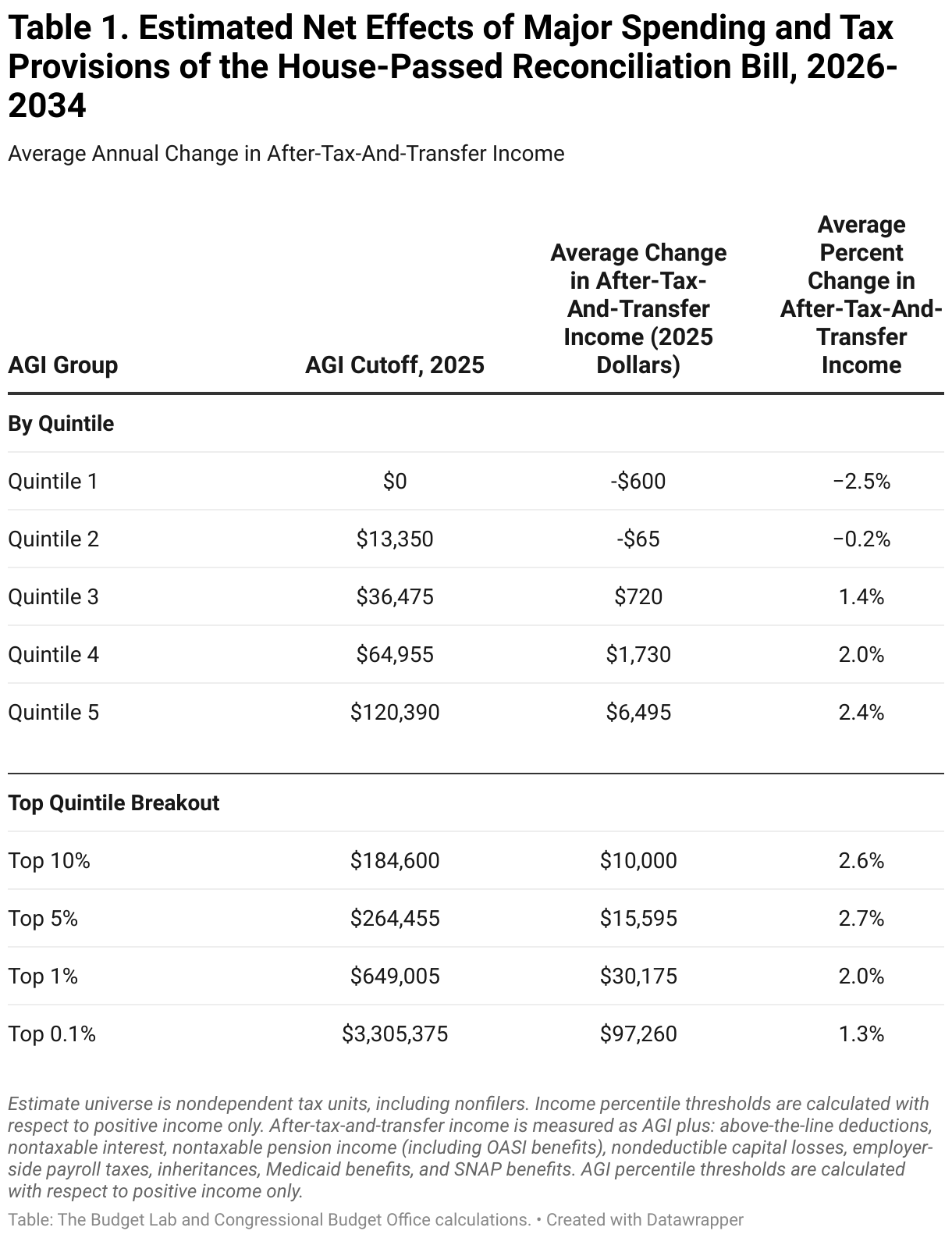
New analysis of the House and Senate budget reconciliation bills reveals a significant regressive impact on income distribution. The Senate version is projected to decrease income for the bottom quintile by 2.9% (approx. $700) while increasing it for the top 1% by 1.9% (approx. $30,000), primarily through tax changes and cuts to Medicaid and SNAP. This shift of after-tax-and-transfer resources from lower to higher income brackets is more pronounced for the lowest earners in the Senate bill compared to the House version, highlighting a potential widening of income disparity.
Analysis of the House and Senate budget reconciliation bills reveals a significant regressive fiscal shift, transferring resources from lower to higher-income households. The Senate version, specifically, is projected to reduce after-tax-and-transfer income for the bottom quintile by 2.9% (approximately $700 annually) while increasing it for the top 1% by 1.9% (about $30,000). This effect is driven by a combination of tax changes and spending cuts to social programs, notably a proposed $313 billion reduction in Federal Medicaid spending over the 2025-2034 period. While both bills are regressive, the Senate version imposes a deeper income cut on the lowest earners compared to the House bill (a $700 vs. $600 decline). Critically, this analysis excludes the impact of proposed tariffs, which the report states would further exacerbate the regressive outcome, suggesting a potential for even greater pressure on lower-income consumer spending than these figures indicate.
AI-powered research, real-time alerts, and portfolio analytics for institutional investors.
Request DemoOverall Sentiment
moderately negative
Sentiment Score
-0.50
