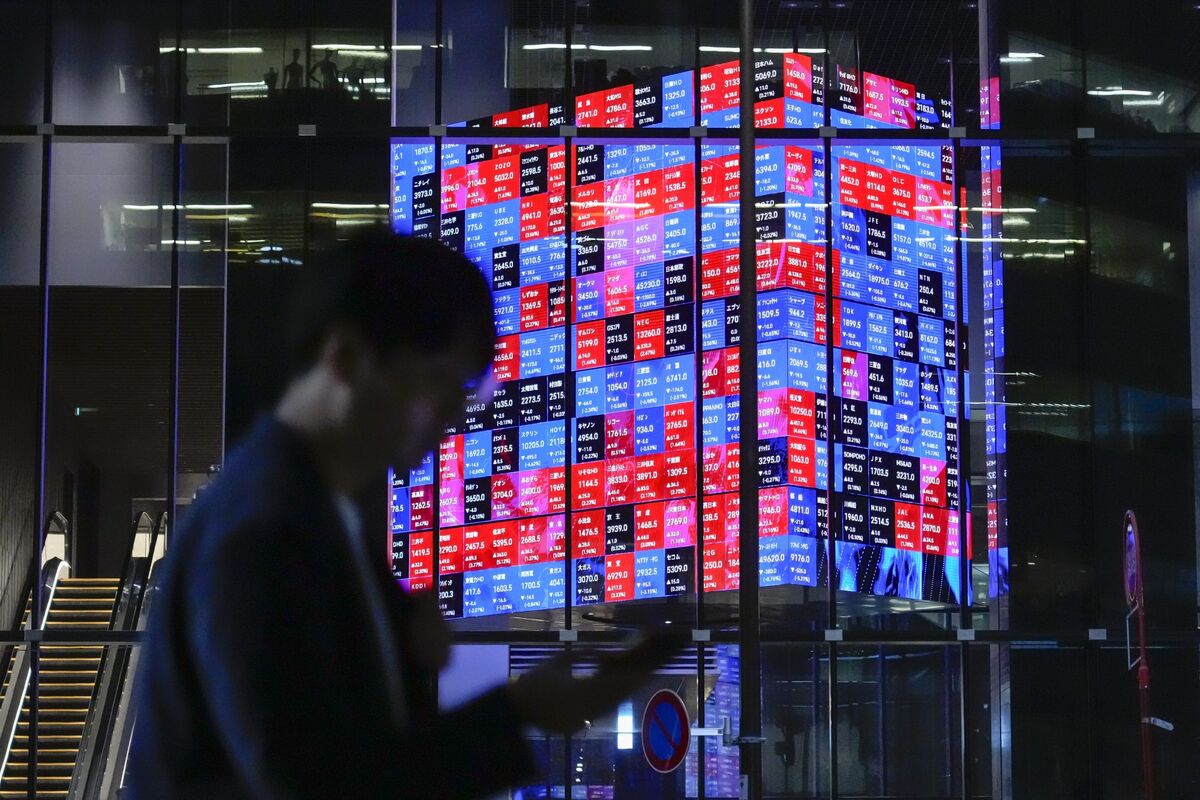
Japanese stocks are expected to fluctuate as the yen weakens following President Trump's extension of the EU tariff deadline to July 9. Nikkei 225 futures are trading slightly above the underlying gauge's last close, with the yen's retreat driven by Trump's recent tariff threats against the EU and Apple.
Japanese stocks are anticipated to experience fluctuations driven by the yen's depreciation against the U.S. dollar. This currency movement directly followed U.S. President Donald Trump's decision to extend the deadline for potential 50% tariffs on the European Union to July 9. Nikkei 225 futures on the Chicago Mercantile Exchange were quoted at 37,210, slightly above the underlying index's last close of 37,160.47, suggesting a degree of market repricing. The yen's retreat occurred amidst broader U.S. tariff threats, which also targeted the EU and Apple Inc., underscoring persistent global trade policy uncertainty. The overall market sentiment is characterized as "mixed" with a sentiment score of -0.1 and an "uncertain" tone, reflecting the unpredictable nature of these geopolitical developments and their moderate, yet discernible, market impact.
AI-powered research, real-time alerts, and portfolio analytics for institutional investors.
Request DemoOverall Sentiment
mixed
Sentiment Score
-0.10
Ticker Sentiment
