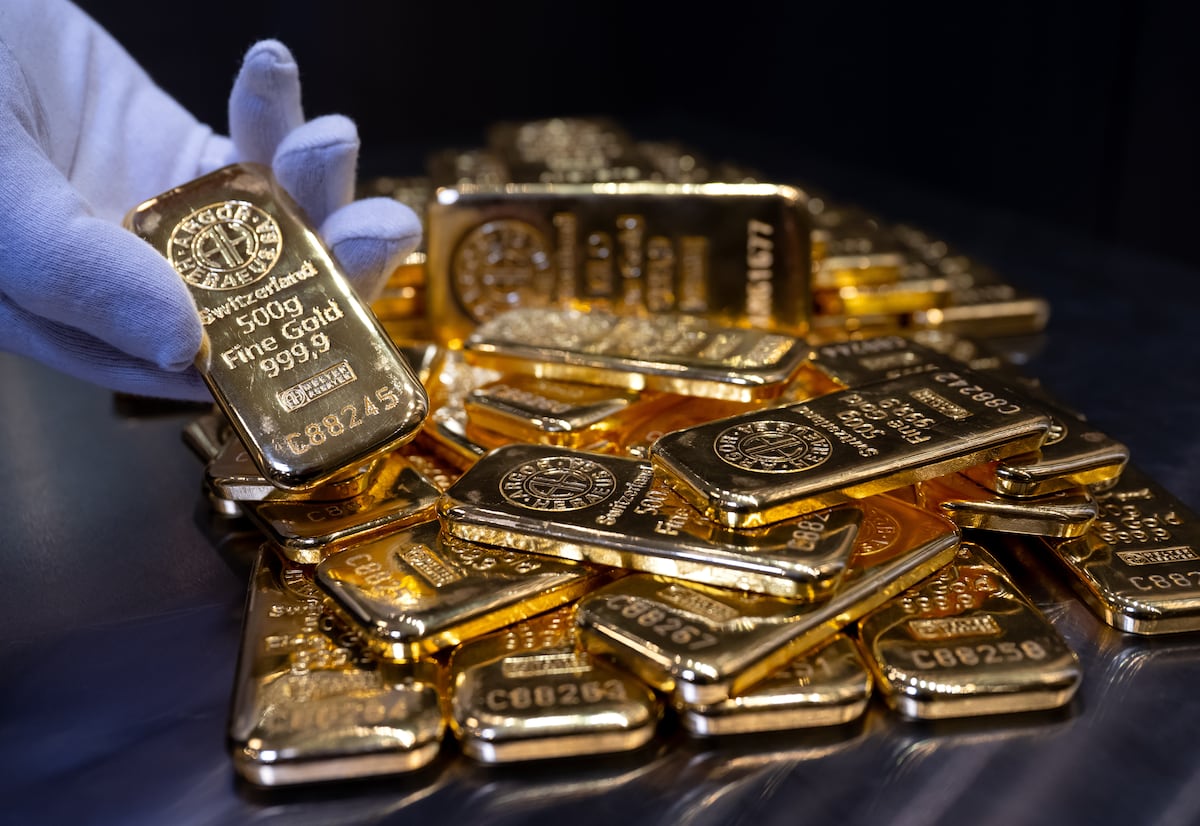
Gold has re-emerged as both a safe-haven and a geostrategic asset as central banks accelerated purchases following the 2022 Russian invasion of Ukraine and amid U.S. political and trade pressures; gold appreciated 65% in 2025 and nearly 140% over three years. Central bank purchases total roughly 32,000 tons valued at €3.84 trillion ($4.51 trillion), U.S. reserves are the largest at 8,133 tons (surpassing $1 trillion), and key holders include Germany (3,350.25t), Italy (2,451.84t) and China (2,279.56t), while analysts point to significant undeclared purchases (China estimated +821t since Jan 2022). The story matters for asset allocators because shifting reserve policy, repatriation debates and tariff threats have already influenced physical flows between London, New York and refining hubs, creating sustained upside pressure on gold prices and altered reserve/FX diversification dynamics.
Market structure: Central-bank demand and geopolitical fears shift pricing power to physical-gold holders, refiners (Switzerland) and miners. Winners: GLD/IAU holders, GDX and large producers (GOLD, NEM) who get leveraged upside if central banks keep buying ~500–1,000t+/yr; losers: AUD/EM FX under pressure if domestic FX reserves are diverted, and short-duration sovereign debt if risk premia rise. Vault/processing bottlenecks (London→NY flows, Swiss refining ≈70% of global processing) create localized price/dislocation premiums.
Risk assessment: Tail risks include a U.S. policy shock (tariffs, asset freezes, or legal steps restricting custodian flows) that could spike physical premia and force forced repatriation; operational risks include transport/insurance capacity constraints that can widen spreads by 100–300bps short-term. Immediate (days) volatility spikes follow political headlines; short-term (weeks–months) driven by central-bank purchase cadence and Swiss refining disruptions; long-term (years) structural de-dollarization could sustain incremental central-bank demand of several hundred tons p.a.
Trade implications: Favor physical/ETF exposure (GLD/IAU) plus selective miner leverage (GDX, GOLD, NEM). Use options to buy upside with defined loss (90-day GLD call spreads) and protect miner exposure with 3-month 10% OTM puts. Cross-asset: expect downward pressure on real yields and USD over 6–24 months, supporting gold; positive for inflation-protected securities and commodity inputs.
Contrarian angles: The market overweights political theater (repatriation talk) vs. cold logistics cost — mass exodus is unlikely; this suggests knee-jerk premiums are overdone and creates buying windows on 5–12% pullbacks. Historical parallel: 1970s gold rally driven by policy distrust plus supply frictions — miners can outperform but operational execution matters. Unintended consequence: tighter physical markets could produce sudden backwardation in short-dated gold futures, rewarding holders of allocated metal.
AI-powered research, real-time alerts, and portfolio analytics for institutional investors.
Request DemoOverall Sentiment
mildly positive
Sentiment Score
0.25
