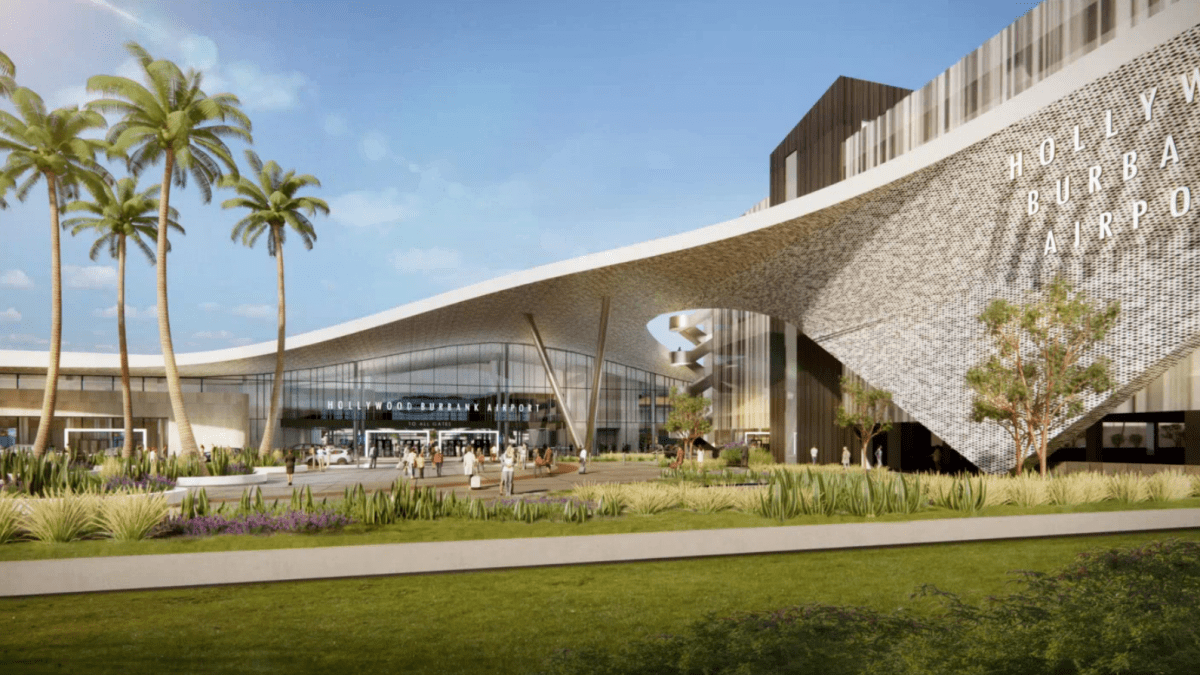
Key event: Elevate BUR is a $1.2 billion Hollywood Burbank Airport terminal replacement (355,000 sqft) with up to 6,637 parking spaces, ground broken Jan 2024 and the replacement terminal slated to open Oct 2026. Near-term impact: a 60-day traffic advisory through June 6 with lane, sidewalk and bike-lane closures affecting Hollywood Way and Thornton/Winona access — expect traveler delays and recommendations to arrive two hours early. Project features include a new concourse, TSA checkpoint, automated ticketing, a 45,900-sqft aircraft parking area, LEED Silver target, and demolition of the old terminal 9–12 months after opening.
This project functions as a multi-year, localized demand shock for hard and soft infrastructure suppliers rather than a pure travel-demand story. Engineering firms, specialty subcontractors, and aggregates suppliers will see lumpy, milestone-driven revenue that can sustain margins if backlog is converted on schedule, but their stock moves will be driven more by execution (labor, permits, change orders) than by passenger volumes.
A less obvious beneficiary is the airport’s concession and parking economics: redesigned curb flow and common-use gates materially change the unit economics of pick-up/drop-off, parking yield management, and concession footfall. If gate flexibility raises aircraft turn rates by even low-double-digit percentages regionally, airline slot productivity and ancillary revenue per flight improve — a multi-year tailwind to carriers that operate frequent short-haul rotations into constrained metro airports.
Key risks are schedule slippage, cost inflation, and modal substitution. Construction and permit delays or rising financing costs compress contractor margins and defer concession revenue; conversely, faster-than-expected adoption of curbless travel (TNCs/public transit) would leave sizable parking capacity underutilized, creating stranded asset risk for parking operators and EV charger rollouts. Watch near-term traffic/curb changes as a high-frequency signal and milestone completions as quarterly catalysts over the next 12–36 months.
AI-powered research, real-time alerts, and portfolio analytics for institutional investors.
Overall Sentiment
neutral
Sentiment Score
0.05
