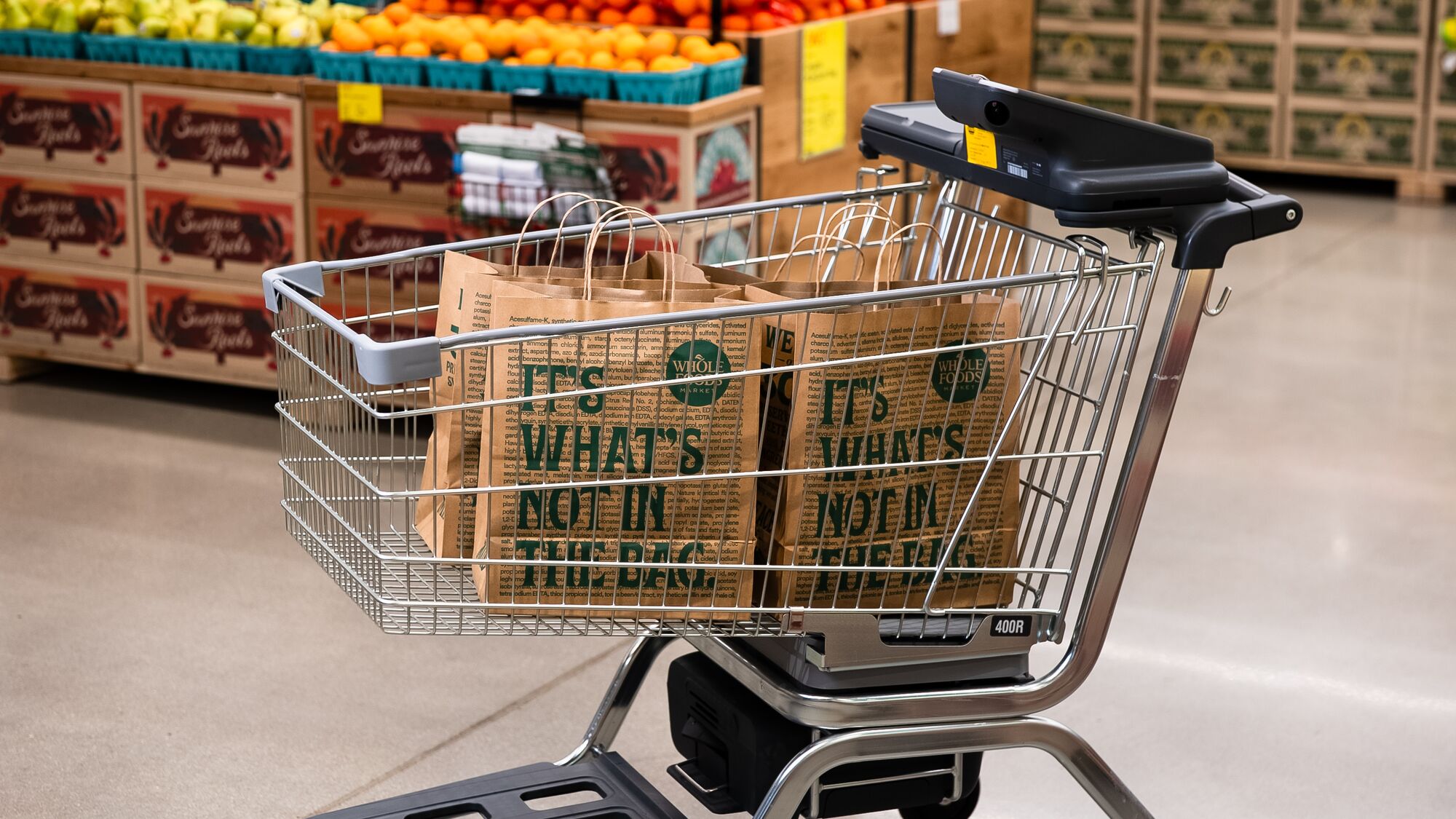
Amazon is rolling out a new generation of its Dash Cart at Whole Foods, expanding to dozens of U.S. locations by the end of 2026 after pilot deployments and thousands of trips with >90% customer satisfaction. The redesigned cart adds real-time price tracking on a built-in screen with Alexa integration and store mapping, a more responsive scanner to bypass checkout, expanded payment options, a built-in produce scale and AI-driven computer-vision/sensor fusion, and is 25% lighter with 40% more capacity. For investors, the changes signal incremental operational and customer-experience improvements that could boost throughput, reduce friction and labor needs at checkout, and modestly support basket size and loyalty, though the announcement is unlikely to be near-term market moving.
Market structure: Amazon/Whole Foods and adjacent service providers (payment rails, sensor/AI hardware and edge-compute suppliers) are the primary beneficiaries—Dash Cart’s 25% lighter design and 40% larger capacity will likely raise basket sizes and reduce labor per transaction, advantaging AMZN’s store economics over 12–36 months. Traditional grocers with slower automation rollouts (e.g., KR) face margin compression and share losses in urban/affluent segments where convenience premium matters.
Risk assessment: Key tail risks are regulatory/privacy backlash (consumer surveillance or data-use restrictions), shrinkage/theft >2–3% of sales if detection fails, and rollout supply-chain limits for cameras/scales; these can materialize within weeks–months (operational incidents) or over 1–3 years (regulatory actions). Hidden dependencies include AI accuracy thresholds (false positive/negative rates) and consumer behavior stickiness—monitor daily trips/store and per-trip basket value as early adoption signals.
Trade implications: Near-term (0–12 months) expect limited direct EPS impact for AMZN but a longer-term (1–3 years) lever to Whole Foods profitability and Amazon’s ecosystem monetization via payments and personalized offers. Favor concentrated, event-driven exposure to AMZN and payment processors while selectively shorting grocers with weak tech roadmaps; use options (12-month calls or call spreads) to express upside with defined risk.
Contrarian angles: The market may overestimate rollout speed—historical parallels (Amazon Go pilots) show slow scaling; privacy/regulatory scrutiny or shrinkage could truncate benefits and concentrate gains in high-density stores only. Treat adoption as binary: if pilots don’t clear operational KPIs (e.g., >200 trips/day/store within 6 months of launch), downside risk to automated-store optimism rises materially.
AI-powered research, real-time alerts, and portfolio analytics for institutional investors.
Request DemoOverall Sentiment
mildly positive
Sentiment Score
0.32
Ticker Sentiment
