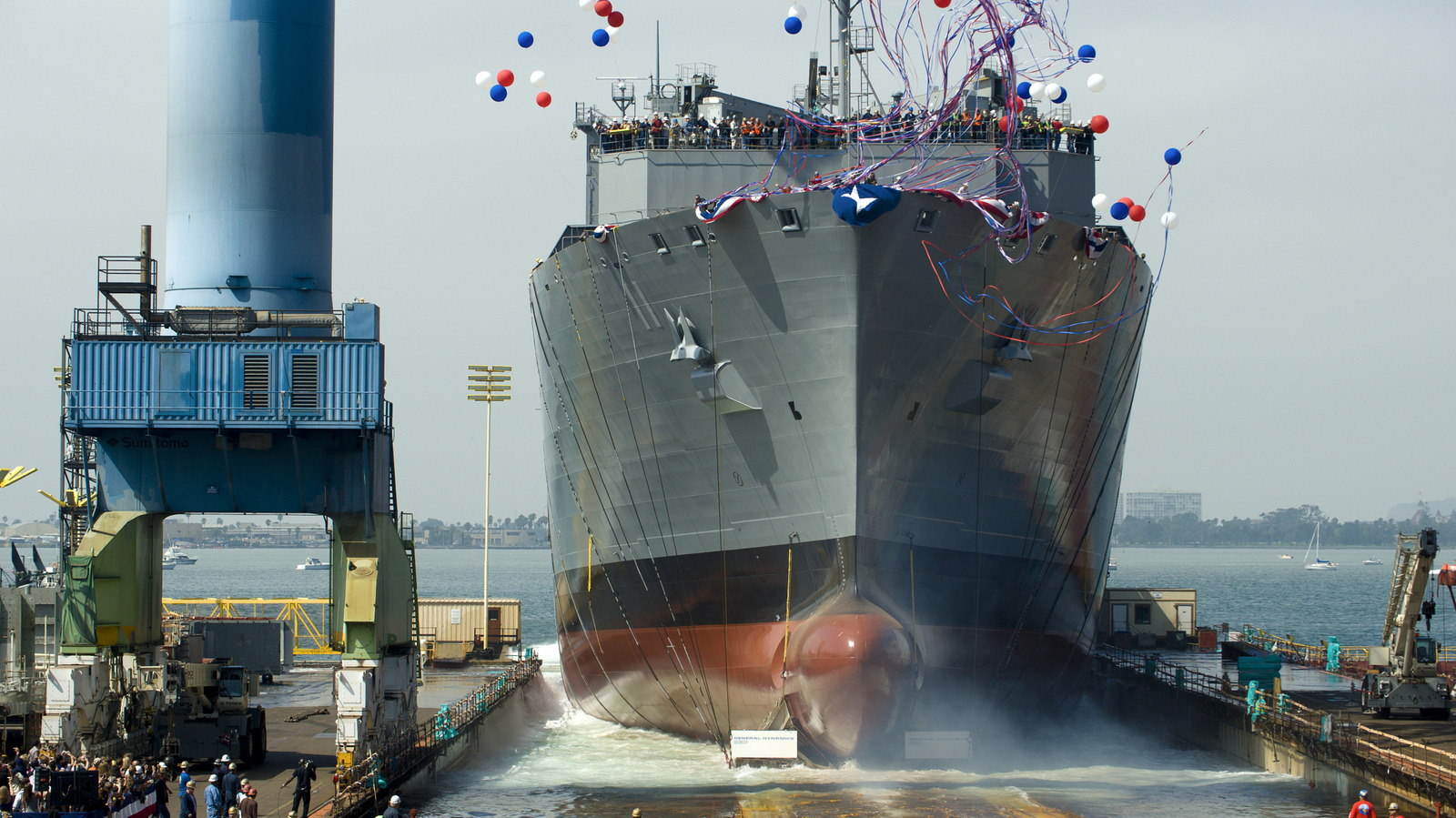
US Navy Secretary John Phelan warned that US shipyards are struggling to attract and retain skilled workers, with shipyard welder pay ranging roughly $19.34/hr (FL) to $29.31/hr (WA) versus recent retail/warehouse wages (Buc-ee's $18–$33/hr by role; Amazon $23/hr base and >$30/hr average total comp). The labor shortfall is occurring as China’s shipbuilding capacity vastly outpaces the US (CSIS estimates China can outbuild the US by a factor of ~230; >50% of 2024 global shipbuilding output; ~70% of Chinese navy ships built after 2010 versus 25% for the US), raising fleet-capability and national-security risks. Phelan advocates higher wages plus better training, conditions, housing and benefits to shore up U.S. shipbuilding competitiveness — a development that could pressure defense-sector labor costs and capital allocation decisions for shipbuilders and government budgets.
Market structure: The immediate winners are U.S. defense prime contractors and domestic steel/industrial suppliers that will capture outsized shipbuilding spending (think Huntington Ingalls (HII), General Dynamics (GD), Nucor (NUE)). Losers are smaller commercial yards and any contractors with fixed-price, near-term delivery obligations that face rising direct-labor costs; expect 10–30% margin erosion on projects without repricing. Labor scarcity implies 5–15% wage inflation for skilled trades in 12–24 months unless automation or immigration policy offsets growth.
Risk assessment: Tail risks include a kinetic naval incident prompting a multi-year accelerated build program (high-impact) or a congressional funding shortfall that delays contracts (low-probability but material). Near-term (days–weeks) market moves will be narrative-driven around NDAA headlines; short-term (3–12 months) impacts manifest as orderbook revisions and margin guidance; long-term (2–5 years) is a structural capacity rebuild costing tens of billions. Hidden dependencies: apprenticeship pipeline, housing near yards, and procurement friction—if any single factor lags, delivery schedules slip and backlog monetization slows.
Trade implications: Take concentrated, time-boxed exposure to primes and recruiting/HR platforms: HII/GD (equity or call-spread exposure) and ZIP (benefits from higher job-posting demand). Hedge with short exposure to commodity capital-intensive commercial shipping or to equities with high near-term fixed-price ship contracts. Use 9–12 month call spreads to capture upside from NDAA appropriations while limiting premium outlay.
Contrarian angles: Consensus assumes funding = immediate capacity; it underestimates multi-year lead times—so stocks priced for fast ramp (small yards) may disappoint. Alternatively, rapid automation/robotics adoption could compress labor needs (benefitting ABB, FANUY-style automation plays) which the market is not pricing. Historical parallel: 1980s Reagan build-up took 3–5 years to fully translate into ship-delivery and industrial hiring, suggesting patience and staged deployment of capital.
AI-powered research, real-time alerts, and portfolio analytics for institutional investors.
Request DemoOverall Sentiment
moderately negative
Sentiment Score
-0.45
Ticker Sentiment
