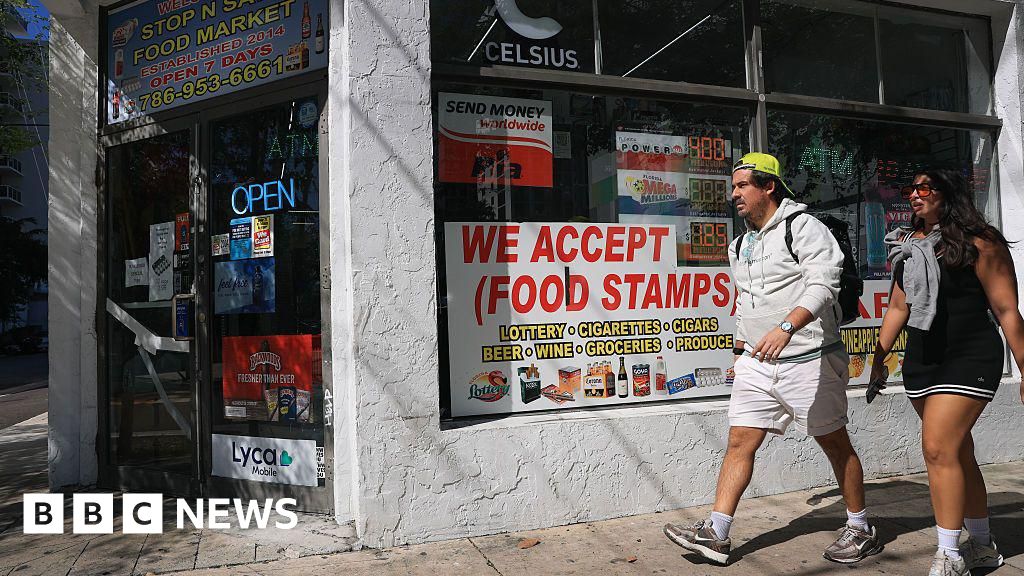
The Trump administration, through the USDA, has ordered states to cap Supplemental Nutrition Assistance Program (SNAP) benefits at 65% for November and claw back any full payments already disbursed, impacting over 42 million Americans. This directive follows a Supreme Court decision that temporarily allowed the administration to withhold $4 billion in funding pending further legal review, overriding a lower court's order for full funding amidst the ongoing government shutdown. Several states, including New York and Massachusetts, which had previously issued full benefits, are resisting the federal order and threatening legal action, highlighting a significant federal-state conflict over critical social welfare funding.
The U.S. Department of Agriculture (USDA) has mandated states cap Supplemental Nutrition Assistance Program (SNAP) benefits at 65% for November, impacting over 42 million Americans and requiring states to claw back any full payments already disbursed. This directive follows a Supreme Court decision that temporarily allowed the administration to withhold $4 billion in funding, overriding a lower court's order for full benefits amidst the ongoing government shutdown. The SNAP program, costing approximately $9 billion monthly, provides an average of $715 per month for a family of four, underscoring the significant financial implications for beneficiaries.
This action has intensified federal-state conflict, with several states, including New York and Massachusetts, resisting the order and threatening legal challenges. Wisconsin's Governor Evers explicitly refused the clawback, while Massachusetts Governor Healey vowed legal action if states are penalized for preventing hunger. The USDA has warned of cancelling federal funding for administrative costs and holding states liable for "overissuances" if they do not comply, escalating the dispute.
The strongly negative sentiment and uncertain tone surrounding this development suggest potential for increased social instability and economic strain on vulnerable populations. While no direct tickers are identified, the moderate market impact score of 0.35 indicates potential indirect effects, possibly through consumer spending patterns in affected regions or increased state-level fiscal pressures. This event highlights significant themes of fiscal policy, regulation, and domestic politics, which could influence future legislative priorities and state-federal relations.
AI-powered research, real-time alerts, and portfolio analytics for institutional investors.
Request DemoOverall Sentiment
strongly negative
Sentiment Score
-0.70
